
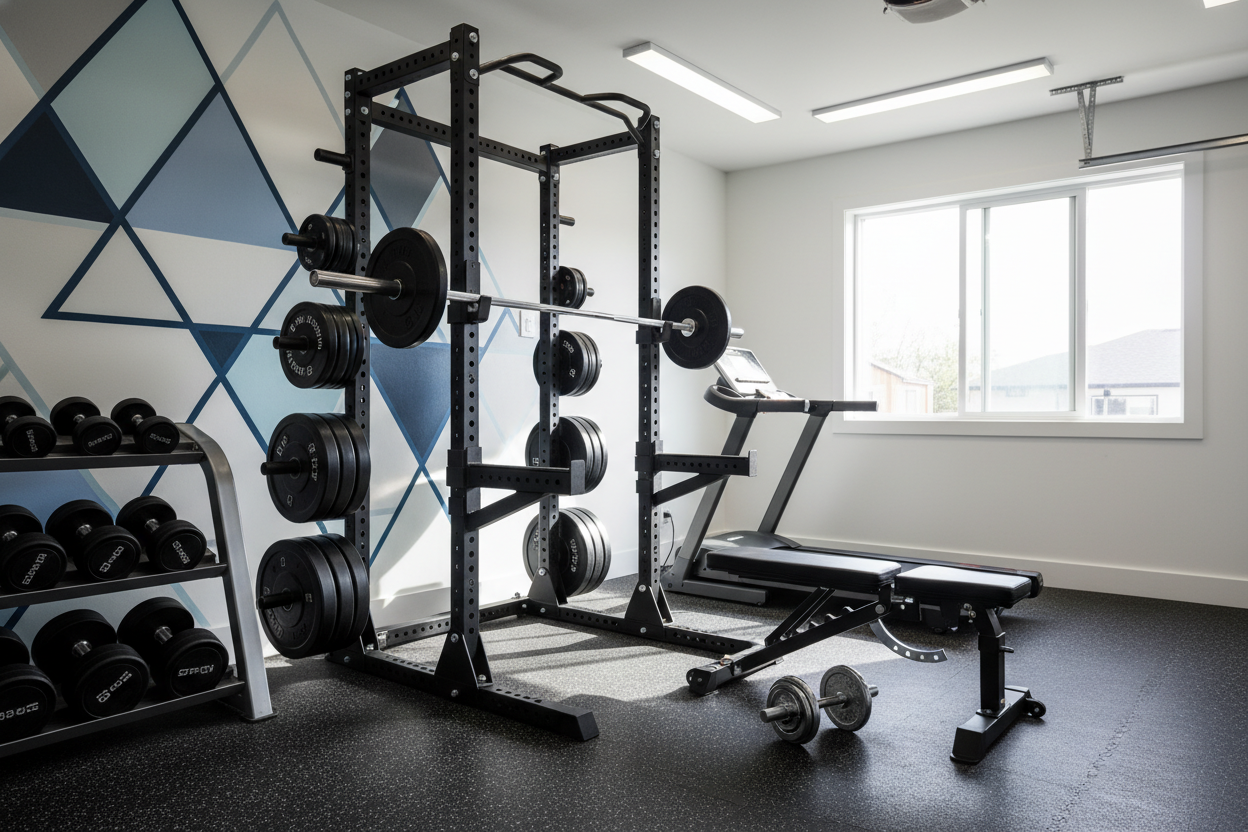
I remember the day I finally quit my local commercial box and built my own setup. I bought a 'package deal' from a big-box store, thinking I had saved a fortune. The first time I loaded three plates for a set of squats, the bar didn't just bend; it groaned. That is when I realized a real gym barbell isn't just a piece of metal—it is a precision-engineered tool that keeps you from getting pinned to the floor.
- Cheap bars use low-tensile steel that leads to permanent bending (perma-flex).
- Commercial-grade bars usually boast 190,000+ PSI tensile strength.
- Bushings are superior for general strength training; bearings are for specialized Oly lifting.
- Machine bars in commercial gyms almost never weigh 45 lbs.
The Trap of the $100 'Olympic' Bar
The term 'Olympic' is the most abused word in the fitness equipment industry. You see it slapped on $99 bars at sporting goods stores, but those bars are usually made of decorative steel. They have a weight capacity of maybe 300 lbs, which sounds like a lot until you realize that dropping 225 lbs from your hips exerts significantly more force than that.
These cheap bars often feature bolt-on sleeves that rattle every time you move. They use a low-grade steel that lacks 'memory,' meaning once it bends under a heavy load, it stays bent. A real bar gym owners trust won't leave you lifting on a permanent 'U' shape after one heavy session of deadlifts.
Why the Bar at the Gym Survives Thousands of Drops
Why does the bar at gym chains feel like it could survive a nuclear blast? It comes down to Tensile Strength, measured in PSI (pounds per square inch). If a bar is rated under 150k PSI, it is essentially a glorified towel rack. Most commercial gyms use bars in the 190k to 210k range. This is why you should upgrade to a true Olympic barbell if you plan on lifting anything heavier than a grocery bag.
Yield strength is the other side of the coin. This is the amount of weight it takes to permanently deform the bar. High-quality steel has high 'whip' and elasticity, allowing it to flex during a clean or a heavy squat and snap back to perfectly straight. That durability is what keeps a bar in gym environments alive despite being dropped by hundreds of people every week.
Bearings vs. Bushings (And What You Actually Need)
You will see 'needle bearings' advertised like they are the gold standard for every lifter. They are great if you are chasing a world-record snatch and need the sleeves to spin at the speed of light. But for the rest of us doing rows, presses, and squats, bronze bushings are the way to go. They are simpler, require less maintenance, and provide a smooth, reliable spin without the 'loose' feeling of cheap bearings.
Stop Guessing: Do Machine Bars Weigh the Same?
People always ask if the bars used in machines weigh the same as a standard free weight bar. Short answer: No. If you are using a Smith machine, you aren't lifting 45 lbs of steel. Most have internal counterbalances that make the bar feel like it weighs 15 lbs or even zero. I have actually tested this, and you can find the real bar weight in Smith machine racks here.
The same applies to specialized bench press stations. If you are using a fixed-path machine, the real Matrix bench press bar weight is often lighter than the standard 20kg. Stop guessing your PRs on machines and realize that machine math doesn't always translate to the platform.
The 3 Specs to Check Before You Buy
Before you pull the trigger on a bar for your home, check three things. First, look for a 190k+ PSI rating. Second, check the finish. Chrome chips and flakes over time; Cerakote or Stainless Steel actually handles sweat and humidity. Third, look for a medium-depth knurl. You want a bar that grips your hands but doesn't cheese-grater your skin off during a high-rep set.
If you want a baseline for your garage, a solid 20kg Olympic barbell is the gold standard for replicating a commercial lifting experience. It provides the right balance of grip, durability, and sleeve rotation for 99% of lifters.
My Honest Mistake
When I started out, I bought a 'black oxide' finished bar because it looked cool and tactical. Within three months of summer humidity in my garage, it looked like I had pulled it out of a shipwreck. I spent more time scrubbing rust with a wire brush and 3-in-1 oil than I did actually lifting. Don't be me. If you live somewhere humid, pay the extra $50 for a better finish like stainless steel or zinc. Your future self will thank you.
FAQ
Is a 20kg bar the same as a 45lb bar?
Technically, no. A 20kg bar is roughly 44.1 lbs. In most gyms, they are treated as the same, but if you are a competitive powerlifter, that 0.9 lb difference matters for your total math.
How often should I oil my barbell?
If you are in a garage, once a month. If you are in a climate-controlled room, once every three months. Just a few drops of 3-in-1 oil in the sleeves and a light coat on the shaft will keep it spinning and rust-free.
Why does my bar make a clicking sound?
Usually, it is a loose snap ring or a dry bushing. It is rarely a structural issue, but it is a sign that you need to add some lubrication to the sleeve mechanism.
Share:
I Swapped Dumbbells for the Lunge on Smith Machine. My Legs Blew Up.
Can the PureSport Workout Bench Survive a Real Garage Gym?