
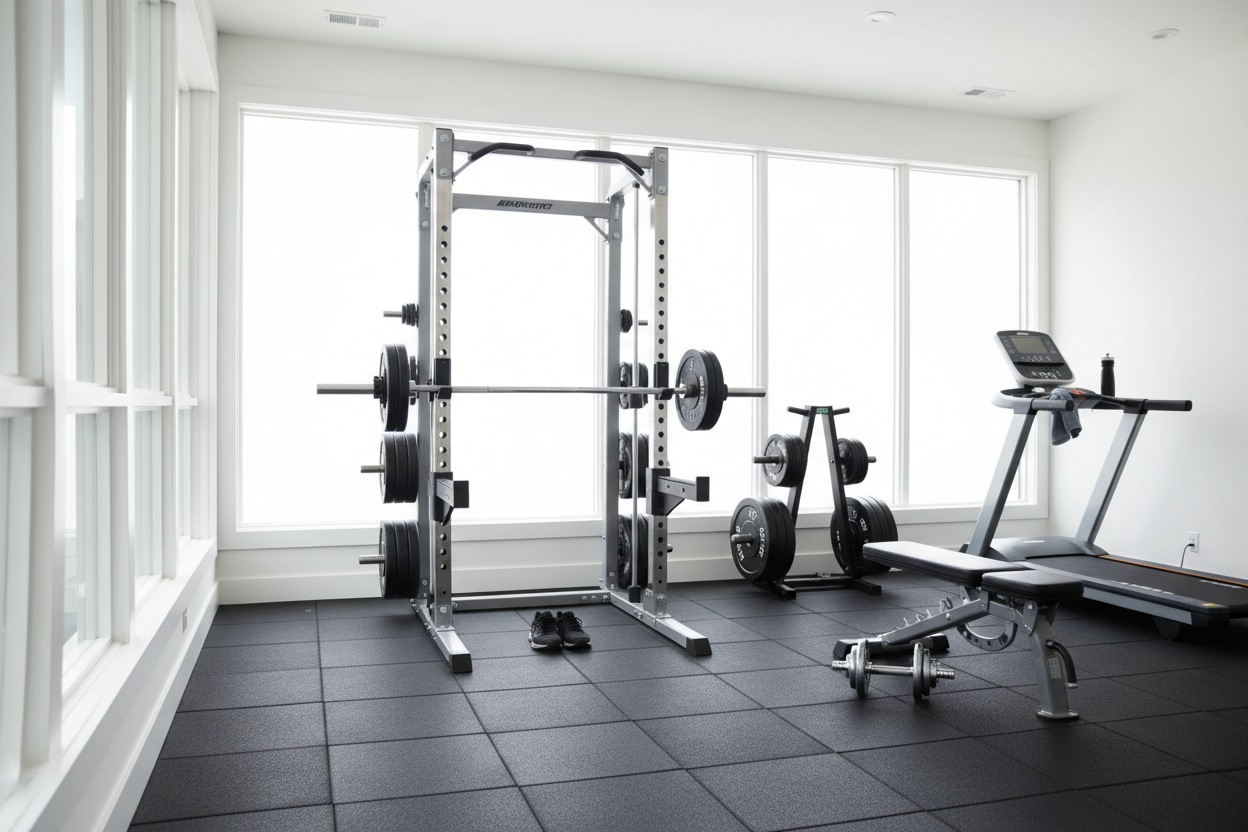
I spent five years as a barbell purist. If it wasn't a 45-lb Ohio Bar on my back, I didn't want to hear about it. Then, a nagging lower back injury and a desire for actual quad hypertrophy forced me to swallow my pride and step into the rails. What I found was that the smith machine squat muscles worked in a way that my traditional squat never could because I was no longer limited by my spinal erectors or my balance.
Quick Takeaways
- Fixed-path squats allow for greater quad isolation by removing the need for mid-foot balance.
- Moving your feet forward mimics a hack squat, placing massive tension on the vastus lateralis and medialis.
- A wide stance shifts the load toward the adductors and glutes, making it a viable posterior chain builder.
- While core engagement is lower, the ability to train to absolute failure safely is significantly higher.
The Fixed-Path Difference: What's Actually Happening to Your Legs?
When you step into a Smith Machine, you're trading freedom for stability. In a free-weight squat, your body is constantly micro-adjusting to keep the center of mass over your mid-foot. This is great for athleticism, but it’s a tax on your nervous system. On the rails, that balance requirement disappears. You can lean against the bar, shift your center of gravity, and drive until your legs literally give out without worrying about tipping over or dumping the bar.
This lack of lateral and anterior-posterior movement means the smith machine squat muscles worked are purely the ones responsible for knee and hip extension. You aren't 'wasting' energy on stabilization. I've found that this allows me to use about 10-15% more weight for higher reps, which is the sweet spot for growth. The fixed path also means your bar path is perfectly vertical (or slightly angled, depending on the machine), which removes the 'good morning' squat error where your hips rise faster than your chest.
For the home gym owner, this is a safety win. If you're training alone in a garage at 6 AM, having those built-in safety catches is the difference between a productive session and a trip to the ER. You can push your quads to the brink of failure because the machine has your back—literally.
The Primary Smith Machine Squat Muscles Worked
The beauty of this movement is that it doesn't just hit 'legs'—it hits specific segments of the leg with surgical precision. If you've been stuck in the 'squatting is only for functional strength' mindset, you need to Stop Hating The Smith Machine Squat Why It Works and look at the tension profiles. The primary movers here are the quadriceps, gluteus maximus, and the adductor magnus.
Because the machine handles the stabilization, you can often achieve a deeper range of motion. Increased depth equals increased stretch under load, which is the primary driver of hypertrophy. I've noticed that my adductors—the inner thigh muscles—get significantly more sore from Smith squats than from barbell squats because I can safely sit deeper into the 'hole' without my form breaking down. The glutes also take a beating, provided you're hitting at least parallel depth. They act as the primary engine to get you out of the bottom of the rep.
It is a mistake to think this is a 'lesser' movement. In my experience, the mechanical tension on the quads is actually higher here because the torso stays more upright. In a barbell squat, many lifters (myself included) tend to lean forward as they fatigue, which shifts the load to the lower back. On the Smith, the quads stay under fire from the first rep to the last.
Quads: The Main Event
The quadriceps are the stars of the show. Specifically, the vastus lateralis (outer sweep) and the vastus medialis (the teardrop) are under constant tension. Because you can keep your torso almost completely vertical, you create a sharper angle at the knee. This increased knee flexion is exactly what triggers quad growth. When I use a standard shoulder-width stance, I feel a level of burning in the 'teardrop' that I simply can't replicate with a free bar without my lower back fatiguing first.
Glutes and Hamstrings: The Supporting Cast
Your glutes are heavily involved in hip extension, especially as you drive upward from the bottom. However, the hamstrings are the 'odd man out' here. In a squat, the hamstrings are actually quite inefficient because they cross both the hip and the knee. As you descend, they stretch at the hip but shorten at the knee, resulting in little change in length. If you're looking for hamstring growth, this isn't the tool—you’re better off with RDLs. But for glute drive? The Smith machine is an underrated powerhouse.
How Foot Placement Manipulates the Muscle Bias
This is where the magic happens. By shifting your feet just three or four inches, the smith machine squats muscles worked profile changes entirely. Unlike a barbell, where your feet must stay under the bar to keep you from falling, the Smith machine allows you to place your feet well in front of the bar. This essentially turns the machine into a multi-purpose leg press or hack squat.
I've experimented with everything from a 'heels-under-bar' stance to a 'two-feet-forward' stance. The further forward your feet go, the more the movement becomes knee-dominant. The further back they go (closer to the bar path), the more hip-dominant it becomes. You can also play with width. A narrow stance will hammer the outer quads, while a wide stance brings the inner thighs into the conversation. This versatility is why I kept my Smith machine even when I upgraded to a full power rack.
Feet Forward: The Hack Squat Effect
If you want to blow up your quads but don't have the space or budget for a Compact 30 Degree Leg Press Hack Squat Combo Machine Lm L5, the feet-forward Smith squat is your best friend. By placing your feet 6-10 inches in front of the bar, you can keep your back perfectly flat against the bar and sink into a deep squat. This mimics the mechanics of a hack squat perfectly.
This stance drastically increases knee flexion while keeping the hips relatively open. The result? Your quads are forced to do 90% of the work. I usually program these at the end of a leg day for sets of 12-15. The pump is honestly disgusting. One tip: make sure your floor has enough grip. If you're on cheap, dusty horse stall mats, your feet might want to slide forward. I always wear high-traction lifting shoes for this specific variation.
Wide Stance: Firing Up the Adductors and Glutes
When I want to target my 'inner quads' and glutes, I go wide—well outside shoulder width—and point my toes out at about 45 degrees. This is the sumo-style Smith squat. Because the machine is stable, you can really sit back into your hips in this wide stance without losing your balance. This puts a massive stretch on the adductors. If you've never done these, start light. The 'inner thigh' soreness the next day is a different kind of animal. This variation is excellent for building that 'thickness' in the upper leg that makes your quads look massive from the front.
The Stabilizer Myth: What Muscles Actually Get a Break?
Let's be real: your core and spinal erectors are doing significantly less work here. In a free-weight squat, your abs and back are screaming to keep that bar from crushing you or folding you forward. On the Smith, they're mostly just hanging out. Some people call this 'cheating,' but I call it 'targeted training.' Why let a weak core limit how much your legs can grow?
That said, you shouldn't rely on the Smith machine for everything. You still need to hit those stabilizers. I always recommend following up your heavy Smith work with something like the Bulgarian Split Squat Muscles Worked Every Muscle This Exercise Targets. This ensures you're still building unilateral stability and core strength while using the Smith machine for the raw, heavy hypertrophy work. It's about using the right tool for the job, not choosing one over the other.
Personal Experience: The Day I Learned Respect
I remember the first time I tried 'feet-forward' Smith squats. I loaded it up with three plates a side, thinking I'd breeze through it because it was 'just a machine.' Halfway through the second set, my quads were cramping so hard I had to use the emergency catches. I couldn't walk down my basement stairs for three days. It taught me that while the machine provides stability, it also provides a unique ability to push yourself into a dark place that free weights don't always allow. My mistake was treating it like a secondary movement rather than the primary mass builder it can be.
FAQ
Is the Smith machine squat bad for your knees?
Not if your form is correct. In fact, for people with limited ankle mobility, the ability to move your feet forward on a Smith machine can actually reduce knee shear compared to a free-weight squat where your heels might lift off the ground.
Can you build as much muscle on a Smith machine?
Absolutely. Hypertrophy is about mechanical tension and metabolic stress. The Smith machine allows you to apply more of both to the quads because you aren't limited by balance or core fatigue.
Should I still do barbell squats?
If you're an athlete or a powerlifter, yes. You need the stabilization and the 'skill' of the squat. But if your goal is 100% aesthetic or pure leg size, the Smith machine is often a superior tool for many lifters.
Share:
I Built 5 Homemade Gym Machines (And 3 Almost Killed Me)
I Ditched My Membership to Build a Real Gym at Home