
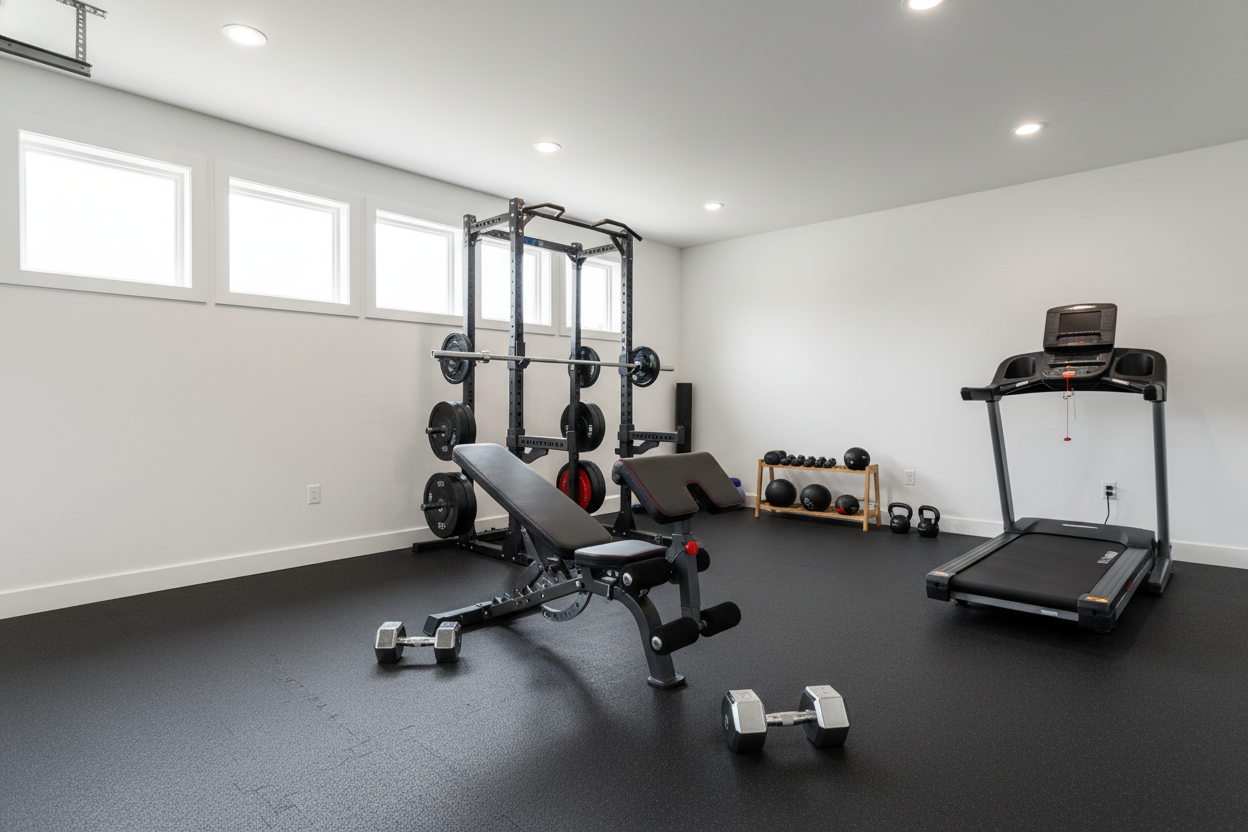
I remember the first time I bought a budget bench from a big-box store. I was midway through a set of dumbbell presses when the back pad shifted three inches to the left. That heart-stopping moment of instability is exactly why I am obsessive about hardware specs now. If you are building a home gym, a multi purpose exercise bench is likely your centerpiece, but most of what you see online is glorified lawn furniture.
Quick Takeaways
- Look for 11-gauge steel frames; anything thinner is for light cardio, not heavy lifting.
- Prioritize ladder-style adjustments over pop-pins for faster, more secure transitions.
- A tripod front foot design offers better leg drive positioning than a wide T-bar.
- If you train solo, consider lever-arm attachments for safety without a spotter.
The Swiss Army Knife Trap Most Home Gym Owners Fall Into
We have all seen those listings. A bench that claims to be a preacher curl station, a leg extension machine, and a rowing deck all in one. It sounds like a space-saving dream. In reality, these 'do-it-all' setups often compromise on the one thing that matters: the frame integrity.
When you are trying to hit a multi purpose bench press PR, you do not want to feel the hinges groaning. Most multi-function benches use thin 14-gauge steel and plastic bushings that wear out in six months. I would rather have one rock-solid flat bench than a shaky contraption that offers ten mediocre exercises. Complexity is often a mask for poor engineering.
What Actually Makes a Versatile Bench Worth Buying?
If the bench does not weigh at least 60 to 80 pounds, it probably is not stable enough for serious lifting. I look for 2-inch by 3-inch or 3-inch by 3-inch steel tubing. This provides the mass needed to keep the unit glued to the floor when you are moving heavy iron.
A sturdy adjustable weight bench should have a weight capacity of at least 600 pounds. Don't just look at the total number; look at the footprint. A wider rear base prevents the bench from tipping during lateral movements like seated rows or one-arm rows. If the frame flexes when you sit on it, send it back.
The Pad Gap and Hinge Hardware Dilemma
The 'pad gap' is the space between the seat and the backrest when the bench is flat. If it is wider than two inches, it is going to dig into your lower back during a press. Some high-end benches use a sliding seat mechanism to close this gap, which is a massive quality-of-life upgrade for your spine.
Then there is the adjustment style. Pop-pins are common, but they are slow and can fail if the threading isn't perfect. I prefer a ladder-catch system. It is faster to adjust between sets and, mechanically speaking, it is much harder for a steel ladder to fail under load compared to a single spring-loaded pin. It is the difference between 'clicking' into place and 'locking' into place.
When Built-In Pressing Arms Actually Make Sense
For those of us training in a garage without a partner, the fear of getting pinned under a bar is real. This is where the evolution of the multi-purpose bench gets interesting. Lever arms allow you to mimic the feel of a barbell while providing a fixed path and a built-in safety stop.
Investing in a bench with independent pressing arms can be a smart move if you want to push to failure safely. These arms allow for unilateral work, helping you fix muscle imbalances that a standard barbell often hides. It is the closest you will get to a commercial chest press machine in a compact footprint.
Can a Single Station Really Replace a Power Rack?
I get asked this constantly. A multi function bench press set that includes uprights can handle your benching and maybe some light overhead presses. But it is not a full replacement for a cage if you are planning on heavy back squats. Safety arms on most bench-link combos aren't rated for a 400-pound drop from shoulder height.
However, if you are working with limited square footage—say a 10x10 spare bedroom—a high-quality combo unit is better than a cheap rack and a cheap bench. Just be honest about your goals. If you aren't trying to compete in powerlifting, the versatility of a combo station usually outweighs the sheer bulk of a four-post rack. It keeps the floor clear for deadlifts or metabolic work.
A Real-World Look at Popular Budget Options
I have tested plenty of the budget options found on major marketplaces. Some are surprisingly decent for the price, but you have to know where the manufacturers cut corners. Usually, it is the vinyl. Cheap padding bottoms out after three months, leaving you pressing against a hard plywood board.
In my previous teardown of the Body Flex Body Power adjustable bench, I noted that while the price was right, the wobble at full incline was a dealbreaker for heavy shoulder work. Don't sacrifice your joints to save fifty bucks. If you can't trust the bench with 50-lb dumbbells, you definitely can't trust it with 100s.
Final Verdict: Build Your Foundation First
Stop looking at the attachments and start looking at the welds. A bench is a tool for stability. If it fails that primary job, the leg developer and preacher curl attachment are worthless. Buy the heaviest frame you can afford, ensure the vinyl has a bit of 'grip' so you don't slide around, and make sure the adjustment points feel like they were built in a machine shop, not a toy factory.
FAQ
Is a 1000-lb capacity bench overkill?
No. That rating usually accounts for dynamic load—the force of you and the weight moving together. A 1000-lb static rating often translates to a very stable 300-lb working load.
What is the ideal bench height?
IPF standards are around 17 to 17.5 inches. Much higher and your feet won't reach the floor for proper leg drive; much lower and it feels like you are sitting on the ground.
Do I need a decline setting?
Unless you are a dedicated bodybuilder or doing specific core work, most people can get 95% of their results from flat and incline positions alone. Don't pay extra for decline if you will not use it.
Share:
Are Your Favorite Brands for Gym Equipment Actually Making Their Gear?
I Put 300 Lbs on a 3-Piece Barbell to See When It Would Snap