
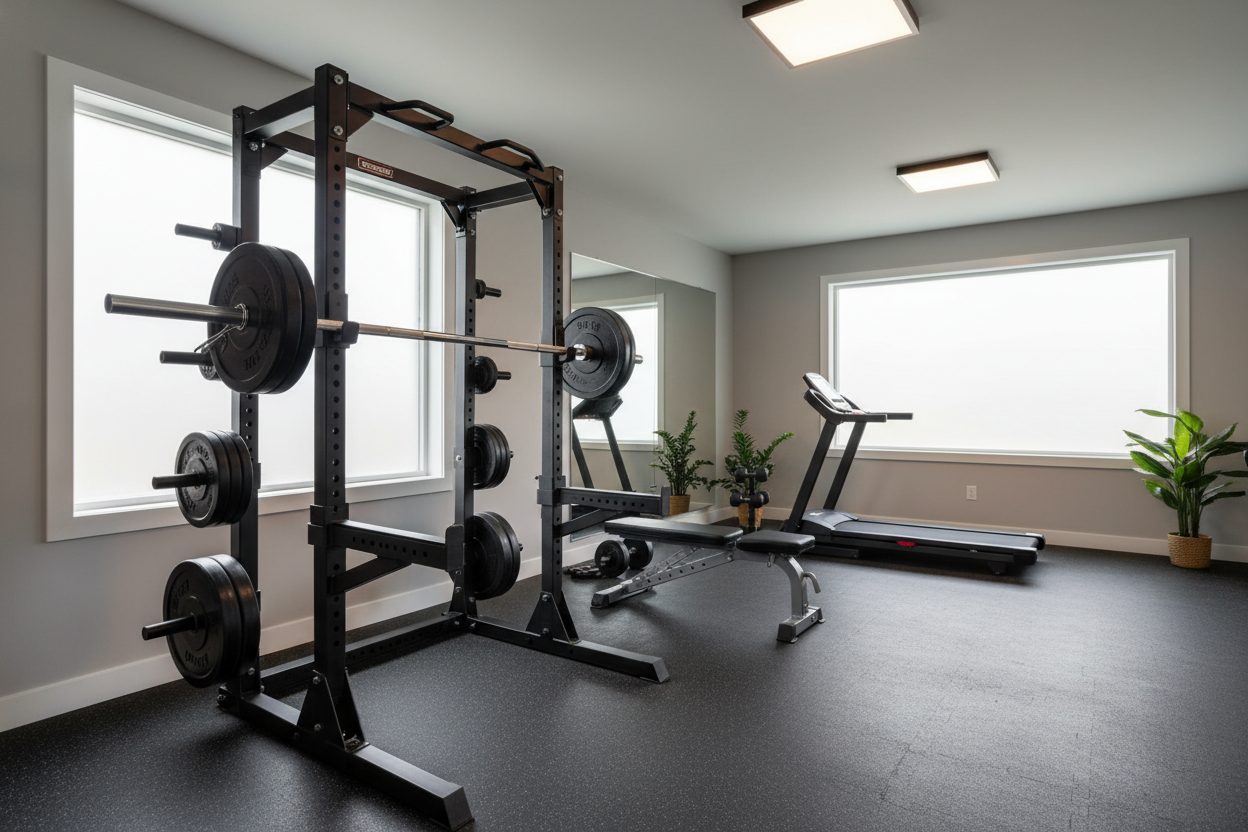
I remember scrolling through Amazon at 1 AM, trying to build a garage gym on a shoestring budget. Shipping costs for a standard 7-foot bar are a nightmare—sometimes the freight cost is as high as the bar itself. That is when I saw the 3-piece barbell, promising the same utility for half the shipping price. It looked like a steal, but my gut told me those joints were a disaster waiting to happen.
Quick Takeaways
- Best for light technique work or high-rep pump sessions under 150 lbs.
- The central joints are a major failure point for heavy squats or deadlifts.
- Shipping is cheaper because it fits in a standard box, but long-term durability is low.
- Threaded connections tend to loosen mid-set, which is a massive safety distraction.
The Irresistible Trap of Free Shipping
Let's be real: shipping a solid piece of 7-foot steel is a logistical headache. Carriers slap on 'oversized' surcharges that make a budget bar feel like a luxury purchase. This is exactly why the 3-piece olympic bar exists. By breaking the shaft into three segments, manufacturers can ship it in a box that fits on a standard porch without a freight truck.
For a garage gym builder watching every penny, it feels like beating the system. You get a bar that fits your 2-inch plates, looks the part, and leaves enough cash in your pocket for a few extra cast iron plates. But as the old saying goes, you get what you pay for. A 3-piece olympic bar is a compromise of physics, not a miracle of engineering.
What Actually Happens When You Load Heavy Plates
I decided to stop guessing and actually load some weight. I started with 135 lbs—a standard one-plate-per-side setup. On a solid bar, this is nothing. On a 3-piece olympic barbell, you start to feel a subtle, unsettling 'clack' in the center. As I moved toward 225 lbs, the flex wasn't the smooth whip of a high-end weightlifting bar; it was a jagged, uneven sag.
The shear force on those internal threads is immense. You have to Stop Treating a Smith Barbell Like a Regular Olympic Bar, but at least a Smith bar has a fixed path. With a multi-piece bar, the weight is dynamic and the bar is trying to pull itself apart at the seams while you are balancing it. By the time I hit 300 lbs, the center joint looked like it was bowing. It didn't snap, but the rattle was enough to make me cut the set short.
The Weakest Link is Right Under Your Neck
The design of the cap 3 piece barbell and similar models usually relies on a threaded sleeve or a pin system. Think about where that joint sits during a back squat. It is right on your traps. If those threads start to strip or the pin shears under a heavy load, you aren't just dropping the weight—you are having a mechanical failure directly over your spine.
Most of these bars are rated for 300 to 500 lbs on paper, but those ratings are static. The moment you drop into the hole on a squat and create dynamic force, those ratings become suggestions. I have seen the threads on a budget 3-piece olympic barbell start to flatten after just a few months of moderate use. Once those threads lose their bite, the bar is essentially a giant paperweight.
Is There Any Good Reason to Buy One?
I am not saying these belong in the scrap heap immediately. If you are strictly doing high-rep curls, tricep extensions, or light overhead presses, a 3-piece barbell is fine. It is also a decent solution if you live in a tiny apartment where a 7-foot bar literally won't clear the walls or fit in the elevator. For beginners who are just learning the movements with 65 or 95 lbs, the risk is minimal.
It is a 'bridge' piece of equipment—something to get you started while you save up for the real deal. Just don't go into it thinking you've found a loophole for heavy powerlifting. The knurling on most of these bars is also notoriously passive, feeling more like a smooth pipe than a professional tool. If your hands are sweaty, you’re going to struggle to keep a grip on anything over 135 lbs.
When to Cut Your Losses and Upgrade Your Steel
The moment you can squat two plates for reps, you have outgrown this bar. It is a safety issue, plain and simple. You need the structural integrity of a solid Olympic barbell to handle the vibration and impact of modern training. If you are pulling deadlifts or doing any kind of power cleans, the 'whip' of a solid bar helps you; the 'jiggle' of a 3-piece bar hurts you.
I usually tell people to skip the middleman and grab a solid 20Kg Olympic Barbell. It is a one-time investment that won't leave you wondering if your equipment is going to fail mid-set. When you're under a heavy load, the last thing you want to worry about is whether a $50 bolt is about to give way.
Personal Experience: The Duct Tape Incident
I bought a cheap multi-piece bar back in 2018 when I was broke and living in a third-floor walk-up. I thought I was a genius for saving $60 on shipping. Three months in, the threads on the left side started to cross-thread from the vibration of being dropped on stall mats. I ended up having to duct tape the joint just to finish my workout. It was embarrassing and dangerous. I sold it for $20 and bought a real bar two weeks later. Don't be like 2018 me.
FAQ
How much weight can a 3-piece barbell really hold?
Most are rated for 300-500 lbs, but realistically, I wouldn't go over 200 lbs for dynamic movements. The joints simply aren't built for heavy impact.
Does a 3-piece bar feel different?
Yes, it feels 'dead' and often rattles because the tolerances at the joints aren't perfect. You won't get the clean rotation or whip of a one-piece bar.
Can I use it for CrossFit?
Absolutely not. The high-repetition dropping and high-velocity movements will vibrate those joints loose in a single session. Stick to slow, controlled movements if you must use one.
Share:
How to Pick a Multi Purpose Exercise Bench That Doesn't Suck
The Hidden Flaws in Every Leg Press Multi Gym (And How to Avoid Them)