
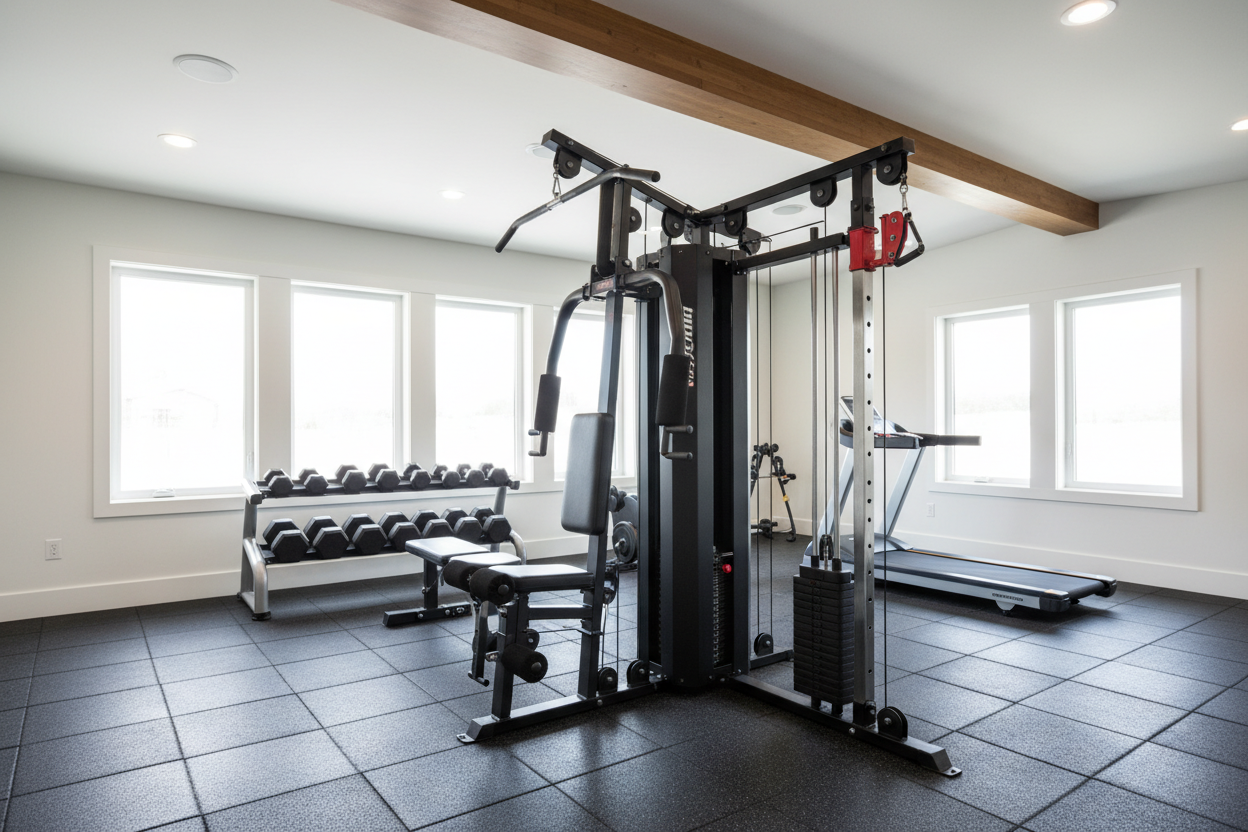
I spent three hours last night scrolling through listings for a universal weight machine for sale, and honestly, most of what I saw belonged in a scrapyard. It is the same story every time: someone buys a massive multi-gym with dreams of getting shredded, it becomes a laundry rack for three years, and then they try to sell it for 80% of retail. I have been there, bought the rusted iron, and regretted the floor space it ate up.
If you are hunting for a rig that actually works, you have to look past the shiny stock photos. Most of these machines are built for people who want to look like they work out, not for people who actually move heavy weight. I am going to show you how to filter the garbage from the gold so you do not end up with a 400-pound paperweight.
- Check the Pulleys: If they are plastic and feel 'gritty' during a test pull, walk away.
- Weight Stacks: Look for 200 lbs minimum per stack; 150 lbs is for rehab, not building real strength.
- Steel Gauge: 11-gauge is the gold standard; 14-gauge is for department store toys.
- Footprint: Measure your room twice, because these rigs are always more intrusive than they look.
The Illusion of the All-In-One Gym
The term 'universal' is a marketing trap. It implies one machine can replace a whole commercial gym, but usually, it just means it does ten things poorly. When you start your search, you will see everything from $400 plastic-shrouded junk to $5,000 commercial rigs. The middle ground is a minefield of bad welds and cables that feel like they are dragging through sand.
Before you care about the cable ratio, ask yourself: Is A Universal Gym Weight Machine Actually Worth The Space in your garage? These units are notoriously difficult to move once they are bolted together. If you have a tight 10x10 spare room, a full multi-station rig might leave you with zero room to actually breathe, let alone stretch between sets.
The 'Over-Engineered' Trap: Features You Will Never Use
If a machine boasts 'over 50 exercises,' it is probably lying. Usually, that number includes things like 'standing bicep curl' and 'slightly different standing bicep curl.' The first things to fail on cheap rigs are the complex attachments. Look at the leg extension: does it have thick foam rollers, or does it look like two pool noodles on a stick? If the pivot point does not align with your knee, it is going to feel miserable.
Pec decks are another red flag. On budget machines, the range of motion is usually fixed and awkward. If you cannot adjust the starting position to accommodate your wingspan, you are just begging for a shoulder injury. I would rather have a machine that does five things perfectly than one that does fifty things like a torture device.
Cables and Pulleys: The Dead Giveaways of a Cheap Rig
The 'feel' of a machine comes down to the friction in the cable system. Cheap machines use plastic pulleys with bushings that wear out in six months. You want sealed ball bearings and, ideally, aluminum or high-grade nylon pulleys. If the cable has a cheap, thin plastic coating, it is going to fray and stick. I know this because I Tracked The Cost Of Weight Machine Gear For A Year and realized that replacing frayed cables on a budget rig costs more than just buying a better machine upfront.
Test the tension. If you pull the handle and it does not immediately retract smoothly, the friction is too high. That friction isn't 'extra resistance'—it is mechanical failure waiting to happen. You want a 1:1 or 2:1 ratio that feels consistent from the first inch of the pull to the final lockout.
When to Walk Away From a Used Listing
Buying used is smart, but only if you know what to look for in the photos. If you see rust on the guide rods—the two vertical poles the weights slide on—walk away. Rust means the previous owner kept it in a damp garage and never lubed it. You cannot just sand it off and expect a smooth glide; the chrome plating is likely pitted, and it will eat your bushings alive.
Check for missing selector pins. If the owner is using a screwdriver or a bolt instead of the actual magnetic pin, it tells you they did not care about the equipment. Also, check the upholstery. Tearing at the seams isn't just cosmetic; it means the foam is breaking down. Re-upholstering a multi-gym is a specialized job that most DIYers fail at, leaving you with a sticky, uncomfortable mess.
What Actually Makes a Multi-Gym Worth the Cash
The 'green flags' are heavy-gauge steel and independent movement. If the arms move together on a press, you are going to develop muscle imbalances. If you are looking for a serious chest builder, something like the Weight Bench Chest Press Machine Independent Arms Z1 Pro is often a better bet than a generic all-in-one because it focuses on a natural path of motion and independent limb work.
Look for weight stacks that use real iron plates, not plastic-coated sand. Real iron doesn't crack, and it doesn't take up as much vertical space, allowing for a more compact machine. Adjustable seat heights and backrest angles are non-negotiable if you want to target different muscle groups effectively without straining your lower back.
The Free Weight Alternative: Building Around a Bench
Sometimes the best universal machine isn't a machine at all. If you are tight on space, a high-quality Weight Bench paired with a set of dumbbells can hit 90% of what a multi-gym offers. You get more functional carryover, better core engagement, and you do not have to worry about a cable snapping mid-set. Plus, you can actually move a bench out of the way when you need the floor space.
A bench is the foundation of any real home gym. It is easier to sell, easier to move, and it does not require a degree in mechanical engineering to assemble. If you aren't 100% sold on the 'all-in-one' lifestyle, start with a solid bench and build out from there. Your floor space—and your sanity—will thank you.
Personal Experience: The $200 Nightmare
Early in my lifting days, I found an old 'Body Solid' clone on Craigslist for $200. I thought I had won the lottery. It took me six hours to disassemble it in a stranger's basement and another eight to put it back together in mine. The cables were slightly stretched, so there was about four inches of 'dead air' at the start of every rep. I spent more time tightening bolts than I did actually lifting. I eventually sold it for $50 just to get it out of my sight. Lesson learned: cheap machines are just expensive scrap metal.
FAQ
Is a 150-lb weight stack enough?
For isolation moves like tricep extensions, yes. For chest presses or lat pulldowns, most active lifters will outgrow a 150-lb stack within a few months. Look for 200 lbs or a machine that allows for plate loading to ensure you don't hit a ceiling too early.
Can I use WD-40 on the guide rods?
No. WD-40 is a degreaser, not a long-term lubricant. It will attract dust and turn into a sticky paste that ruins the glide. Use a 100% silicone spray or a specialized PTFE lubricant to keep the weights sliding smoothly.
How much ceiling height do I need?
Most universal machines are between 80 and 84 inches tall. However, you need extra clearance for the top pulley and for your head during pull-ups. Measure for at least 7.5 feet of clearance to avoid hitting the ceiling during explosive movements.
Share:
I Finally Learned Which of the Gym Machines Are Worth Using
Does the Body-Solid Series 7 Smith Machine Belong in a Garage Gym?