
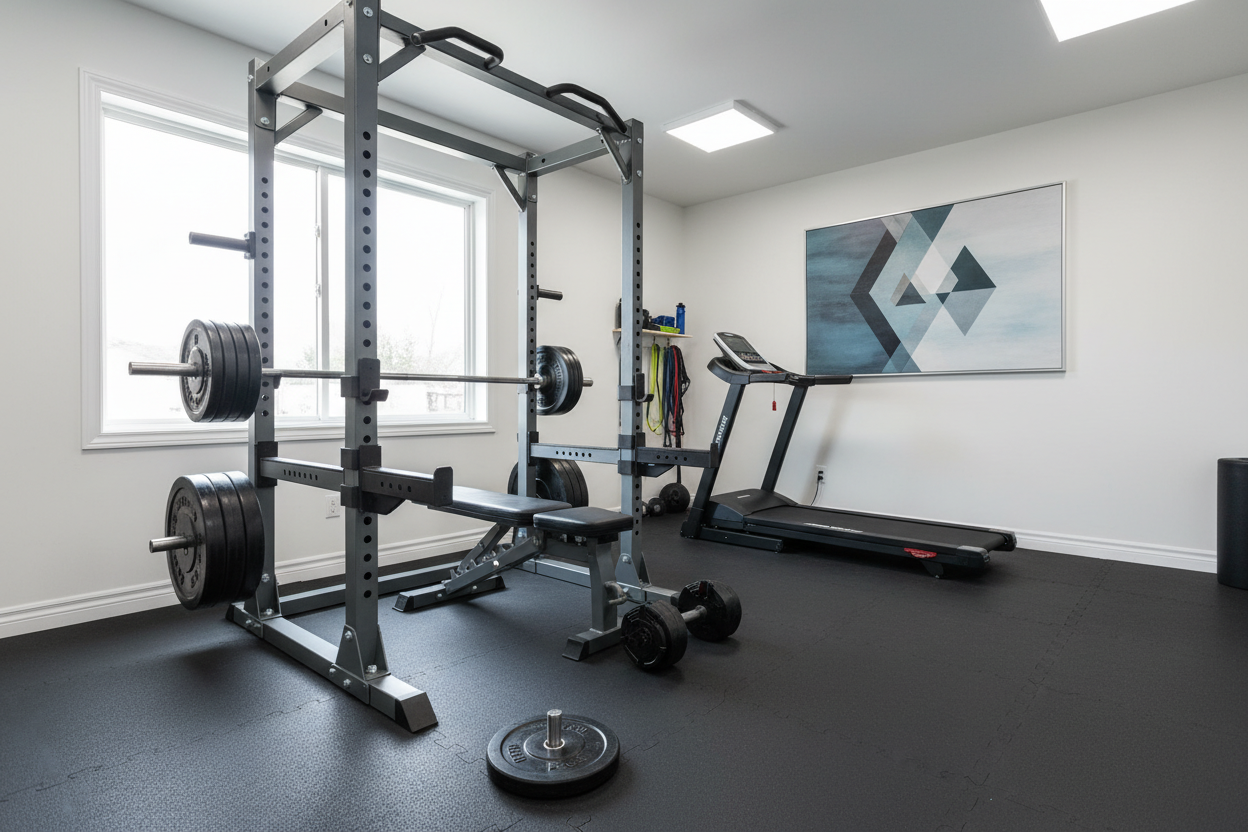
I remember my first 'score'—a rusty 45-lb barbell I bought for twenty bucks in a gas station parking lot at 10 PM. I thought I was a genius until I got it home, tried to clean it, and realized the sleeves were seized solid and the shaft was bent like a banana. Buying 2nd hand home gym equipment is an art form that requires a cynical eye, a wire brush, and the willingness to walk away from a deal that looks good only in blurry low-light photos. If you are hunting for home gym used equipment, you are essentially a treasure hunter in a field full of landmines.
Quick Takeaways
- Surface rust is cosmetic; deep pitting is a structural safety hazard.
- Always roll a barbell on a flat floor or spin the sleeves to check for bends and seized bearings.
- Used cardio machines with screens are high-risk; if the electronics fail, the machine is a paperweight.
- Never pay more than 60% of current retail for used gear that lacks a transferable warranty.
The Wild West of Local Fitness Marketplaces
Scrolling through Facebook Marketplace or Craigslist for home used gym equipment for sale feels like a full-time job. You see it all: the 'vintage' 1980s plastic-coated weights that smell like a basement, the overpriced Peloton that someone used twice, and the occasional 'unicorn' deal where a high-end rack is being given away because someone is moving. The reality is that most people overvalue their gear. They remember what they paid at the height of the pandemic and expect you to cover their loss. You have to be the one to bring them back to earth.
When you are looking to outfit a Home Gym, you have to balance the savings of used gear against the headache of restoration. I have spent hours scrubbing dead skin and rust off iron plates just to save fifty bucks. Sometimes it is worth it; sometimes you realize your time has a dollar value too. The marketplace is a grind, and if a deal looks too good to be true, it is usually because the seller is hiding a cracked weld or a stripped bolt under a fresh coat of spray paint. Be patient, be skeptical, and always bring a truck.
Iron and Steel: Surface Rust vs. Structural Death
When you are inspecting used home fitness equipment for sale, you need to know the difference between 'patina' and 'trash.' Surface rust is orange or reddish and sits on top of the metal. You can usually take it off with some WD-40 and a brass wire brush. It is a great negotiation tool because it looks terrible but does not hurt the integrity of the steel. However, if you see 'pitting'—actual craters or flakes of metal falling off—that piece of equipment is compromised. Do not buy a barbell with deep pitting in the center where you grip; it is a snap risk under heavy load.
For barbells specifically, check the knurling. If it is smoothed over from years of abuse, your grip will suffer. More importantly, check the straightness. I have seen guys try to sell bent bars by claiming they are 'specialty cambered bars.' They aren't. They are just ruined. Put the bar on a flat section of the garage floor and roll it. If it hops or shows a gap between the floor and the shaft that changes as it rolls, leave it there. For plates, iron is iron. As long as they aren't cracked, they are fine. Just weigh them if you can—cheap 45-lb plates can vary by as much as 3 or 4 pounds, which will mess up your training percentages.
Why Moving Parts Mean More Risk
Buying used exercise equipment for home becomes significantly more dangerous when things start to move. A squat rack is just a cage of steel; a treadmill is a complex system of motors, belts, and sensors. Most residential cardio equipment is built with a lifespan of maybe 5 to 7 years of regular use. If you are buying a 10-year-old elliptical, you are buying a liability. If the motor goes or the console fries, you will find that replacement parts are either discontinued or cost more than the machine is worth.
If the local market is flooded with overpriced, broken-down cardio, I usually tell people to stop looking at the junk and just buy something reliable and new. For example, a Foldable Upright Exercise Bike With 16 Level Magnetic Resistance Xb01 gives you a warranty and a footprint that actually fits in a modern house, unlike that 300-lb commercial beast from 2004 someone is trying to sell you for $500. Unless it is a Concept2 rower—which is the only cardio machine that holds its value and is easy to repair—be extremely wary of anything with a plug.
Inspecting Cables, Pulleys, and Bearings
When you go to buy used fitness equipment that involves cables, you need to run your hands along the entire length of the wire. You are feeling for 'kinks' or fraying in the plastic coating. If the steel core is exposed, that cable is a ticking time bomb. Check the pulleys too. If they are plastic, look for cracks. If they are metal, make sure they spin freely without a grinding sound. A grinding sound means the bearings are shot.
This is especially true for guided machines. I once looked at a used rack where the seller wanted top dollar, but the vertical tracking was so notched it felt like moving a bar through sand. Replacing worn linear bearings on a cheap used rack can sometimes cost more than just buying a brand new Smith Machine Home Gym Station that comes with smooth, factory-fresh movement and a guarantee. Don't pay for someone else's lack of maintenance.
The Art of the Lowball: How to Negotiate Fairly
Negotiation is part of the game when looking at used home exercise equipment for sale. My rule of thumb is the 50/60 rule. If the equipment is in 'like new' condition, 60% of the current retail price (including shipping) is a fair offer. If it has rust or needs work, 40% to 50% is the ceiling. Remember, the seller is not providing a warranty, they aren't shipping it to your door, and they aren't helping you carry it down their basement stairs. You are taking all the risk.
Always have a 'sold' price history ready on your phone. If a seller wants $800 for a power rack that is currently on sale for $900 with free shipping and a lifetime warranty, show them the listing. Explain that for $100 more, you get peace of mind and a brand-new product. Most reasonable sellers will drop their price when confronted with the reality of the current market. If they don't? Walk away. There is always another person moving across the country next week who just wants their garage cleared out.
When You Should Just Buy New Instead
There is a point where the 'hunt' for a used home gym equipment sale stops being fun and starts being a waste of time. If you have been refreshing apps for three months trying to save $100 on a squat rack, you have already lost. You could have been training that whole time. I love a good flip, but for the 'big' items—the rack and the primary barbell—buying new is almost always the smarter move. You get the peace of mind that the 11-gauge steel hasn't been stored in a damp shed for three years.
If you find yourself hoarding random pieces of mismatched gear, stop and reset. Check out The Bare Minimum Equipment for a Home Gym (That Doesn't Suck) to get an idea of what a streamlined, effective setup looks like. Sometimes, three high-quality new items are worth more to your progress than a garage full of rusted, 2nd hand junk that you're constantly trying to fix. Invest in the stuff that keeps you safe, and save the marketplace hunting for the 'nice-to-have' accessories like kettlebells or extra plates.
Personal Experience: The 'Mint' GHD Disaster
I once drove two hours one way for what was described as a 'mint condition' Glute Ham Developer. The photos were taken from ten feet away. When I arrived, the padding was cracked and smelled like a wet dog, and the frame had a visible wobble because a bolt had been cross-threaded so badly it couldn't be tightened. I felt pressured to buy it because of the drive. I bought it, spent $80 on new upholstery, and still hated using it because of that wobble. I ended up selling it for a loss. The lesson? If it's not right when you see it in person, the drive home is the only thing you should be worried about—not the gear.
FAQ
How do I get rust off used weights?
Soak them in a 50/50 mix of white vinegar and water for 24 hours, then hit them with a stiff wire brush. Dry them immediately and apply a thin coat of 3-in-1 oil or spray paint to prevent the rust from coming right back.
Is it safe to buy a used power rack?
Yes, as long as the welds are clean and there are no visible cracks or bends in the uprights. Avoid racks that have been modified (drilled into) by the previous owner, as that compromises the weight capacity.
What is the best way to transport used gym gear?
Bring a truck, moving blankets, and heavy-duty ratchet straps. Do not trust bungee cords to hold 300 lbs of iron. If you're picking up a rack, bring a socket set to break it down—never assume the seller has tools ready for you.
Share:
Why Most Gym Machines for Home Feel Awful (And How to Fix It)
Forget the Hype: Must Have Equipment for Home Gym Setups