
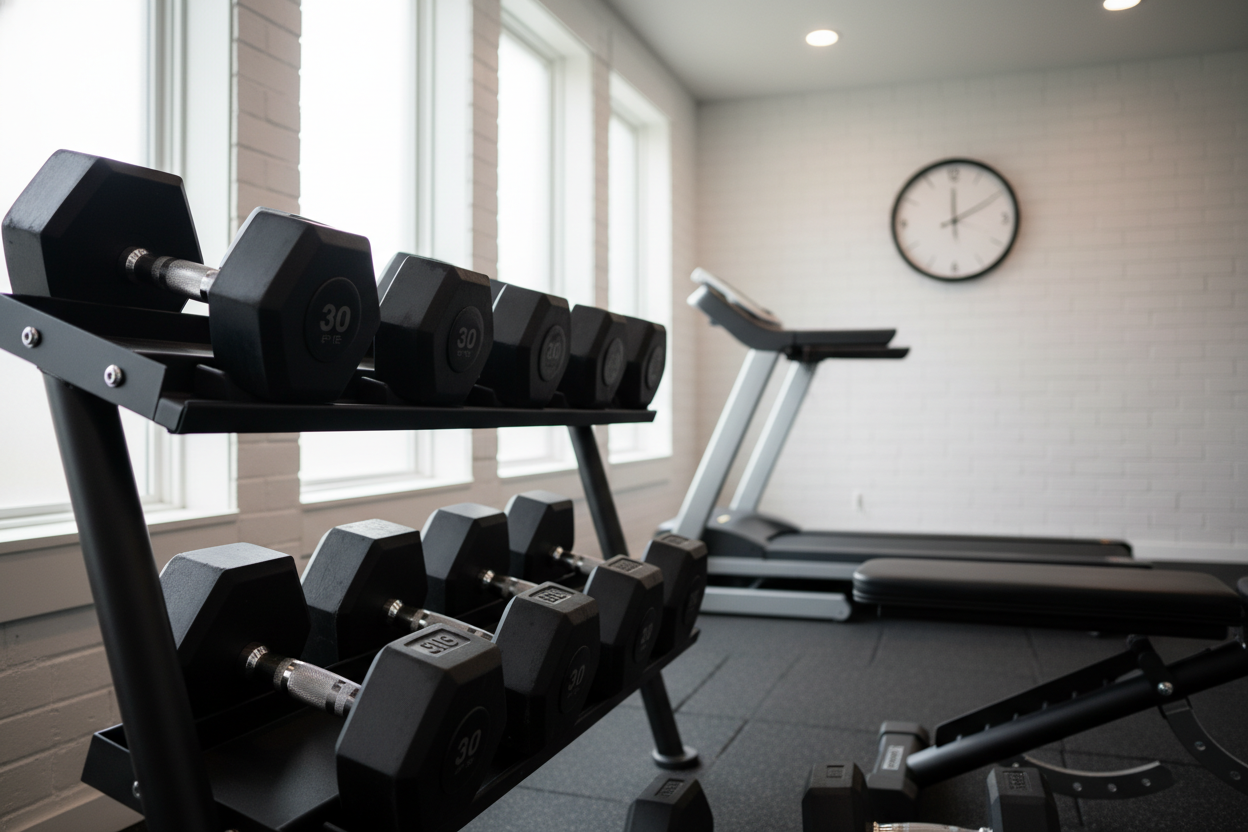
I was at Target for coffee pods and paper towels when I saw them. Nestled between the yoga mats and the 'live laugh love' wall art were the 30 pound dumbbells target stocks for the impulse buyer. I have a garage full of calibrated plates and competition-grade steel, but curiosity got the better of me. I wanted to see if a dumbbell bought in the same building as frozen pizza could actually survive a real workout.
- Weight Accuracy: Surprisingly decent, within 0.5 lbs of the stated weight.
- Grip: Passive, slippery chrome knurling that fails once you sweat.
- Durability: Not rated for drops; heads began to rattle after three shoulder-height impacts.
- Smell: Intense chemical off-gassing that requires a week of outdoor airing.
The Temptation of the Big Box Fitness Aisle
Buying weights while you shop for household goods is the ultimate convenience play. Most big-box stores stop being useful at the 20-lb mark, usually offering those neoprene-coated things that look like dog toys. But the 30-lb mark is the threshold. It is where you finally move past high-rep toning and into actual strength work. I have written before about why I reach for a 30 lbs dumbbell more than almost any other increment in my rack. It is the sweet spot for high-volume goblet squats, single-arm rows, and punishing overhead presses.
When you see that 30-lb hex head sitting on a shelf for a few bucks less than the specialty gym brands, it is easy to justify. You think, 'It is just heavy metal, how different can it be?' But department store fitness gear is built for a specific person: the casual user who keeps their equipment in a carpeted spare bedroom. If you are a garage gym owner who trains with intensity, that convenience comes with a hidden tax on your sanity and your safety.
First Impressions: Grip, Smell, and Handle Ergonomics
The first thing you notice when you unwrap these target dumbbells 30 lbs isn't the weight—it is the smell. These things reek of low-grade recycled rubber and industrial adhesive. It is that oily, chemical scent that makes you want to leave the garage door open for three days. If you plan on keeping these in a small home office, be prepared for your workspace to smell like a tire fire for at least a week.
Then there is the handle. Most professional dumbbells use a 28mm to 32mm handle with aggressive knurling designed to bite into your palm. The Target version uses a generic, overly thick chrome handle. The knurling is incredibly passive, feeling more like a decorative pattern than a functional grip. It feels like a cheese grater that has been sanded down until it is smooth. The moment my palms got even slightly damp during a set of snatches, the dumbbell started to rotate in my hand. It is a recipe for a slipped grip and a broken floor.
The ergonomics also feel 'off' compared to standard gym equipment. The distance between the hex heads is slightly narrower than what you would find on a commercial dumbbell, which can feel cramped if you have larger hands. It is clear these were designed for aesthetics first and biomechanics second.
The Concrete Drop Test (Where Things Went Wrong)
I took these home and treated them like my Rogue or REP gear. I did a set of overhead presses to failure and let them drop from about shoulder height onto a 3/4-inch stall mat over concrete. This is standard operating procedure in any serious garage gym. Unlike purpose-built gym dumbbells that use a friction-welded or solid-cast design, these budget heads are often just pressed onto a tapered handle with a bit of industrial glue.
On the third drop, I heard a sickening 'thud' that wasn't just rubber hitting the mat. It was the sound of the internal bond failing. The head didn't fly off immediately, but it developed a noticeable rattle. Once a dumbbell rattles, it is a ticking time bomb. Every time you move it, that internal shift throws off your balance. More importantly, it means the structural integrity is compromised. If that head shears off during a bench press, you are looking at a trip to the ER.
I also noticed the rubber coating on the hex heads started to scuff and peel immediately. It isn't the high-density virgin rubber you find on premium gear; it is a softer, cheaper compound that tears easily. If you are doing 'man-makers' or any floor-based work, expect these to leave black streaks on your floor and lose chunks of rubber within the first month.
Are Target Dumbbells 30 Lbs Actually Worth the Convenience?
If you are doing slow, controlled bicep curls in your living room while watching TV, these weights are fine. They are heavy, they are relatively cheap, and they will get the job done for casual resistance training. But if you are building a real home gym where you intend to sweat, drop weights, and push your limits, skip the grocery store aisle. You are better off investing in a durable rubber hex dumbbell set that can actually survive a drop.
The ten dollars you save today isn't worth a broken toe or a ruined floor when a head snaps off during a set of snatches. Real training requires real tools. Don't let the convenience of a Target run trick you into buying equipment that can't handle the heat of a real garage workout.
Do they smell forever?
No, but it takes about two weeks of 'airing out' in a ventilated area before the chemical scent dissipates enough to bring them indoors.
Is the weight actually accurate?
Surprisingly, yes. Mine clocked in at 30.2 lbs and 30.4 lbs. They aren't competition-grade calibrated plates, but for general fitness, they are well within an acceptable margin of error.
Can I use these for CrossFit?
I wouldn't. High-repetition movements that involve frequent contact with the floor will kill these weights faster than a New Year's resolution. The handle-to-head connection just isn't built for that kind of abuse.
Share:
Why Buying a Pre-Packaged Olympic Weight Set and Bar Usually Fails
Is an adjustable workout bench with leg curl actually worth it?