
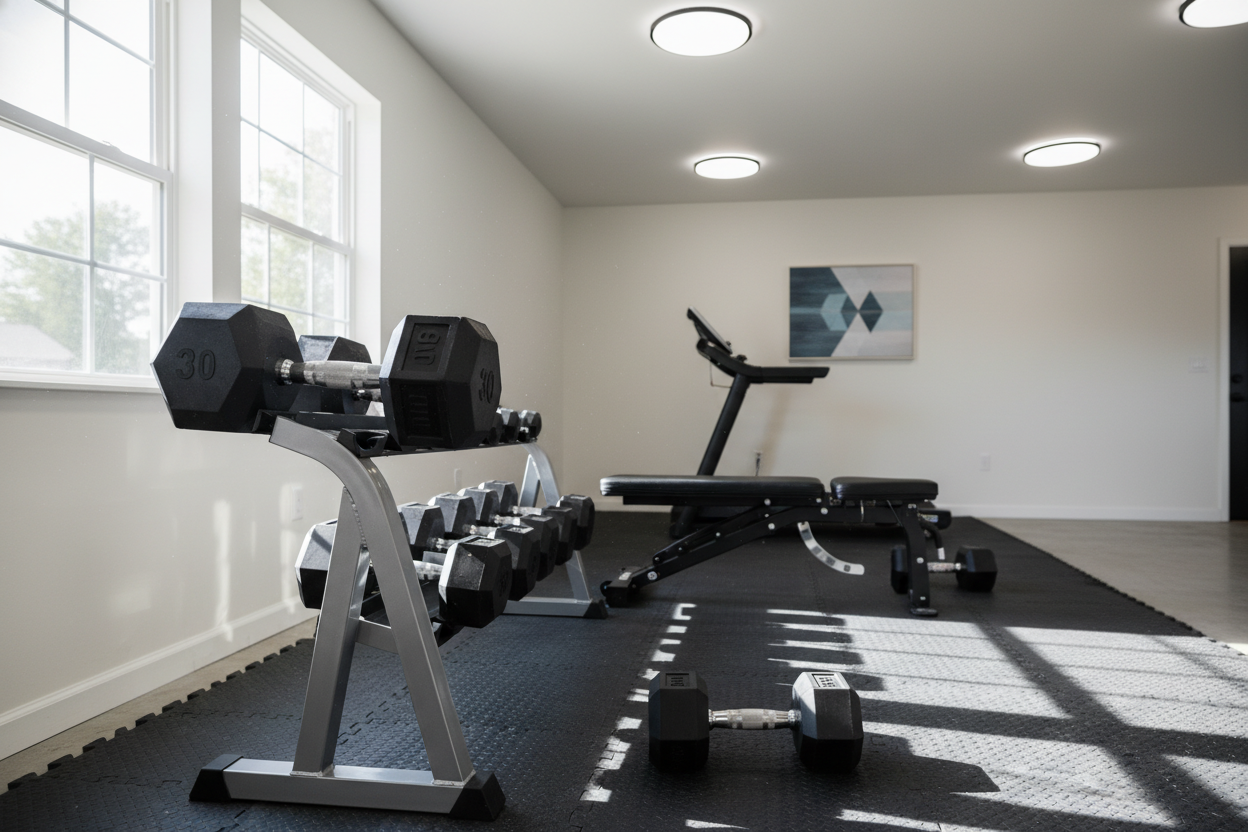
I remember the first time I set up my garage. I bought a cheap 5-50lb set from a guy on Marketplace, and half those weights have been gathering dust for three years. In a space where every square inch matters, the 30 lbs dumbbell has emerged as the undisputed MVP of my morning sessions. It is the one weight that never gets a chance to get cold.
You see, most people think they need a full commercial rack to see results. They spend thousands on a shiny row of iron they will rarely touch. I have spent years testing, dropping, and occasionally swearing at fitness gear, and I have found that a high-quality 30 pound dumbbell is the absolute sweet spot for the intermediate lifter who actually trains hard.
Quick Takeaways
- Hypertrophy Hero: 30 lbs is the ideal resistance for the 8-12 rep range on most accessory movements.
- Durability First: A fixed rubber hex weight survives the concrete drops that shatter plastic adjustable gears.
- Circuit Efficiency: Moving from floor to overhead is seamless when you are not clicking dials between sets.
- Minimalist Value: If you can only afford three pairs of dumbbells, this should be the middle one.
The 'No-Man's Land' of Garage Gym Weights
In the world of home lifting, we often deal with 'No-Man's Land'—that awkward gap where a 20lb weight feels like a toy and a 45lb weight feels like an invitation for a shoulder impingement. The 30 lb weight sits right in the pocket. It is heavy enough to provide the mechanical tension needed for muscle growth, yet light enough that your form does not break down into a series of ugly compensations.
When I am programming for myself or friends, weights 30 lbs are where the real work happens. For a beginner, this is a heavy goal. For an advanced lifter, it is the perfect load for high-volume metabolic conditioning. It is heavy enough to make a goblet squat suck, but light enough to keep your heart rate in the stratosphere during a cross-training metcon. It is the bridge between 'I am just moving' and 'I am actually training.'
Why I Benched My Adjustables for a Fixed Pair
I used to be a massive advocate for those fancy dial-based systems. On paper, they make sense. They save space. But in practice? They are clunky, wide, and frankly, a bit fragile. If you are halfway through a brutal EMOM and need to switch weights, those quick-changing adjustable dumbbells can feel like they are moving in slow motion. I got tired of the clicking and the fear of the internal plastic gears failing mid-swing.
There is a psychological edge to grabbing a dedicated 30 lbs dumbbells pair. You pick them up, and they are ready. No checking the dial, no worrying if the plates are locked in. For high-intensity supersets—like moving immediately from a heavy bench press to a controlled fly—the fixed weight is king. You can throw them down, grab the next pair, and keep the intensity where it belongs. I have found that my workouts are actually 10 minutes shorter simply because I am not messing with equipment settings.
The Concrete Floor Drop Test
If you have ever had to bail on a heavy set of renegade rows, you know why durability matters. Most adjustable weights have a strict 'no drop' policy. If you drop them on a raw concrete garage floor, they are done. A solid 30lb rubber hex dumbbell, however, is built for abuse. The iron core is encased in heavy-duty rubber that absorbs the shock and protects your floor. I have dropped mine from overhead more times than I care to admit, and they still look—and more importantly, weigh—exactly like they did on day one.
4 Lifts Where a 30-Pound Dumbbells Pair Absolutely Shines
If you have a 30-pound dumbbells pair, you can effectively train every muscle group in your body. Here is where they really earn their keep. First, the Bulgarian Split Squat. If you can do 12 clean reps per leg with 30s, your legs are in the top 10% of gym-goers. It is the perfect amount of load to torch your quads without your grip failing before your legs do.
Second, the Renegade Row. This is a stability nightmare in the best way possible. The hex shape of a 30 lb weight provides a stable base, but the weight is heavy enough to force your core to scream. Third, the Overhead Press. For most intermediate lifters, 30 lbs is that 'danger zone' weight where you can hit high reps for hypertrophy without the ego-driven injury risk of a 50-pounder. Finally, the Weighted Step-Up. Holding 30s at your sides while stepping onto a 20-inch box is a foundational strength move that every garage athlete needs.
How to Spot a Cheap Knockoff Before Buying
When you start looking for a 30lb dumbbell for sale, you will see a lot of 'too good to be true' prices. Avoid the chrome-handled versions that look like they were dipped in cheap silver paint; that stuff will flake off and cut your hands within a month. Also, watch out for 'neoprene' versions in this weight class. At 30 lbs, neoprene tends to get slippery once you start sweating, and the handles are often too thick for a secure grip.
Look for a contoured, knurled handle. You want a grip that feels like a barbell—aggressive enough to stay in your hand during a sweaty set of snatches, but not so sharp it draws blood. When shopping for dedicated pairs of dumbbells, check the weight tolerance. Cheap brands can be off by as much as two pounds. A quality brand will be within 1-2% of the stated weight. If the rubber smells like a tire fire, that is another red flag—it means they used low-grade recycled fillers that will off-gas in your garage for months.
The Verdict: Start Small, Lift Brutally Hard
The biggest mistake I see people make is buying a massive 5-100lb rack because they think it makes them look 'serious.' Half those weights will never be touched. My philosophy is simple: buy the pairs you actually use, and buy them in high quality. A 30 lb weight is the workhorse. It is the one you will use for your warm-ups, your accessories, and your high-rep finishers.
Your home gym setup doesn't need 50 pairs to be effective. It needs the right tools for the job. I have a 300-lb weight capacity rack in my garage, but the 30s are the only ones that have the paint worn off the handles. That is the mark of a good investment. Buy a pair, treat them like garbage, and they will still be there for you a decade from now.
Personal Experience: My $300 Mistake
A few years back, I tried to save space with a budget pair of 'selectorized' weights. I was doing a set of walking lunges in my driveway. I lost my balance, dropped the right handle, and the plastic adjustment bracket snapped like a twig. The weight was stuck at 15 lbs forever. It was a $300 lesson in why 'solid' beats 'complex' every single time in a home gym environment. Now, I stick to the rubber hex. They are ugly, they are basic, and they are indestructible.
FAQ
Is 30 lbs too heavy for a beginner?
For isolation moves like lateral raises or curls, yes. But for compound moves like squats, rows, and deadlifts, 30 lbs is a great starting point for most men and a solid goal for most women. It provides enough resistance to actually feel the muscle working.
What is better: Iron or Rubber Hex?
Rubber hex, every time. Iron dumbbells clank, they rust, and they chip your floor. Rubber hex weights stay put when you set them down and they are much quieter for those 5:00 AM sessions when the rest of the house is sleeping.
Can I build muscle with just 30 lb dumbbells?
Absolutely. Muscle growth is about tension and volume. If 30 lbs starts feeling light, you don't necessarily need more weight—you need more time under tension. Slow down your eccentric, add a pause at the bottom, or increase your reps. You can get incredibly fit with nothing but a pair of 30s and some grit.
Share:
Stop Wasting Money on Useless Barbell Equipments (Buy These 4 First)
I Tested a Starter Weights Bench and Set (And My Shoulders Paid)