
I remember standing in my garage three years ago, surrounded by $500 worth of 'essential' barbell equipments that I hadn't touched in months. I had landmine handles for angles I never trained and three different types of foam grips that just collected dust. It’s a classic trap: you start building a home gym and suddenly you're scrolling through 14 pages of attachments instead of actually lifting.
Building a solid training space is about utility, not variety. You don't need a specialized attachment for every muscle fiber; you need gear that survives a heavy drop and keeps the plates from sliding off when your form gets shaky. If it doesn't help you move more weight or stay safer, it's just clutter.
- Buy a high-quality bar first; everything else is secondary.
- Lockjaw collars are worth every penny over cheap spring clips.
- A deadlift jack is the best 'luxury' purchase for your lower back.
- Avoid 'squat pads' and learn proper bar placement instead.
The Trap of the 'Must-Have' Accessory Ecosystem
The home gym industry thrives on the idea that you're just one gadget away from a new PR. I've seen guys buy rack-mounted cable systems before they even own a full set of 45-pound plates. They get sucked into an ecosystem of barbell fitness equipment that promises to 'optimize' their pull, but really just drains their bank account.
Most of these accessories are designed to solve problems that don't exist. You don't need a rotating sleeve adapter if you bought a decent bar with needle bearings. You don't need a 'squat helper' if you spend two weeks working on your thoracic mobility. Every dollar you spend on a gimmick is a dollar you didn't spend on better plates or a sturdier rack.
The Core Barbell Fitness Equipment You Actually Need
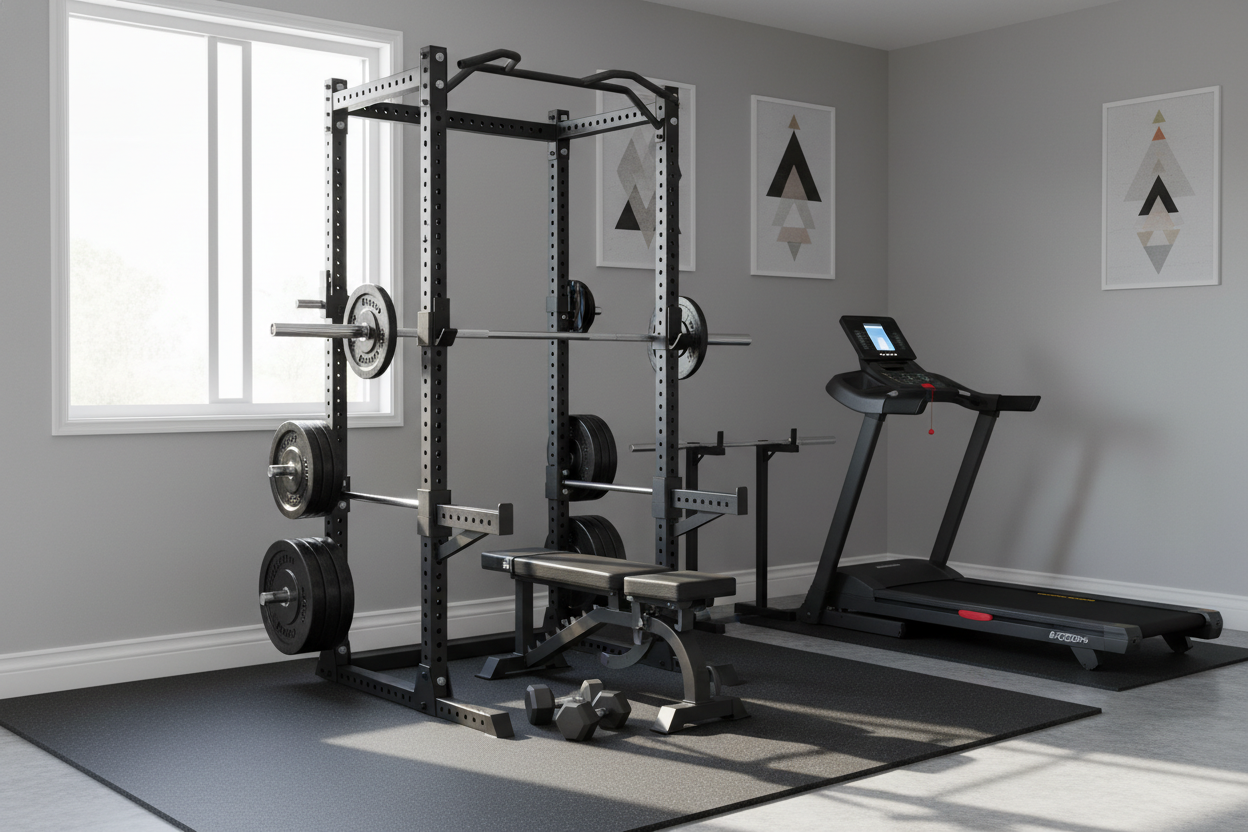
If you're starting from scratch, your budget should be a lopsided circle. Most of it goes to the bar and the rack. A solid weight bench with barbell rack is the literal foundation of your progress. If that rack wobbles when you re-rack 225, nothing else matters.
Once the rack is bolted down, focus on the contact points. You need plates that are actually circular (you'd be surprised how many cheap ones aren't) and a floor that can take a hit. This core setup handles 90% of the most effective movements in existence: squats, benches, deadlifts, and presses. Everything else is just seasoning.
Why Your Collars Matter More Than You Think
I used to use those basic wire spring collars that come free with cheap sets. Then I had a plate slip during a heavy set of overhead presses. It nearly took my shoulder out. Cheap spring collars lose their tension over time, especially if you leave them clamped on a bar for weeks.
Invest in a pair of nylon lockjaw collars. They’re fast to swap, they don't mar the finish on your bar, and they actually stay put during high-rep cleans or heavy deadlifts. It’s a $30 insurance policy for your face.
Elevating the Setup: Worthwhile Upgrades
Once you have the basics, there are a few pieces of gear that actually improve your quality of life. A mini deadlift jack is a prime example. If you’re pulling over 315 lbs, sliding plates on and off a bar that’s flat on the floor is a workout in itself. A jack saves your energy for the actual lift.
Another smart move is a landmine attachment. It’s a simple piece of metal that bolts to your rack, but it opens up rows, presses, and rotations that feel much more natural than fixed machines. Just make sure you pair these upgrades with a high-quality Olympic Barbell. A great bar has the right whip and knurling to make these movements feel smooth rather than clunky.
The Gimmicks You Should Leave in the Shopping Cart
Let’s talk about the foam neck pad. If you’re using a pad for squats, you’re likely placing the bar on your neck instead of your traps. It creates an unstable surface and moves the center of gravity further from your spine. It’s literally less safe. Ditch the pad, find your shelf, and get used to the steel.
The same goes for flimsy standard-to-olympic adapters. They rattle, they slip, and they make your lifts feel 'mushy.' If you're serious about your home gym, don't try to bridge the gap between 1-inch and 2-inch equipment. If you want a perfectly guided, padded experience, you might as well go figure out the Planet Fitness Smith Machine Barbell Weight rather than trying to turn your free weights into a machine.
Final Rule: Build the Engine Before Painting the Car
My biggest mistake was buying 'cool' attachments for a bar that had terrible knurling and bushings that didn't spin. The bar is the engine of your gym. You wouldn't put a spoiler on a car with a broken transmission, so don't buy a landmine handle for a bar that’s already bending under 200 pounds.
Start with a workhorse like the 20Kg Olympic Barbell Pb01. It’s built to take the abuse of daily training and heavy drops. Once you have a bar that you trust, then—and only then—should you start looking at the extras. Your strength is built on the basics, not the accessories.
FAQ
Do I really need a deadlift jack?
If you're lifting heavy, yes. It saves your lower back from the awkward 'deadlift plate wiggle' between sets. If you're mostly doing lighter accessory work, a simple 'dead wedge' or a small 5lb plate under the inner plate works just fine.
Are expensive collars worth it?
Yes. Nylon lockjaw collars are more durable than plastic ones and provide a much tighter grip than metal spring clips. They prevent plates from shifting, which keeps the bar balanced during your lift.
Can I use standard plates on an Olympic bar?
No. Standard plates have a 1-inch hole, while Olympic bars have 2-inch sleeves. You can't make them fit without dangerous modifications. Always stick to one sizing standard for your gym.
Share:
Why a Leg Press Machine for Weight Loss Beats Endless Cardio
The Brutal Truth About Why I Reach for a 30 Lbs Dumbbell the Most