
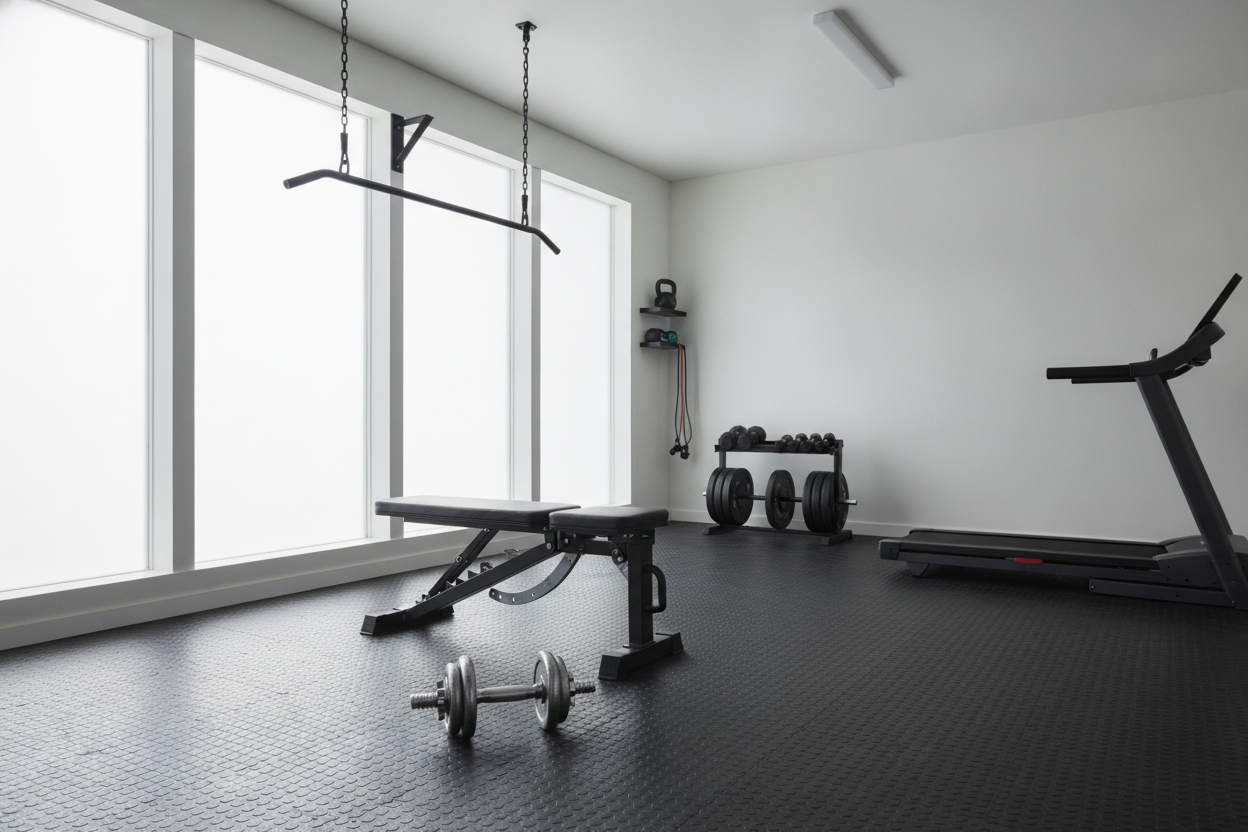
I used to have a 1,000-square-foot garage gym paradise. Then life happened, and I moved into a 650-square-foot apartment. I had to choose between a couch or a full power rack. I chose the couch, but I didn't quit lifting. I built a lethal setup using just a weight bench and pull up bar. It turns out, you don't need a 3x3 steel cage to get jacked.
- Stability over everything: If the equipment wobbles, you won't push yourself.
- Separate units are better than all-in-one 'power towers' for safety.
- High-density foam on the bench prevents bottoming out during heavy presses.
- Vertical pulling and horizontal pressing cover 90 percent of your upper body needs.
Why I Ditched the Half Rack for a Minimalist Setup
Moving into a 5x8 spare room was a reality check. I spent years convinced that if I didn't have a bolt-down rack with spotter arms, I was just playing around. But once the floor space disappeared, I realized I was spending half my workout adjusting safeties and J-cups rather than actually lifting.
I stripped it down to the essentials. I found that 90 percent of my actual strength gains came from two movements: vertical pulling and horizontal pressing. By focusing on a high-quality weight bench pull up bar combo, I reclaimed my floor space without sacrificing my physique. You can do 500-pound floor presses all day, but nothing beats the range of motion you get from a dedicated bench.
The minimalist approach forces you to work harder. There are no fancy cables to hide behind. It is just you, the bar, and the iron. It is honest training that fits in the corner of a bedroom.
The Fatal Flaw in Most All-In-One Combo Towers
I have tested those cheap, all-in-one power towers you see on big-box retail sites. Most of them are accidents waiting to happen. The physics are simple: when you attach a bench to the same thin uprights holding a pull-up bar, the center of gravity is a nightmare. Why Your Weight Bench With Pull Up Bar Wobbles Like Crazy usually comes down to a narrow base and 16-gauge steel that flexes under a 200-pound man.
If you are doing pull-ups and the whole rig starts walking across the floor, you aren't going to focus on your lats; you are going to focus on not dying. I always tell people to separate the two. Get a wall-mounted or heavy-duty standalone pull-up station and a completely independent bench. This allows you to position the bench exactly where you need it for incline or flat work without the uprights getting in the way of your elbows.
Picking a Pad That Survives Heavy Pressing
The bench is the foundation of your micro-gym. If you buy a cheap pad that feels like a pool noodle, you will regret it the first time you try to press anything over 50 pounds. You need high-density foam and a steel frame that doesn't creak when you sit down. I recommend browsing a dedicated Weight Bench collection rather than settling for whatever comes in a bundle box.
Specifically, I have been using the Adjustable Weight Bench Owb01 lately. It is a rock-solid foundation for the pressing side of the micro-gym. It doesn't have that annoying gap between the seat and the backrest that swallows your tailbone, and the steel gauge is thick enough that it doesn't shimmy when you're setting up for a heavy set. If the bench isn't stable, your CNS will limit your power output to protect you. Don't let a cheap bench stall your progress.
The Blueprint: Training Your Whole Body on Two Pieces of Gear
You can hit every muscle group with this setup if you are creative. For chest and shoulders, you have flat, incline, and overhead presses on the bench. For your back, the pull-up bar is the king of all exercises. Switch between wide-grip pull-ups, neutral-grip chin-ups, and even hanging leg raises for core. If you have a set of dumbbells, you can do chest-supported rows on the incline bench to blow up your mid-back.
Don't ignore legs just because you don't have a squat rack. Bulgarian split squats using the bench as a rear-foot elevated platform are arguably more effective for hypertrophy than back squats for many lifters. Combine those with weighted step-ups and dumbbell RDLs, and your legs will be toasted. I usually run a simple upper/lower split. Monday is pull-ups and incline pressing. Tuesday is split squats and RDLs. It is simple, effective, and takes up zero extra space.
When Does It Make Sense to Add Leg and Curl Attachments?
There comes a point where you might want more variety. If you find yourself missing the pump from isolation moves, it might be time to look at modular options. I usually stick to the basics, but I know plenty of lifters who hit a wall and need that extra stimulus for their quads or biceps.
If you reach that stage, look for something like the Weight Bench With Barbell Rack And Biceps And Leg Extension Curl Station Z3. This is the logical upgrade path when a lifter finally outgrows the barebones setup and wants dedicated isolation stations without buying five different machines. It keeps the footprint small while adding the ability to do leg extensions and preacher curls, which are hard to replicate with just a flat bench.
How much ceiling height do I need for a pull up bar?
You generally want at least 15 to 20 inches of clearance between the bar and the ceiling so you don't crack your head on every rep. If you have low ceilings, look for a bar with adjustable heights or a joist-mounted option.
Is a folding bench stable enough for heavy lifting?
Some are, most aren't. If you weigh 200 pounds and want to press 100-pound dumbbells, avoid the ultra-cheap folding benches that look like lawn chairs. Look for a bench with a weight capacity of at least 600 pounds to ensure the hinges won't fail under load.
Can I really build big legs without a squat rack?
Yes. Bulgarian split squats and heavy lunges are brutal. Because you are working one leg at a time, you don't need 400 pounds of plates to reach failure. Your grip or your lungs will usually give out before your legs do if you're doing them right.
Share:
Your Fitness Gear Flat Bench Has a Hidden Breaking Point
The Truth About the Best Adjustable Weight Bench Reddit Hypes Up