
I remember staring at a $2,000 functional trainer that I used maybe twice a month while my squat rack sat in the corner gathering dust. I was a gear junkie, convinced that the next attachment or the latest 'as-seen-on-TV' gadget would finally be the secret to a better physique. It wasn't. I eventually realized that a bloated home exercise equipment list is usually just a distraction from actual hard work.
- Focus on movements: Buy for the squat, hinge, push, and pull.
- Safety first: Never cheap out on the gear that holds your weight.
- Space is premium: If it doesn't serve three purposes, it's a coat rack.
- Quality over quantity: One good barbell beats ten pairs of cheap hex dumbbells.
The Trap of Buying Every Shiny New Toy
My garage used to look like a graveyard for fitness fads. I had an ab-roller, a thigh-master knockoff, and a 'gravity-defying' pull-up bar that nearly took out my drywall. Beginners often make the mistake of purchasing single-use machines because they see them in commercial gyms. The problem? Those machines are built for high-traffic facilities with thousands of square feet. In your spare room or garage, they just eat floor space and empty your wallet.
I’ve tested dozens of these 'all-in-one' plastic contraptions. They always feel flimsy under a real load. When you're trying to hit a heavy set of presses, the last thing you want is the frame creaking. Most of that gear ends up on Facebook Marketplace for pennies on the dollar within six months. If you are serious about results, you have to stop thinking about 'machines' and start thinking about 'versatility.'
So, What Workout Equipment Should I Buy for Home?
The shift happens when you stop asking 'what looks cool' and start asking 'what movements can I perform?' When you are building out a home gym, your goal should be to cover the fundamental human movements: the squat, the hinge (deadlifts), the vertical push/pull, and the horizontal push/pull. If a piece of equipment doesn't allow you to do at least three of those, it’s probably not worth the floor space.
By focusing on these big movements, you maximize your metabolic output and your budget. You don't need a dedicated leg extension machine when you have a barbell for squats and lunges. You don't need a pec deck when you have a solid bench and a rack. This mindset is the only way to build a functional training space that doesn't feel like a cluttered storage unit. It’s about efficiency, not excess.
My Ruthless 4-Item Home Exercise Equipment List
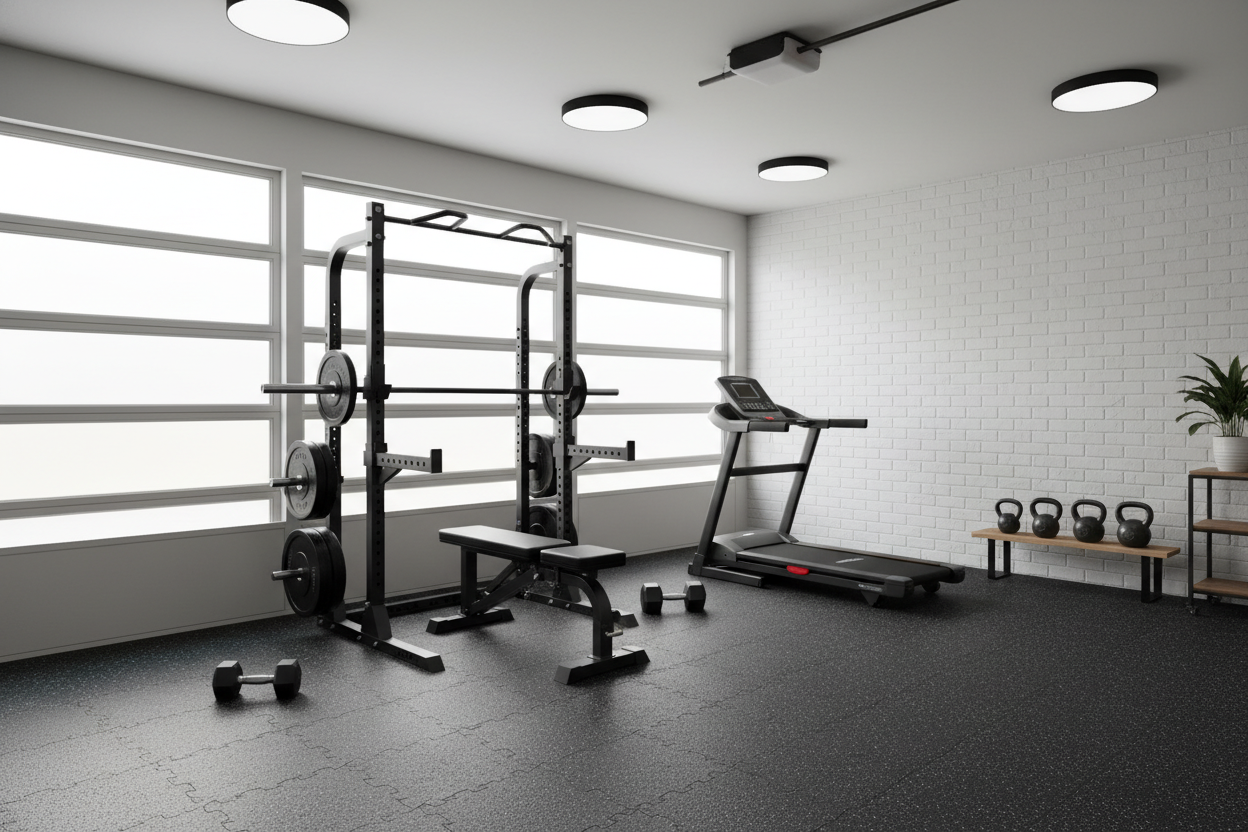
I stripped my personal gym down to the essentials. I asked myself: if I had to move tomorrow and could only fit four things in the truck, what stays? My list is built on the philosophy that every item must be bulletproof and multi-functional. If it can't handle 500 lbs or a high-intensity interval session, it doesn't make the cut.
1. The Anchor: A Bulletproof Rack or Smith Station
You need a cage. Period. It's not just about holding the weight; it's about not dying when you miss a rep. A 3x3-inch steel rack with 11-gauge steel is the gold standard for most, but I’ve found that a Smith machine home gym station is a legit alternative for solo lifters. It gives you those fixed paths and built-in spotters that save your neck during late-night bench sessions when no one is around to help.
Whether you go with a traditional power rack or a Smith setup, this is the 'anchor' of your gym. It’s where you’ll do your squats, overhead presses, and pull-ups. Look for something with a footprint of about 4x4 feet to ensure stability. If the rack wobbles when you're doing chin-ups, it's too light. You want something that feels like it’s bolted to the earth.
2. The Weight: An Olympic Barbell and Plates
Forget the 1-inch 'standard' bars you see at big-box retailers. You want a 20kg Olympic barbell with a 28mm shaft and a high tensile strength (aim for 190,000 PSI). The barbell remains undefeated for progressive overload because you can add weight in tiny increments. I personally use iron plates because I like the sound, but if you’re training on a concrete floor without mats, go for rubber bumper plates to keep the peace with your neighbors.
3. The Base: A Heavy-Duty Adjustable Bench
A cheap bench is a liability. I've sat on benches that felt like they were made of soda cans once I loaded up 225 lbs. Look for a bench with at least a 1,000-lb weight capacity. You want an 'FID' bench (Flat, Incline, Decline) to hit every angle of your chest and shoulders. Check the gap between the seat and the back pad; if it's more than two inches, it’s going to be uncomfortable for your lower back during flat bench presses.
4. The Engine: One Piece of High-Yield Cardio
You don't need a $3,000 treadmill that takes up half the garage. You need a tool that gets your heart rate up without killing your joints or your floor space. A foldable upright exercise bike is my go-to for small footprints. It tucks away when you're doing deadlifts but offers enough resistance to make a 20-minute HIIT session feel like a sprint through mud. It’s the perfect 'engine' for a minimalist setup.
What Is the Best Equipment for a Home Gym on a Tight Budget?
If you've only got $500, don't try to buy a full rack setup—you'll end up with junk. Instead, buy a pair of heavy adjustable dumbbells and a solid flat bench. That combo allows you to perform 80% of the movements you need. You can do goblet squats, dumbbell presses, and rows. That is what is the best equipment for a home gym when you're just starting out or living in a small apartment. You can always add the rack and barbell later once the budget allows.
The Stuff You Should Explicitly Avoid
I've learned the hard way to ignore most top-rated home gym equipment on major retail sites. Those reviews are often written by people who have used the product once and haven't actually put it through a real training cycle. Avoid anything made of plastic or anything that claims to 'target' your lower abs specifically. If it folds into a suitcase or uses 'resistance bands' as the primary source of heavy tension, it's probably trash. Stick to steel, iron, and high-density foam.
FAQ
How much space do I really need?
For the 4-item list above, a 10x10 foot area is the sweet spot. This gives you enough room to move around the barbell without hitting the walls.
Should I get iron or bumper plates?
If you plan on doing Olympic lifts (cleans, snatches) or deadlifting heavy, get bumpers. If you're just doing basic strength training and have floor mats, iron is cheaper and takes up less sleeve space.
Is a Smith machine 'cheating'?
No. It’s a tool. It provides stability which can actually lead to better muscle isolation for hypertrophy. For home use, the safety benefits of the built-in spotter arms are a massive plus.
Share:
The Only Machines for Lower Back That Won't Destroy Your Spine
A No-BS Fitness Gear Pro Utility Weight Bench Review