
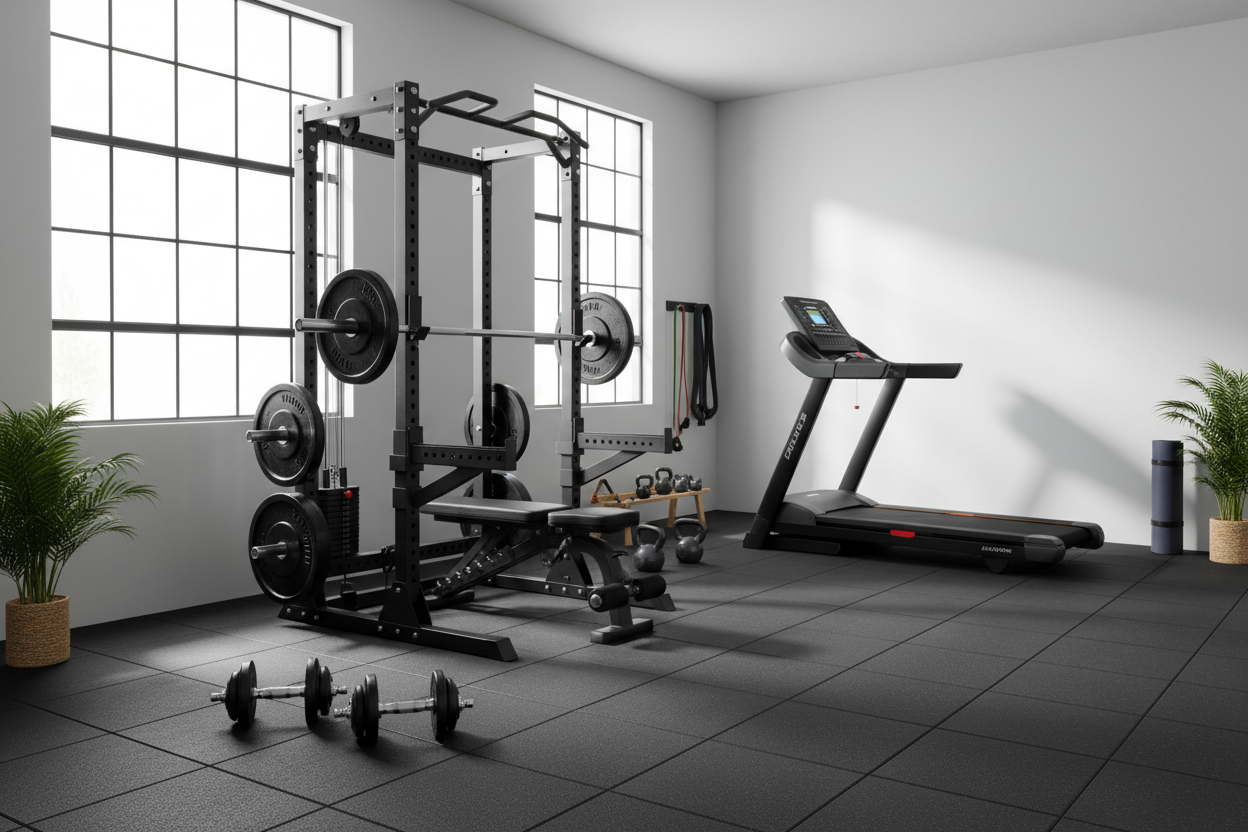
I remember walking into a big-box gym for the first time and feeling like a tourist in a heavy-machinery factory. I stared at a sea of chrome, pulleys, and seats at weird angles, wondering if I was supposed to sit on them or bench press them. exercise machines and what they do shouldn't be a mystery, but most gyms make it feel that way with those faded, sweat-stained placards that barely explain the movement.
- Compound machines (multi-joint) are your bread and butter for strength.
- Isolation machines (single-joint) are best for finishing a workout or rehab.
- Fixed-path machines provide safety but limit your natural range of motion.
- For home gyms, versatility is king—don't buy a machine that only does one thing.
Why the Gym Floor Looks Like a Transformer's Graveyard
Walking into a commercial gym can be overwhelming. You see a maze of levers and cables that look like they belong in a sci-fi movie. But here is the secret: despite the chaos, understanding gym machines and their uses boils down to recognizing just a few basic human movement patterns: push, pull, squat, and hinge.
I spent years trying to figure out every single lever, only to realize that most of them are just variations of the same thing. Understanding gear is the first step to lifting confidently, and a real lifters guide to gym equipment can help you cut through the noise. Once you stop seeing 'machines' and start seeing 'movements,' the gym floor becomes a lot less intimidating.
The Heavy Hitters: Compound Press and Pull Rigs
These are the big boys. Chest presses, lat pulldowns, and seated rows are designed to hit multiple muscle groups at once. These workout machines and what they do is mimic free weight barbell movements but with a catch: they provide a fixed path. This is great if you are training to failure because you won't have a 225-lb bar pinned against your throat if your strength gives out.
The lat pulldown is a staple for a reason. It builds the 'V-taper' by targeting the lats and biceps. Seated rows do the same for your mid-back thickness. These gym machines and their uses are foundational. If you only have 45 minutes, stick to these compound machines to get the most bang for your buck.
Squat Alternatives: Safely Loading the Lower Body
Leg day is usually where people get the most confused. You have the leg press, the hack squat, and the Smith machine. These machines at the gym and what they do is allow you to push massive weight without needing a spotter or the technical balance required for a barbell back squat. I have seen guys leg press 800 pounds who couldn't squat 225 with good form—that is the power (and the trap) of machine stability.
If you are training in a tight space, a Smith machine home gym station is often the ultimate solution. It covers your squats, lunges, and even overhead presses in a single footprint. It is the Swiss Army knife of the lower body world, especially when you do not have a dedicated training partner to watch your back.
Isolation Stations: When to Actually Use Single-Joint Gear
Then you have the smaller units like leg extensions, leg curls, and pec decks. These are isolation stations. Exactly gym machines what they do is isolate one specific muscle—like the quads or the hamstrings—without involving other joints. These are not meant for building raw, foundational power. They are for 'chasing the pump' at the end of a session or working around an injury.
In my own garage, I realized I missed the leg extension too much to go without it. I ended up getting a bench with leg extension curl station because it tucked those commercial-grade isolation features into a footprint that did not require me to park my truck in the driveway. It is the best way to get that targeted burn without buying three separate pieces of gear.
Which of These Beasts Actually Belong in Your Garage?
If you are moving away from the commercial floor and building a dedicated home gym, you have to be ruthless. You cannot afford to waste 15 square feet on a machine that only works your calves. You need ROI. Look for functional trainers or cable crossovers that allow you to do 50+ different exercises in one spot.
Also, watch out for the price traps. I have seen the brutal truth about gym machines prices firsthand—if a machine is too cheap, the cables will feel like they are dragging through sand. Invest in quality pulleys and bearings. These workout machines and what they do for your physique is only as good as the tension they provide. If the movement is jerky, your muscles won't grow as effectively.
Personal Experience: The Cable Snap Incident
I once bought a generic 'home gym' tower from a guy on Craigslist. It looked fine, but the first time I loaded 150 pounds on the stack for a row, the plastic pulley sheared right off the bolt. I ended up punched in the chest by my own handle. Lesson learned: if the machine doesn't have a high-gauge steel frame and nylon-coated aircraft cables, keep your money. I now prioritize weight capacity and pulley smoothness over how many 'stations' a machine claims to have.
FAQ
Are machines as good as free weights?
They are different tools for different jobs. Free weights build better stability and core strength, but machines allow for better isolation and safer training to absolute failure. Use both.
Why do some machines feel heavier than others?
It is all about the pulley ratio. A 2:1 ratio means you are only lifting half the weight on the stack, but the cable travels further. A 1:1 ratio is 'true' weight. Always check the specs.
Can I get a full workout with just one machine?
Yes, if it is a cable-based functional trainer or a high-quality Smith machine. Single-use machines like a leg press won't cut it for a full-body routine.
Share:
Do You Actually Have the Floor Space for a Dumbbell Set 5-100?
I Finally Figured Out Why Professional Weight Machines Feel Different