
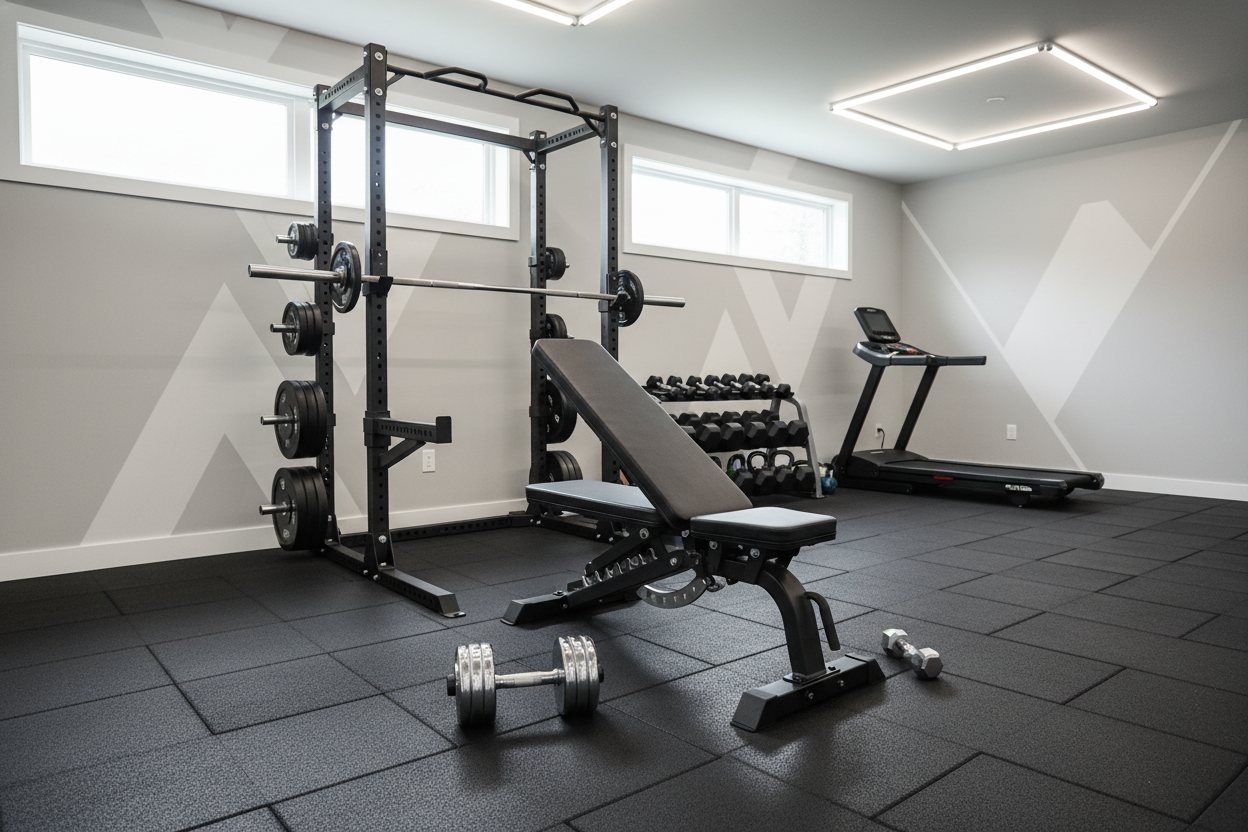
I was midway through my third set of incline presses, 100-pound dumbbells hovered over my face, and then I heard it. A sickening metallic pop followed by a sudden three-inch drop of the back pad. That is the exact moment I realized a heavy duty incline weight bench isn't a luxury—it is life insurance.
- Steel Gauge Matters: Never settle for anything less than 11-gauge steel for serious lifting.
- Ladder vs. Pop-Pin: Ladder adjustment systems are mechanically superior for heavy loads.
- Footprint: A wide rear base is the only thing keeping you from tipping during a heavy dumbbell setup.
- Weight Capacity: If it does not specify a 1,000-lb capacity, it is likely a consumer-grade toy.
The Day My Back Pad Gave Out
Early in my home gym days, I fell for the 'good enough' trap. I bought a bench off a big-box shelf because it was rated for 500 pounds, and at the time, I only weighed 200 and was pressing 225. The math seemed to check out. I spent a few months swapping my flat pad for an adjustable utility weight bench to focus on my upper chest, thinking I was making a smart training move.
The failure happened on a Tuesday. I was working with 100-pound dumbbells—a weight that puts massive localized pressure on the adjustment hinge. As I drove the weight up, the cheap pot-metal pin inside the adjustment mechanism sheared clean off. The back pad slammed down to the next notch. I didn't get crushed, but the sudden jolt sent a shooting pain through my rotator cuff that took six months to heal. That bench didn't just fail; it lied to me about its limits.
What I didn't understand then is that flat bench specs are easy to hit. When a bench is flat, the weight goes straight down into the frame and the floor. The second you angle that pad, physics changes the game. You are no longer just dealing with compression; you are dealing with shear force on the smallest, weakest part of the bench: the adjustment pin.
Why Incline Angles Are the Ultimate Frame Killer
When you are incline pressing, you aren't just pushing the weight up; you are pushing yourself back into the pad. This creates a diagonal force vector that wants to slide the back pad right off the frame. In a cheap bench, all that force is concentrated on a single bolt or a spring-loaded pin about the thickness of your pinky finger.
Think about the leverage involved. If you are sitting at a 45-degree angle, that pivot point becomes a fulcrum. The further up the pad the weight is (near your shoulders), the more torque is applied to the adjustment mechanism. Most budget benches use 14-gauge steel, which is roughly 0.07 inches thick. Under heavy loads, the holes where the pins sit can actually begin to 'ovalize' or stretch. Once that metal deforms, the structural integrity is gone.
A real heavy-duty frame uses 11-gauge steel (0.12 inches thick). It doesn't sound like much of a difference on paper, but in your hands, it is the difference between a hollow tube and a solid tank. You want a frame that doesn't vibrate when you drop into the seat. If you can shake the back pad with one hand and see the frame flex, it will never handle a 300-pound press safely.
Ladder Catch vs. Pop-Pin: Which Survives?
If you are looking for an adjustable weight bench heavy duty enough for powerlifting, look at the adjustment style. Most commercial-grade benches use a 'ladder' system. This is where the back pad support arm drops into a series of steel notches or 'rungs.' There are no pins to shear and no springs to fail. The weight is distributed across a massive surface area of steel-on-steel contact.
Pop-pins are convenient, sure. They make it easy to click into place. But they are a massive point of failure for heavy lifters. The pin itself is often the only thing holding you up. If that spring wears out or the pin doesn't fully seat in the hole because of a bit of debris or bad machining, you are one rep away from a trip to the ER. For my money, the ladder catch is the only mechanism I trust when I'm holding heavy iron over my throat.
Three Specs That Expose Fake Heavy-Duty Benches
Marketing teams love the words 'heavy duty,' but the spec sheet doesn't lie. First, check the weight. A real bench should weigh at least 70 to 100 pounds. If you can pick it up with two fingers, the steel is too thin. I look for 3x3 inch or 2x3 inch 11-gauge steel tubing. This provides the mass needed to stay anchored to the floor while you are wrestling 120-pound dumbbells into position.
Second, look at the rear stabilizer width. A lot of 'compact' benches have narrow rear feet to save space. This is a recipe for a tip-over. When you're leaning back to start an incline press, your center of gravity shifts. You want a rear stabilizer that is at least 20-25 inches wide. This prevents that terrifying lateral wobble that happens when you're slightly off-balance during a max effort set.
Third, check the pad gap. Cheap benches often have a massive 3-inch gap between the seat and the back pad. Not only is this uncomfortable, but it usually indicates a lazy hinge design. A high-end bench will have a minimal gap or a sliding mechanism to keep your lumbar supported. If your butt is falling into a hole while you're trying to drive through your legs, your power transfer is going to be garbage.
Are Combos and Attachments Worth the Risk?
I get the appeal of the heavy-duty weight bench set that comes with a built-in rack or a leg developer attachment. If you're tight on space, it looks like a win. But here is the truth: most 'all-in-one' units compromise the bench's stability to accommodate the attachments. The more holes you drill into a frame for leg extensions or preacher curls, the more you weaken the primary structure.
I prefer a dedicated, standalone bench. It allows you to position yourself perfectly inside a power rack without being tethered to a flimsy upright. If you do go for a set, ensure the bench itself can be disconnected and used independently. If the bench is permanently bolted to a light-duty rack, you'll likely outgrow its weight capacity within your first year of serious training.
When to Ditch the Bench for a Machine
There comes a point in every lifter's life where the risk-to-reward ratio of heavy dumbbell inclines starts to skew. If you are training alone in a garage and pushing weights that make your floor joists groan, it might be time to look at a dedicated chest press machine. Machines offer a fixed path of motion that removes the stability requirement, allowing you to push to absolute failure without worrying about a dumbbell falling on your face.
I still love my free weights, but for pure hypertrophy—especially on the upper pecs—a plate-loaded machine is a godsend. You get the heavy-duty feel and the massive weight capacity without the 'death wobble' of a budget bench. But if you're staying with the bench, just make sure it's built like a tank. Your shoulders will thank you.
FAQ
How much weight capacity do I really need?
Don't just look at your lift numbers. You have to include your body weight. If you weigh 220 lbs and incline press 200 lbs, you're already at 420 lbs of stress. A 500-lb capacity bench is way too close to its limit. Aim for a 1,000-lb rated bench to ensure a proper safety margin.
Is 14-gauge steel okay for a home gym?
For a light-duty bench used for accessory work like curls or seated rows, it is fine. For heavy compound pressing? Absolutely not. Stick to 11-gauge steel for anything involving a barbell or heavy dumbbells.
Does the vinyl on the pad matter?
Yes, but not for safety. Cheap vinyl is slippery. When you are trying to 'dig' your shoulders into the pad for stability, you don't want to slide around. Look for 'grippy' or textured vinyl that holds you in place during the lift.
Share:
I Tested a Home Gym Machine Walmart Sells (Here Is What Broke)
Why Your Shoulders Demand a True Heavy Duty Weight Bench