
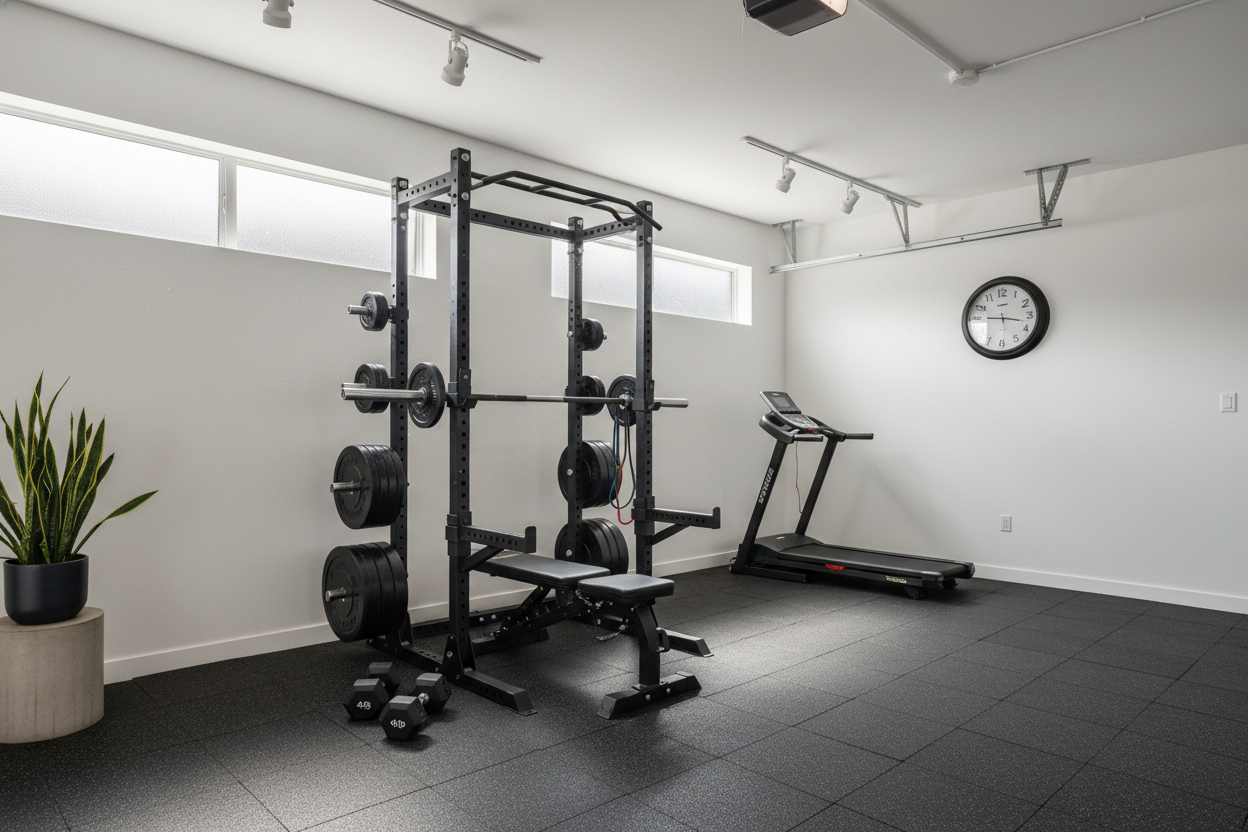
I stood in my garage three months ago and couldn't see the floor. I had a leg extension machine I used once a month, a wobbly treadmill acting as a coat rack, and three different types of pull-up bars. It was a graveyard of good intentions and bad purchases. I realized that the most important gym equipment isn't the stuff that looks cool in a 30-second Instagram clip; it's the gear that allows you to move heavy weight safely without thinking about the hardware.
- Prioritize structural integrity over fancy attachments—11-gauge steel is non-negotiable.
- Your barbell is your primary interface; spend the most money here.
- Iron plates and flat benches are where you can hunt for deals and buy used.
- Avoid 'all-in-one' machines until you've mastered the big three lifts.
The Purge: Why I Liquidated Half My Garage Gym
I used to think that more gear meant more options, which meant more gains. I was wrong. My garage looked like a commercial gym threw up in a 20x20 space. I had a dedicated leg press that took up a 4x6 foot footprint and a cable crossover that made it impossible to pull my car in. When I actually looked at my training logs, 90% of my progress came from four pieces of equipment. The rest was just expensive clutter.
When I started building a home gym, I was obsessed with variety. I thought I needed a machine for every muscle group. But the reality of home training is that friction kills motivation. If I have to move three things just to set up for a squat, I'm less likely to do it. I decided to sell everything that didn't serve a foundational purpose. I stripped it down to the essentials. Identifying the most important workout equipment isn't about what you might use; it's about what you can't live without. I stopped buying 'solutions' to problems I didn't have and started investing in heavy-duty basics that will outlive me.
The Power Rack Is Your Lifeline (Don't Cheap Out Here)
The rack is the heart of your gym. If this piece fails, you're not just out of a workout—you're potentially in the hospital. I've tested those thin, 2x2 inch racks you find at big-box retailers, and frankly, most beginner gym equipment is overpriced junk. They wobble when you rack 135 pounds, and the safety arms feel like they are made of coat hangers. You need a rack built from 11-gauge steel, preferably in a 3x3 inch or 2x3 inch configuration.
Look for a rack with Westside hole spacing (1-inch gaps through the bench zone). This allows you to set your safeties at the exact height needed to save your neck without ruining your range of motion. I personally use a 4-post rack bolted to the floor. It doesn't budge. If you can't bolt it down, look for a rack with an extended flat foot base for stability. Don't get distracted by 'multi-functional' plastic pulleys attached to the back. You want a cage that can hold 1,000 pounds without groaning. That stability gives you the confidence to push for that third or fourth rep on a heavy set of squats when you're training alone in a quiet house.
The Barbell: The Engine of Your Entire Setup
If the rack is the frame of the car, the barbell is the engine. It’s the only piece of equipment you are in constant contact with during a lift. I've used cheap, chrome-plated bars that arrived bent and had knurling so smooth it felt like greased glass. If you ignore most top-rated home gym equipment lists and focus on one premium item, make it a high-quality power bar.
You want a bar with at least 190,000 PSI tensile strength. This ensures the bar has 'whip' but will return to being perfectly straight after a heavy pull. Look for a 29mm diameter for powerlifting or a 28.5mm for general purpose. The knurling should be aggressive enough to bite into your palms during a heavy deadlift but not so sharp that it draws blood during a high-rep session. I made the mistake of buying a 'beater bar' early on, and within six months, the bushings stopped spinning. When the sleeves don't spin, the rotational force of the plates goes directly into your wrists. That’s a recipe for tendonitis that will keep you out of the gym for months.
Plates and Benches: Where You Can Actually Save Money
Here is a secret: a 45-pound iron plate from a garage sale weighs almost exactly the same as a brand-new, laser-etched urethane plate that costs four times as much. Unless you are a competitive weightlifter who needs calibrated plates for specific gram-accuracy, go with standard cast iron. They make a satisfying 'clink' when you load them, and they take up less space on the bar than bumper plates. I spent way too much on fancy rubberized plates early on, only to realize they just smelled like a tire fire and took up too much room on my storage pegs.
The same logic applies to benches. You don't need a 15-position adjustable bench with a built-in footrest. A heavy-duty, 11-gauge steel flat bench is often more stable and cheaper. I’ve found that many mid-range adjustable benches have a 'gap' between the seat and the backrest that hits right at your lower back, making it impossible to get a good arch. A solid flat bench with a 12-inch wide pad is the gold standard for bench pressing. It gives your shoulders a stable platform to drive from. If you do buy an adjustable, make sure it’s a 'ladder style' adjustment rather than a pin-pop, as they are much faster to change between sets.
What About Cables, Cardio, and Specialty Machines?
Cables are great, but they are secondary. I see people buying a Smith machine home gym station before they even own a decent set of dumbbells. That is backwards. Machines fix your range of motion, which is fine for hypertrophy, but they don't build the stabilizing muscles that a barbell does. If you have the space and the budget after you've secured a rack and bar, a functional trainer is a fantastic addition for face pulls, lat pulldowns, and tricep work. But it’s the 'dessert,' not the 'steak.'
As for cardio, the most important gym equipment for your heart might just be the pavement outside. I wasted $1,200 on a high-end treadmill that eventually became a very expensive shelf for my gym bags. If you must have indoor cardio, look for a used Concept2 rower or a Rogue Echo Bike. These are built like tanks, have high resale value, and don't require a monthly subscription just to see your stats. Build your gym around the movements that have stood the test of time: the squat, the press, and the pull. Everything else is just a distraction.
FAQ
Do I really need a 3x3 rack?
You don't *need* it for the strength—2x3 steel can hold plenty of weight. You want it for the attachments. Most high-end accessories are designed for 3x3 racks with 5/8 or 1-inch holes. Buying a 3x3 rack saves you from being locked out of the best gear later.
Is a center knurl on a barbell important?
If you squat, yes. That little patch of sandpaper in the middle of the bar grips your shirt and keeps the weight from sliding down your back. If you only do cleans and deadlifts, you can skip it to save your neck and shins from scrapes.
How many plates should I start with?
Buy a 300-pound set (which usually includes a 45lb bar). It’s the most cost-effective way to get started. You can always add individual pairs of 45s later as you get stronger. Don't forget 1.25lb 'fractional' plates; they are the key to consistent progress when 5lb jumps become too much.
Share:
I Traded My Power Rack for an All In One Exercise Machine
Why I Finally Stopped Ignoring the V-Squat Machine