
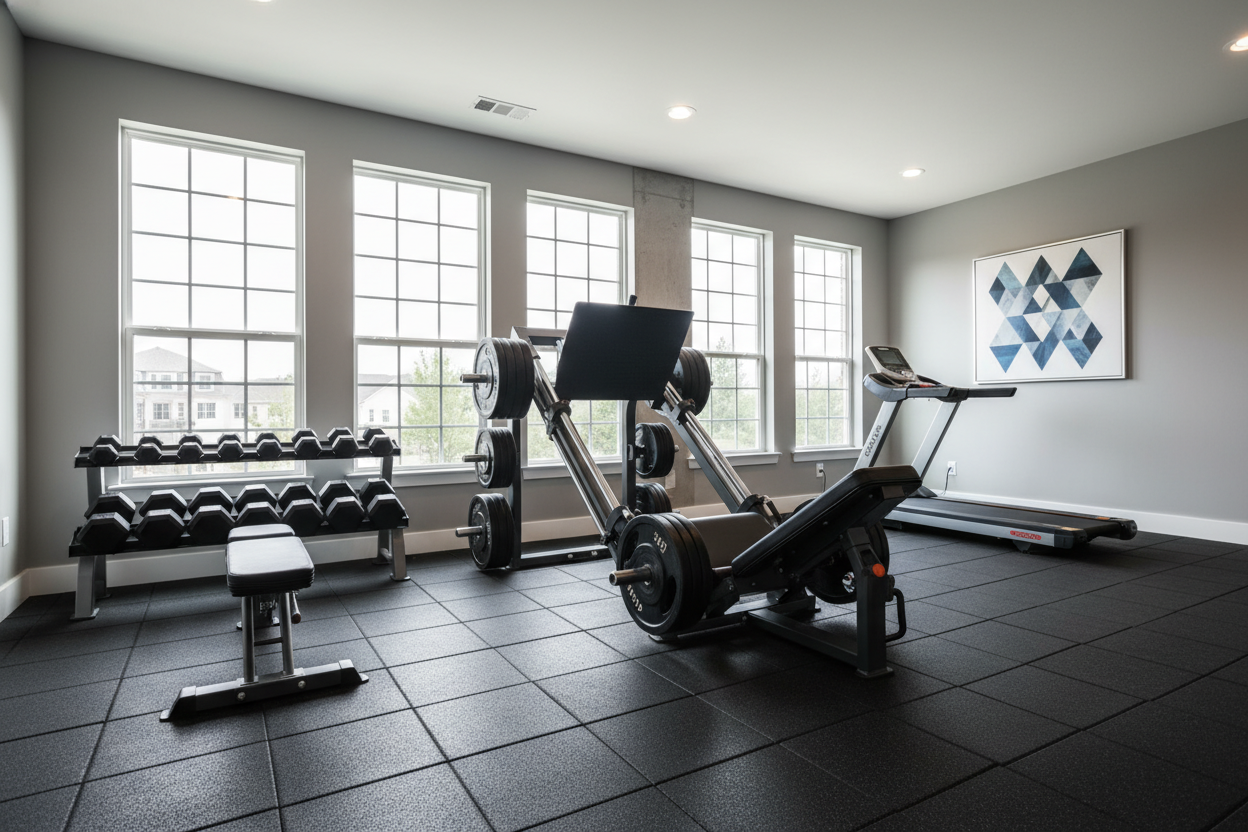
I remember the exact moment my lower back told me to stop. I was halfway through a set of five at 315 lbs, and I felt that familiar, dull ache. For years, I told myself that a leg machine press was for people who didn't want to work hard. I thought if you weren't under a barbell, you weren't training legs. I was wrong, and my lack of quad growth proved it.
- Isolation: Machines target quads without taxing the CNS as much as squats.
- Safety: No more 'pinning' yourself under a heavy bar or bailing in a dark garage.
- Space: Modern combo units fit in the same footprint as a standard power rack.
- Loading: You can safely push to absolute failure without a spotter.
The Day I Finally Gave Up on Heavy Barbell Squats
I hit a wall three years ago. My strength was fine, but my quads looked exactly the same as they did the year before. Every time I tried to add volume to my squats, my lower back or my knees would give out before my quads actually felt fatigued. It’s a common trap: the barbell squat is a full-body movement, which is great for athletes, but it can be a terrible tool for pure hypertrophy if your leverages aren't perfect.
The mental hurdle of buying leg press exercise machines for a home gym is real. You worry about the footprint. You worry it’s 'cheating.' But once I realized I could load 400 lbs and just focus on the stretch and contraction without worrying about falling over, my legs finally started growing again. I stopped being a purist and started being a guy with bigger legs.
Commercial vs. Garage: Not Every Leg Machine Press is Equal
If you're used to the $10,000 Cybex or Life Fitness rigs at a leg press machine gym, you need to manage your expectations for home gear. Commercial units use massive industrial bearings and heavy-gauge steel that can weigh 800 lbs. You probably can't fit that in your garage without the floor cracking.
The key for a home setup is the rail system. Low-end machines use plastic rollers that get 'clunky' after six months. You want linear bearings or high-quality nylon pulleys. Thankfully, modern engineering has caught up. Companies are now building a leg press hip thrust machinie that uses a much smaller footprint while maintaining that smooth, commercial-grade glide. You're looking for a footprint of roughly 7 feet by 3 feet, which is manageable if you ditch the extra storage rack you don't use.
Wait, What About Using a Smith Machine Instead?
I see people on Instagram lying on the floor, pressing a Smith machine bar upward with their feet. Please, stop doing that. It’s a disaster waiting to happen. If your feet slip, that bar is coming down on your hips or chest with zero safety catches to save you. Beyond the safety, the tracking is all wrong.
A dedicated sled is angled for a reason. It aligns the force with your joints. Before you try to MacGyver a solution, read about Is A Leg Press Smith Machine Setup Actually Safe For Your Spine. The shear forces on your vertebrae when you're pressing vertically from the floor are nasty. A real gym machines leg press provides a fixed path and safety stops that let you bail safely if your legs give out.
Combo Units: How I Got the 'Gym Machines Leg Press' Feel at Home
The secret to making this work in a home gym is the combo unit. You don't have room for a standalone hack squat and a standalone leg press. You need a rig that does both. I personally tested the 3 In 1 Hack Squat Leg Press Combo Machine L2 V4, and it’s the closest I’ve felt to a commercial sled. It’s beefy, it doesn't wobble when you load four plates per side, and the transition between movements takes about thirty seconds.
If you're dealing with a low ceiling or a cramped single-car garage, look at the Compact 30 Degree Leg Press Hack Squat Combo Machine Lm L5. The 30-degree angle is a smart engineering choice—it reduces the vertical height needed while still giving you a massive range of motion. It fits in a corner where a standard power rack would feel suffocating.
The Final Verdict on Ditching the Rack
I still own a barbell, but it’s mostly for rows and RDLs now. Ditching the 'squat or die' mentality was the best thing I did for my longevity. My knees feel lubricated instead of crushed, and my quads are actually popping for the first time in my life. If you have the space and you're tired of your lower back being the limiting factor in your leg growth, it’s time to look at a dedicated sled.
FAQ
Is a leg press harder than a squat?
Mechanically, no. You can move more weight on a leg press because you don't have to balance the load. However, it's 'harder' on your quads because they can't hand off the work to your lower back as easily.
How much weight can a home leg press handle?
Most mid-range home units are rated for 400 to 800 lbs. Unless you're an IFBB pro, a 600-lb capacity is more than enough for high-volume hypertrophy work.
Will a leg press fit in a standard garage?
Yes, but measure twice. You need about 8 feet of length to account for the machine and the space you need to load plates on the sides.
Share:
Why Buying a Barbell Set With Weights Usually Ends in Regret
How One Powerhouse Gym Machine Replaced Half My Garage Setup