
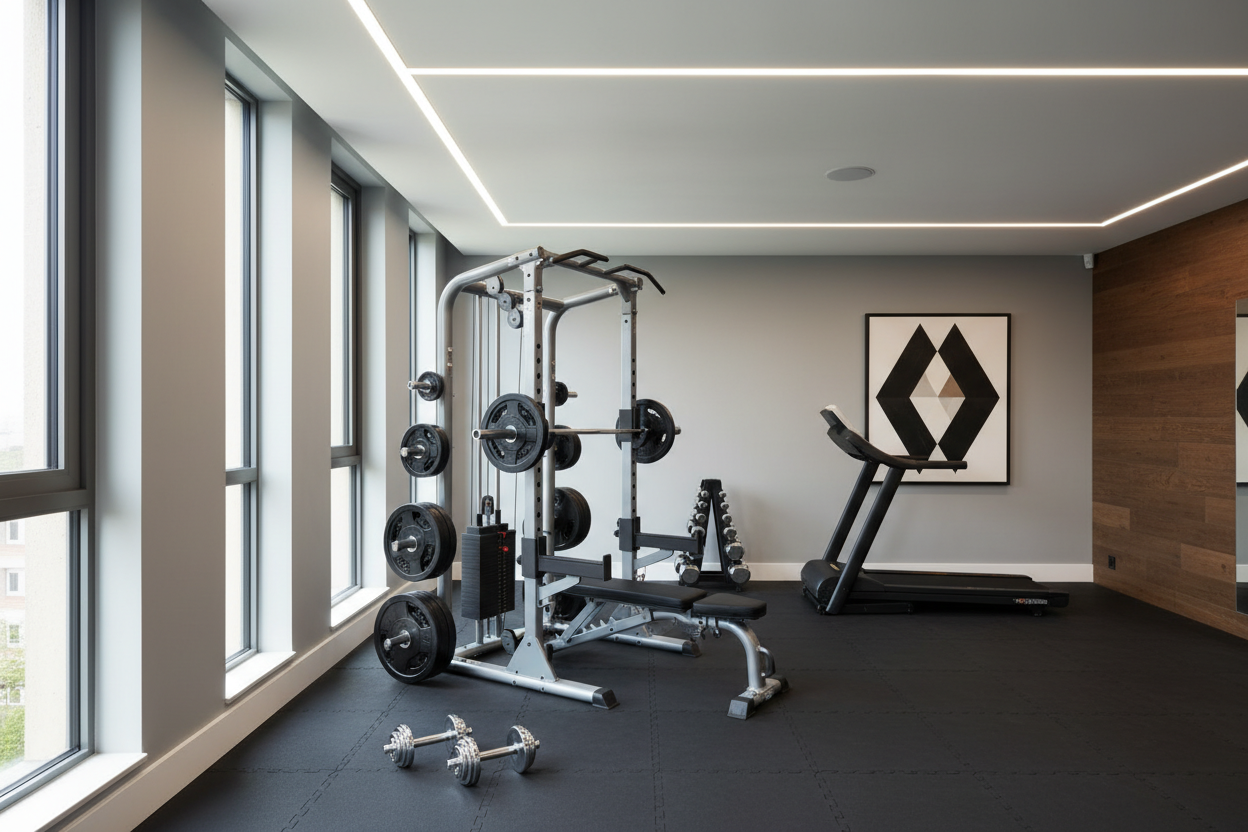
I used to be a total barbell snob. If it wasn't a 20kg Rogue bar and a heavy-duty power rack, I didn't want to know about it. I spent years telling anyone who’d listen that the smith's machine was a crutch for people who didn't want to learn how to stabilize a load. Then I tried to fit a full power rack, a functional trainer, and a plate-loaded leg press into a single-car garage. I realized I was fighting a losing battle against square footage and my own ego.
Quick Takeaways
- Space Efficiency: Combines three massive pieces of gear into one 4x6 foot footprint.
- Safety: Built-in lockout points mean you can push to failure without a spotter.
- Hypertrophy: Removing the stability requirement lets you hammer specific muscles harder.
- Smoothness: Modern linear bearings have replaced the clunky, sticking tracks of the 90s.
The Free-Weight Purist's Confession
I’ll admit it: I used to call it the 'shame machine.' My bias came from a place of 'hardcore' lifting dogma that says if you aren't fighting to keep a bar from crushing your windpipe, you aren't really training. But after a decade of lifting, my joints started disagreeing with that sentiment. I started looking at home gym smith machines not as a replacement for the barbell, but as a specialized tool for high-intensity volume.
The shift happened when I tested a high-end unit with commercial-grade linear bearings. It wasn't the jerky, friction-heavy mess I remembered from my local YMCA. It was buttery smooth. I realized that by swallowing my pride, I could get a better chest pump in twenty minutes than I could in forty minutes of fighting to balance a heavy bar on a shaky bench. Modern lifting culture has unfairly demonized this gear, mostly because we like to feel superior about our 'functional' movements. But if your goal is looking better and getting stronger without a trip to the ER, the perspective shift is mandatory.
Why the Hate? (And Why It's Outdated)
The hate started because early smiths machinery was, frankly, garbage. Most older units used cheap plastic bushings that would bind up the moment you applied uneven pressure. If your left hand pushed slightly harder than your right, the bar would stutter. That’s not just annoying; it’s a recipe for a shoulder impingement. Furthermore, the fixed vertical path doesn't mimic a natural bar path for movements like the bench press or squat, which usually have a slight 'S' curve.
But the engineering has caught up. Modern smith machine fitness setups often incorporate a 7-degree slant to better mimic human biomechanics. They use case-hardened steel rods and ball bearings that feel weightless. We’ve moved past the era of restrictive movement. When you use a complete smith machine workout guide, you realize the fixed path is actually a feature, not a bug. It allows you to place your feet further forward on a squat to torch your quads or adjust your grip on a press to hit the upper pecs with surgical precision—things that are nearly impossible to do safely with a free bar.
The Rise of the 'All-in-One' Garage Gym
If you're working with a standard 10x12 bedroom or a corner of a garage, you can't afford to be a purist. You need utility. This is where the multi functional trainer smith machine has absolutely taken over the market. We’re no longer talking about a single-purpose rack. We’re talking about a command center that replaces a half-rack, a cable crossover, a pull-up station, and a Smith system.
I recently swapped out a standalone power rack for a smith machine with cable crossover, and it felt like I gained 20 square feet of floor space overnight. These units are built with 11-gauge steel and 3x3 posts, meaning they are just as stable as any dedicated squat rack. The integration is the key. You can go from a heavy Smith-style floor press right into cable flies without moving more than two feet. For the home trainee, that efficiency is the difference between getting a workout in and skipping it because the setup is too much of a chore.
Cables, Pulleys, and Heavy Iron
The real magic happens when you look at a smith machine with cable system. Most of these units feature dual weight stacks—usually 200 lbs or more per side—with a 2:1 pulley ratio. This gives you plenty of travel for functional movements like shadow boxing or cable lunges. But when you want to move the heavy stuff, you have the smith machine with plates ready to go.
Having both options in one frame is the ultimate 'best of both worlds' scenario. I use the Smith bar for my heavy compound movements where I want to push my limits safely. Then, I immediately transition to the cables for isolation work. The cables on these modern units are typically 2,000-lb rated aircraft grade, so you aren't going to snap them doing heavy lat pulldowns. It’s the versatility of smith machine multi function units that makes them worth the investment; you aren't just buying a rack, you're buying an entire gym's worth of mechanics.
Will It Actually Build Real Muscle?
Let's kill the myth: you can absolutely get huge using a smith machine and weights. In fact, for hypertrophy (muscle growth), it might actually be superior to free weights in some contexts. Why? Because muscle growth is driven by mechanical tension and metabolic stress. When you're squatting a free barbell, a huge amount of your mental and physical energy goes into not falling over. Your core, your stabilizers, and your ankles are all working overtime.
On a Smith machine, that stabilization requirement is gone. You can put your brain entirely into the muscle you're trying to grow. You can go to absolute, grinding failure on a set of Bulgarian split squats without worrying about losing your balance and crashing into your water heater. Because the bar is on a track, you can use techniques like rest-pause or drop sets much more effectively. I’ve found that my quad development exploded once I started doing Smith-based hack squats because I could finally push my legs to the point of collapse without my lower back giving out first.
Space vs. Utility: Is It Worth Your Garage Floor?
When you start shopping for home gyms with smith machine capabilities, you have to look at the math. A quality power rack is 48 inches wide. A functional trainer is another 60 inches wide. A lat pulldown machine is another 4 feet deep. If you buy them separately, you’ve used your entire garage and spent $5,000 on shipping alone. A smith machine home gym station consolidates all of that into a single unit that usually measures about 65 inches wide and 50 inches deep.
Is it worth it? If you're a competitive powerlifter who needs to practice the specific balance of a competition squat, maybe not. But for the 95% of us who just want to be strong, look good in a t-shirt, and not spend two hours moving equipment around, it’s the smartest move you can make. The footprint-to-utility ratio is unbeatable. I’ve seen guys fit a full home gym equipment smith machine setup into an apartment spare room and still have space for a yoga mat. You just can't do that with a traditional rack and separate machines.
What Actually Matters When You Buy One
Don't just buy the cheapest thing on Amazon. I've done that, and I regretted it the moment I tried to bench. Here is what you actually need to look for: First, linear ball bearings. If the listing says 'nylon bushings,' run away. Bushings will stick; bearings will glide. Second, check the pulley ratio. A 2:1 ratio is standard and feels smoother for most exercises, but a 1:1 ratio is better if you’re a monster who needs the full weight of the stack.
Look at the steel. You want at least 12-gauge, but 11-gauge is the gold standard for a 'buy it once' piece of equipment. Also, check the attachment ecosystem. Does it come with a landmine attachment? A leg developer? A dip station? The best multi functional trainer smith machine units are the ones that grow with you. I once bought a unit that had a proprietary hole size, and I couldn't buy any aftermarket J-cups or spotter arms. It was a nightmare. Stick to units that use standard 1-inch or 5/8-inch holes so you can customize your rig down the road.
FAQ
Is the Smith machine bar lighter than a standard barbell?
Usually, yes. While a standard Olympic bar is 45 lbs, a Smith machine bar often weighs between 15 and 25 lbs because of the counterbalancing system. Always check your specific machine’s manual before you start calculating your PRs.
Can I do 'real' squats on a Smith machine?
You can do very effective squats, but the biomechanics are different. Because you don't have to balance, you can place your feet further forward to target the quads or wider to hit the glutes. It’s a different stimulus, but it’s still a 'real' squat.
Is it safer for solo lifting?
Absolutely. The ability to rack the bar with a simple flick of the wrist at any point in the movement is a lifesaver. If you lift alone at 5 AM like I do, that peace of mind is worth the price of admission alone.
Share:
I Ranked All The Fitness Machine Types (And Most Are Junk)
How Many Machines Should I Do at the Gym? (Stop Doing 12)