
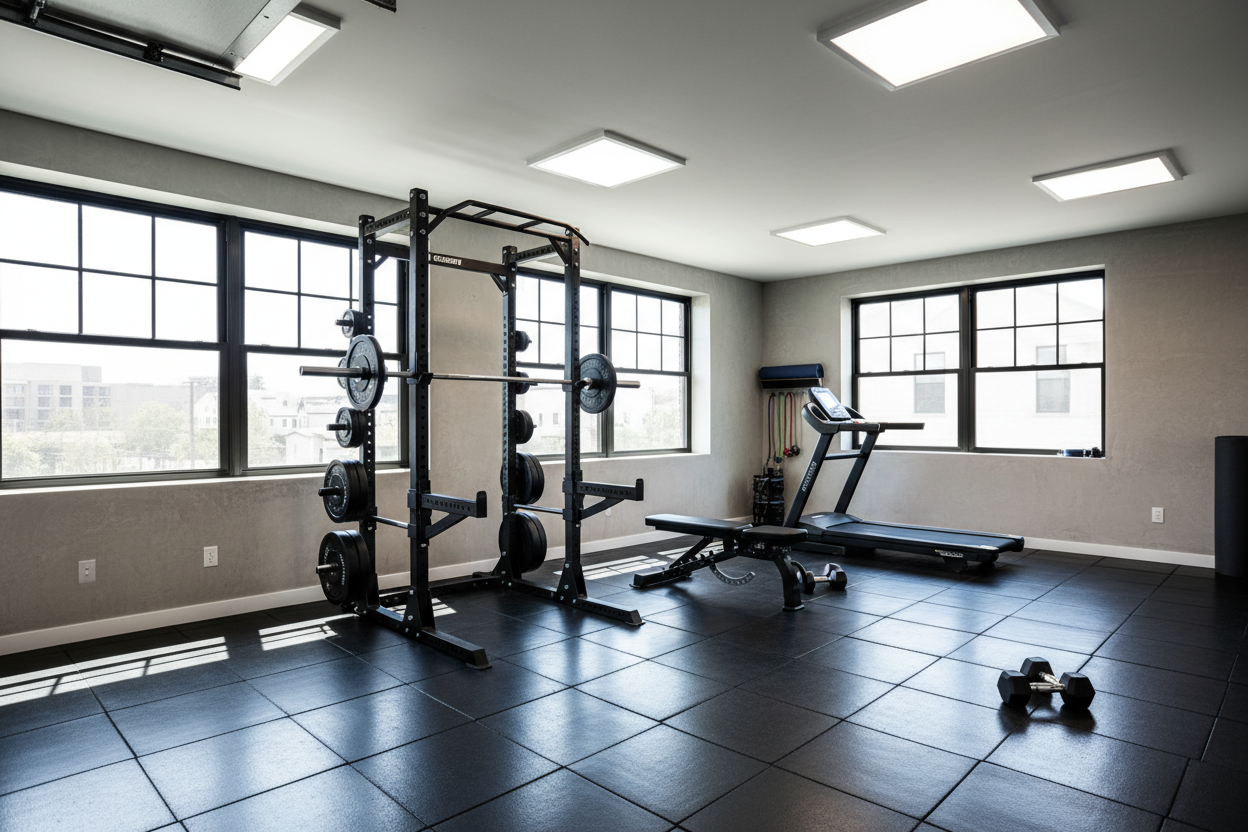
I remember the night I clicked 'buy' on a $800 multi-gym that promised to replace an entire commercial facility. It arrived in three beat-up boxes, took six hours to assemble, and felt about as stable as a house of cards. The first time I loaded 150 pounds for a lat pulldown, the frame groaned, and the plastic pulleys shrieked in a way that told me my money was gone forever. Finding the best weight equipment for home gym setups isn't about buying the most features; it's about buying the most steel.
- Steel Gauge Matters: 11-gauge is the gold standard for racks; skip the 14-gauge tin cans.
- The Barbell is Your Soul: Don't cheap out here. A bent bar is a useless bar.
- Floor Space is Currency: Measure twice, buy once. A 4-post rack needs at least an 8x8 foot footprint to be functional.
- Safety Over Flash: A $500 bench that wobbles is more expensive than a $1,000 bench that doesn't when you factor in the hospital bill.
The 'Do-Everything' Machine Trap
I fell for the marketing. Most 'all-in-one' systems are the jack-of-all-trades and masters of none. They use thin cables that stretch, plastic pulleys that melt under friction, and a footprint that dominates your room while offering mediocre resistance. If you want a good exercise equipment for home use, stop looking for a machine that claims to do 50 things. It won't do any of them well enough to keep you training six months from now.
My biggest mistake was trying to save space by getting a machine that combined strength and cardio. It was a disaster. It's much smarter to buy a dedicated, compact cardio piece like a foldable upright exercise bike and keep your lifting area separate. This allows you to focus on high-quality iron for your strength work without compromising on the ergonomics of your cardio gear. Top rated fitness equipment usually does one thing exceptionally well rather than five things poorly.
The Holy Trinity of Iron: Rack, Bar, and Plates
If you're serious about building a list of home exercise equipment that actually builds muscle, you need the trinity: a power rack, an Olympic barbell, and a pile of plates. This is the foundation of a solid home gym. When you're looking at racks, look for 3x3 inch or 2x3 inch uprights made of 11-gauge steel. If the manufacturer doesn't list the steel gauge, it's probably because it's thin, 14-gauge residential junk that will shake every time you re-rack a squat.
The barbell is the most important piece of workout equipment for home use. You want a 20kg (44lb) bar with a 28.5mm to 29mm diameter. Pay attention to the knurling—that's the sandpaper-like texture on the bar. If it's too passive, the bar will slip when you're deadlifting. If it's too aggressive, it'll cheese-grate your shins. For plates, iron is fine for most people. You only need bumper plates if you plan on dropping the bar from overhead during Olympic lifts. Otherwise, save the cash and buy more iron.
Why Your Bench Dictates Your Entire Workout
Most people treat the bench as an afterthought, but it's the piece of gear you'll interact with most. A narrow, unstable bench is the fastest way to ruin a chest day. I once owned a 'popular exercise equipment' bench from a big-box store that had a 10-inch wide pad. Every time I pressed, my shoulders felt like they were falling off the sides. It was dangerous and distracting.
When hunting for the best rated exercise equipment in the bench category, look for a 12-inch wide pad and a weight capacity of at least 1,000 lbs. That sounds like overkill, but that rating accounts for both your body weight and the iron you're holding. If you're buying an adjustable model, check the gap size between the seat and the back pad. A massive gap will dig into your lower back during flat presses. You want a gap of two inches or less.
When to Actually Invest in Machines
Free weights are king, but eventually, you'll hit a point where you want to isolate muscles or lift heavy without a spotter. This is where top workout machines come into play. If you're training alone in a garage at 5:00 AM, a Smith machine home gym station can be a literal lifesaver. It provides a fixed path and safety catches that allow you to push to failure on squats or presses without the risk of getting pinned under a bar.
When transitioning from free weights to machines, avoid the cheap residential pulleys found in big-box stores. They use nylon bushings that feel 'crunchy' after a month of use. Look for machines with ball-bearing pulleys and aircraft-grade cables. Plate-loaded machines are usually better for home gyms than selectorized (weight stack) machines because they are cheaper to ship and let you use the plates you already own. This is the most effective home workout equipment for those looking to add volume without the systemic fatigue of heavy barbell movements.
What to Buy New vs. What to Scavenge
You don't need a $10,000 budget to have the top home workout equipment. You just need to be smart about where you spend. Never buy a used barbell unless you have a straight-edge tool to check for bends. A bar that's even slightly warped will rotate in your hands and cause wrist pain. Similarly, buy your adjustable bench new to ensure the locking mechanism hasn't been rounded off by a previous owner.
However, you should absolutely scavenge for iron plates. A 45-lb plate made in 1980 weighs the same as one made yesterday. Rust can be sanded off and repainted for $10. Also, be wary of the 'too good to be true' deals on massive marketplaces. There is a reason why the best home exercise equipment UK has to offer isn't on Amazon—the shipping costs for high-grade steel are immense, so 'free shipping' brands often use thinner steel and lower-quality welds to make the numbers work. Buy from dedicated strength brands that actually use the gear they sell.
What is the best exercise machine for home if I have limited space?
If you're tight on space, an adjustable dumbbell set that goes up to 80 or 90 lbs is the best workout tool you can buy. Pair it with a high-quality folding bench, and you can perform roughly 90% of all known strength exercises in a 6x6 foot area.
Which fitness equipment is best for home strength building?
A power rack with a pull-up bar is the most effective home exercise equipment for building raw strength. It allows you to perform the 'Big Four' (Squat, Bench, Deadlift, Overhead Press) safely. Everything else is just an accessory to the rack.
Is a Smith machine better than a power rack?
Not better, just different. A power rack is better for building stabilizing muscles and functional strength. A Smith machine is better for hypertrophy (muscle growth) and solo safety. If you have the space, a rack is usually the better first purchase.
Share:
I Put Elite Fitness Equipment in My Garage (Was It Overkill?)
How to Share a Home Gym Machine Without Hating Your Partner