
I remember walking into my first commercial gym. I felt like a tourist in a foreign country where I didn't speak the language. I stared at a sea of chrome, leather, and steel cables, wondering which one would help me get stronger and which one would just snap my ACL. This exercise equipment guide is the roadmap I wish someone had handed me back then.
We have all been there—paying for a membership only to spend 45 minutes on a treadmill because the weight room looks like a physics experiment gone wrong. You do not need a degree in kinesiology to navigate this floor. You just need to know what the tools do and how they fit your goals.
Quick Takeaways
- Free weights are the gold standard for building stability and raw strength.
- Machines are safer for training to failure and isolating specific muscles.
- The power rack is the most versatile piece of equipment in any facility.
- Cables provide constant tension that you cannot get from dumbbells alone.
- Cardio gear should be chosen based on what you will actually use, not what looks the hardest.
The Gym Floor Doesn't Have to Be Terrifying
Walking into a gym for the first time is a specific kind of sensory overload. There is the clanging of plates, the hum of treadmills, and the unspoken etiquette that everyone else seems to know. It is easy to feel like you are being watched, but here is a secret: most people are too busy looking at their own pump in the mirror to notice what you are doing. This fitness equipment guide is about giving you the confidence to claim your space.
Whether you are planning a home setup or joining a local club, the goal is the same. You want to move weight efficiently. When I started, I thought I had to use every single machine in the building to get a good workout. I was wrong. You can do 90 percent of your work with about 10 percent of the gear. The trick is knowing which 10 percent matters.
In this gym equipment guide, we are going to strip away the marketing fluff. We are going to talk about the iron, the pulleys, and the benches. By the time you finish reading, you will look at a gym floor and see a toolbox, not a maze.
Free Weights vs. Machines: The Endless Debate
If you ask five lifters which is better, you will get six different answers. Here is the gym equipment explained simply: free weights (dumbbells, barbells, kettlebells) require you to balance the weight yourself. This recruits more muscle fibers and builds 'functional' strength. If your barbell is tilted to the left, that is on you to fix it. That struggle is where the growth happens.
Machines, on the other hand, follow a fixed path. They take the stability requirement out of the equation. This is not a bad thing. If you are trying to blow up your quads on a leg press, you do not want to worry about your balance. You want to move heavy weight safely. A well-rounded gym machine guide should emphasize that both have a place in your program.
I usually tell people to start with free weights while they are fresh and finish with machines when they are tired. It is a lot harder to get pinned under a chest press machine than a 225-pound barbell. Use the iron to build the foundation and the machines to add the detail. Don't let the 'hardcore' lifters tell you machines are 'cheating'—your muscles only know tension, they don't know if that tension comes from a plate or a pin-loaded stack.
Breaking Down the Big Iron (Racks and Rigs)
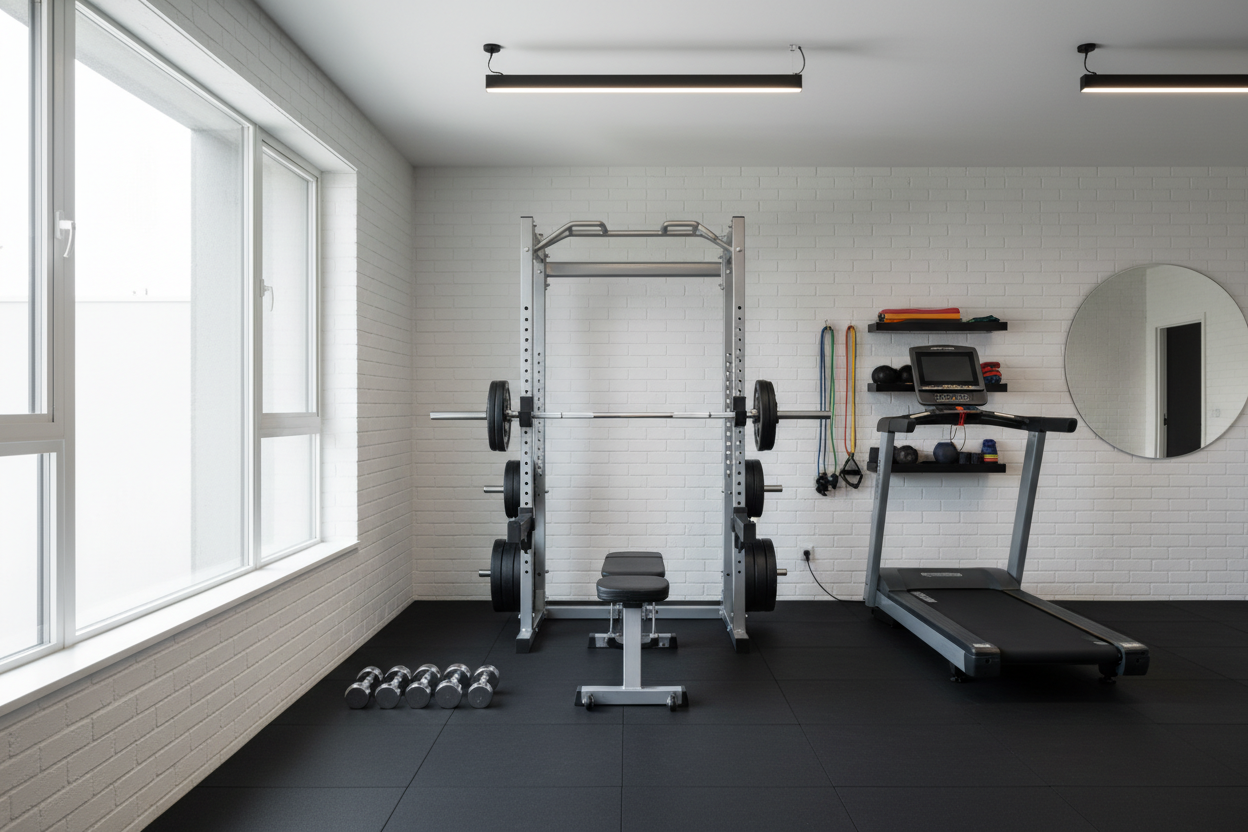
The anchor of any serious training space is the rack. This is your safe zone. A power rack is a four-post steel cage that allows you to squat, bench, and press with safety bars in place. If you drop the weight, the rack catches it, not your neck. This guide to gym equipment would be useless without emphasizing that a solid rack is the best investment you can make.
You might also see half-racks or squat stands. These have a smaller footprint and are great for home gyms where space is at a premium, but they offer slightly less 'enclosed' safety. Then there are rigs, which are the massive jungle gyms you see in CrossFit boxes. They are great for pull-ups and group training, but for solo strength work, a dedicated rack is usually superior.
If you are training alone and want to push your limits without a human spotter, consider a sturdy Smith machine home gym station. The fixed-bar path allows you to rerack the weight with a flick of the wrist at any point in the movement. It is a lifesaver for solo garage sessions where you want to hit that one extra rep on an incline press without ending up on a blooper reel.
Deciphering the Cable Jungle
Cables are the most versatile gym machines explained. Unlike a dumbbell, where the resistance is only heavy at the bottom or top of the move due to gravity, a cable provides constant tension throughout the entire range of motion. This makes them incredible for muscle isolation and joint health.
The centerpiece is usually the functional trainer—two adjustable pulleys that can be moved up and down. You can do everything from chest flies to cable pull-throughs here. Then you have your specialized stations like the lat pulldown and the seated row. These are essential for building a strong back because they allow you to pull from angles that are difficult to replicate with just a barbell.
Understanding the mechanics helps too. If you want to know why some machines feel 'smoother' than others, check out this real guide to gym machine types. Pulleys use different ratios; a 2:1 ratio means 100 pounds on the stack feels like 50 pounds in your hand, giving you more travel and a smoother pull. It is the difference between a clunky basement DIY setup and a professional-grade machine.
The Cardio Corner: Actually Useful Conditioning Gear
Most people treat cardio like a chore, and that is usually because they are using the wrong equipment. You do not need a machine that has a built-in Netflix screen and a fan that barely blows air. You need something that gets your heart rate up efficiently. Treadmills are the old standby, but they are hard on the knees if you are just pounding pavement.
I am a big fan of low-impact options like rowers and bikes. A good rower works almost every muscle in your body while keeping your heart rate in the red zone. If you are looking for something for a small apartment or a corner of your bedroom, a foldable upright exercise bike with magnetic resistance is a fantastic choice. It is quiet enough to use while watching TV and tucks away when you are done. No excuses about 'not having room' for fitness.
The key to cardio equipment is friction. Magnetic resistance is usually the way to go for home use because it is silent and requires zero maintenance. Avoid the cheap friction-pad bikes that squeak like a haunted house every time you pedal. Your ears (and your neighbors) will thank you.
How to Put This Gym Machine Guide to Work
Now that you have the layout of the land, the worst thing you can do is overanalyze it. Take this gym exercise equipment guide and pick five movements: a squat variation (rack), a hinge (barbell), a push (bench or machine), a pull (cables), and a carry. That is a full-body workout. You don't need fancy periodization or 20 different isolation moves to see results.
If you are tired of the commercial gym crowd and are thinking about outfitting your own home gym, start with the basics. Get a rack, a barbell, and some plates. You can add the fancy cable machines and cardio gear later. The best equipment is the stuff that actually gets used, not the stuff that sits in the corner collecting dust and laundry.
Stop worrying about looking like a pro. Everyone in that gym started exactly where you are. They were confused by the pulleys, intimidated by the squat rack, and unsure how to adjust the seat on the leg press. The only difference is they kept showing up. Use this gym machine guide as your starting point, grab a handle, and start moving some weight.
Personal Experience: The 'Bargain' Rack Mistake
I once tried to save $150 by buying a squat rack from a generic sporting goods store. It looked fine in the photos. When I got it home, the steel was so thin I could practically dent it with my thumb. Every time I racked a measly 135 pounds, the whole thing shimmied like it was in an earthquake. I spent the whole workout terrified rather than focusing on my form. I eventually sold it for a loss and bought a real 3x3 steel rack. Lesson learned: when it comes to things that hold heavy weights over your head, never buy the 'budget' version.
Gym Equipment FAQ
What is the best machine for beginners?
The leg press is usually the best starting point. It allows you to build lower body strength with a very low risk of injury since your back is supported and the weight is on a fixed track.
Do I really need a power rack for a home gym?
If you plan on lifting heavy weights alone, yes. The safety pins are the only thing standing between a successful set and a trip to the ER if you fail a rep.
Are cables better than dumbbells?
Neither is 'better,' but cables provide constant tension. For exercises like lateral raises or chest flies, cables are often superior because they don't lose resistance at the bottom of the movement.
Share:
The Only 5 Gym Accessories Home Lifters Actually Need
Wait, Does a Smith Machine Take Off Weight From Your Lifts?