
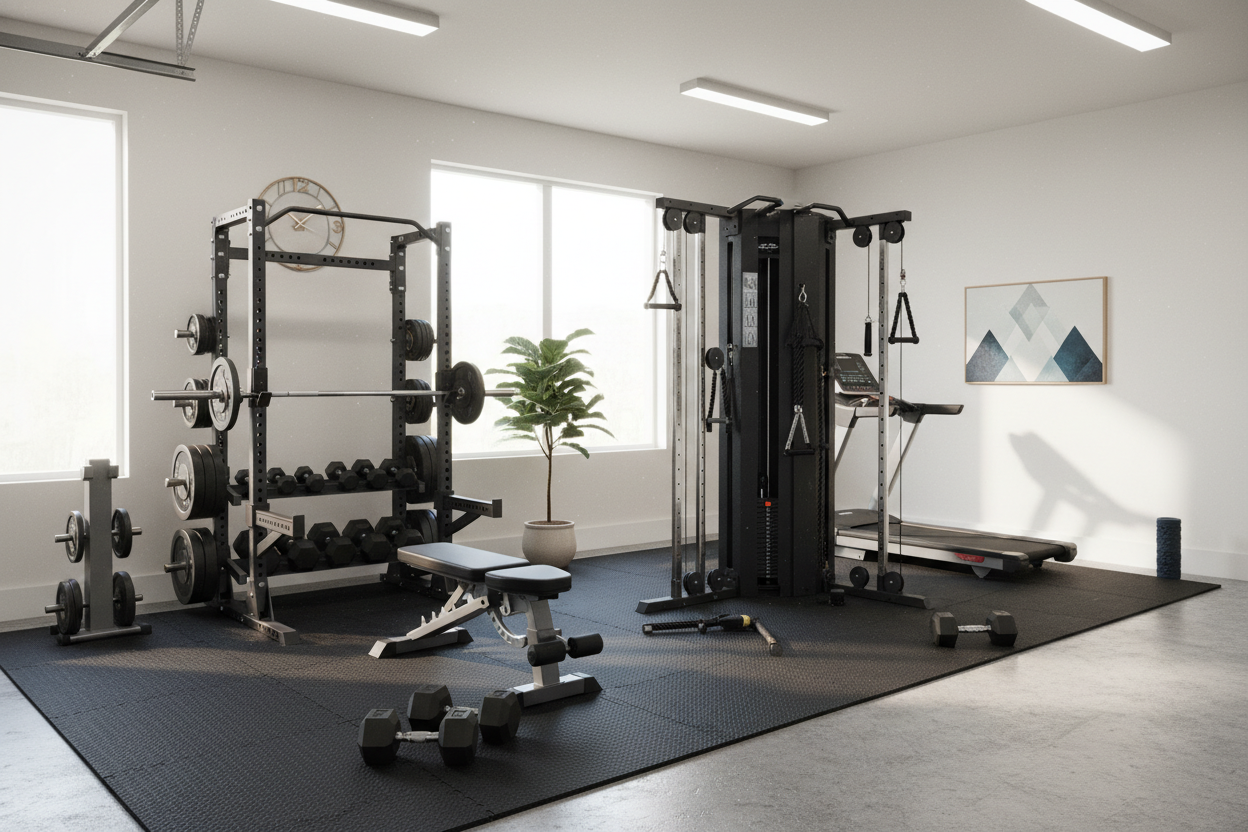
I remember walking into my first 'big box' gym after years of training in a dusty garage with nothing but a rusty barbell and some mismatched plates. I felt like a pilot staring at a cockpit I didn't recognize. There were chrome cables crisscrossing the ceiling and levers that looked like they belonged on heavy construction equipment. It is easy to feel overwhelmed by the sheer variety of gym machine types when you are used to the simplicity of iron.
The truth is, most of that hardware is there to solve a specific problem: stability. While free weights force you to balance the load, machines let you focus entirely on the muscle you are trying to trash. If you have ever struggled to feel your chest working during a bench press because your shoulders were shaking, you already understand why these units exist.
Quick Takeaways
- Selectorized machines (with the pin) are built for speed and ease of use.
- Plate-loaded machines offer a 'raw' feel with the safety of a fixed path.
- Cables provide constant tension that gravity-based free weights cannot match.
- Stability is the primary goal; machines allow you to train to absolute failure safely.
The Free Weight vs. Machine Debate is Finally Dead
For a long time, the 'hardcore' lifting community looked down on anything with a pulley. The mantra was simple: if you aren't balancing a barbell, you aren't building real strength. I fell for that trap for years. But here is the reality: your muscles don't have eyes. They only know tension and load. Different gym machines provide a level of stability that allows you to isolate a muscle group in a way a barbell never will.
When I am doing a heavy set of squats, my lungs or my lower back often give out before my quads do. By switching to a hack squat or a leg press, I can push my legs to the brink of collapse without worrying about a 400-pound bar crushing my spine. Types of fitness machines have evolved to the point where they complement free weights rather than replace them. Using exercise machines types that provide a fixed path of motion is often the fastest way to see actual hypertrophy.
Selectorized Stacks: The 'Pin and Pull' Workhorses
The most common types of machines in a gym are selectorized. If you have ever wondered 'what are weight machines called' when they have a vertical stack of rectangular plates and a small metal pin, this is it. These are the absolute workhorses of the commercial gym floor. They are designed for efficiency. You pull the pin, stick it in the weight you want, and start moving.
These weight machines types are legendary for drop sets. If I am hitting a set of triceps extensions and I hit failure at 100 pounds, I can move that pin to 70 pounds in about two seconds and keep the set going. You can't do that with a barbell. These different gym machines usually use a cam system that adjusts the resistance throughout the movement, making the weight feel 'even' from the bottom of the rep to the top. They are the go-to for different workout machines because they require almost zero setup time.
Plate-Loaded Iron: Bridging the Gap
Then you have the heavy hitters: plate-loaded machines. These require you to manually slide Olympic plates onto the pegs. This type of workout machines mimics the natural strength curve and 'heavy' feel of free weights but keeps you on a guided track. It is the best of both worlds for people who want to move big weight without a spotter.
A prime example of this is the weight bench chest press machine. It allows for independent arm movement, meaning your stronger side can't help your weaker side, which is a common issue with standard barbells. Different weight machines like these are usually leverage-based. Because there are no cables or pulleys to snap, these units are incredibly durable and can often handle way more weight than a standard selectorized stack. If you are looking for types of weight training machines that feel the most like 'real' lifting, this is where you spend your time.
Cable Stations: The Ultimate Multitaskers
Cable stations and functional trainers are the Swiss Army knives of the gym. Unlike a fixed-path machine, cables allow you to move in almost any direction. This makes them essential for 'prehab' work, rotation exercises, and hitting muscles from angles that gravity won't allow. The constant tension is the key—on a bicep curl with a dumbbell, there is no tension at the very top or bottom. With a cable, that muscle is screaming the entire time.
We have all seen the classic 'gym machine where you sit and pull'—usually the lat pulldown or the low row station. These are mandatory for building a thick back. When you look at gym machines and what they do, cables offer the most variety. You can swap a handle for a rope, a straight bar, or a D-handle in seconds. This versatility is why different types of workout machines often incorporate at least one pulley system; it just does too much to leave out.
Hybrids and All-In-Ones: Making It Work at Home
The biggest trend in the industry right now is shrinking these commercial-grade units for home use. Manufacturers are getting clever, combining types of weight training equipment into single, compact footprints. You can now get a power rack that has a built-in functional trainer and a Smith machine. It is a far cry from the flimsy 'home gyms' of the 90s that used plastic-coated weights and creaky pulleys.
I went through this transition myself. Eventually, I missed the weight machines at the gym so much that I had to find a way to get that stimulus in my garage. The key to making these hybrid systems work is the foundation. Even if you have the fanciest cable crossover in the world, you still need a high-quality, adjustable weight bench to perform chest presses, rows, and seated overhead movements. Without a solid bench, half of your machine's functionality is wasted.
My Honest Take on Machine Training
I used to be a total barbell snob. I thought if I wasn't doing 'The Big Three' (Squat, Bench, Deadlift) with a bar, I was wasting my time. Then I tore a labrum in my shoulder. Suddenly, I couldn't stabilize a heavy bench press without sharp pain. I had to swallow my pride and move to the chest press machine and the cable fly station. Not only did my shoulder heal, but my chest actually grew more in those six months than it had in the previous two years because I could finally push to failure without my joints screaming. My mistake was thinking machines were 'easier'—they aren't. They just let you work harder on the parts that matter.
FAQ
Are machines better than free weights for beginners?
They are safer and have a lower learning curve. Machines teach you the basic movement patterns without the risk of dropping a weight on yourself. However, you should eventually learn both to build a well-rounded base.
What are the 'big' machines I should focus on?
Focus on the ones that mimic big movements: the leg press (squat), the lat pulldown (pull-up), and the seated row. These hit the most muscle mass in the shortest amount of time.
Do machines build 'real world' strength?
Yes. Strength is strength. While you might miss out on some stabilizer muscle development, the raw force your muscles can produce will absolutely carry over to moving heavy objects in real life.
Share:
Who Actually Owns the Biggest Fitness Equipment Companies?
The Only 3 Back Machines at Planet Fitness You Actually Need