
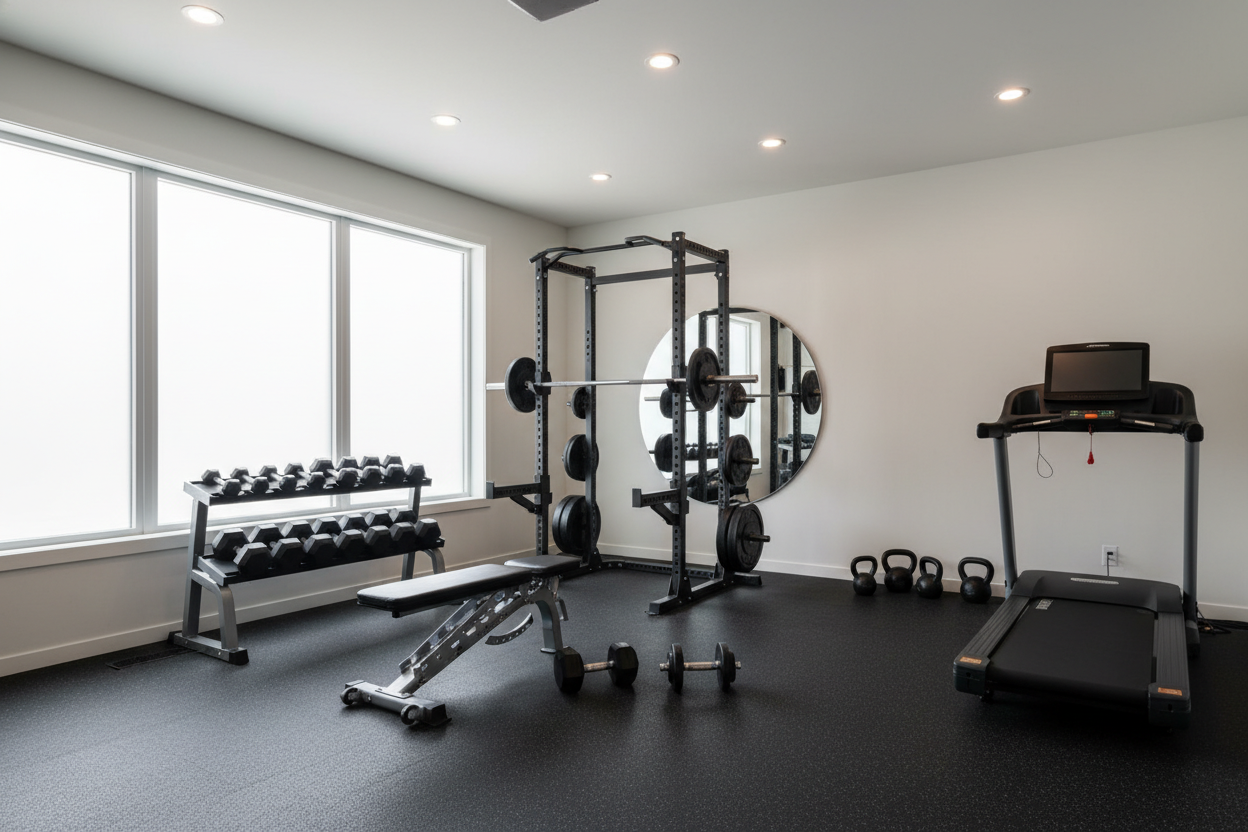
I remember staring at three different adjustable benches on my screen, trying to justify a $100 price gap between them. I thought I was carefully comparing the biggest fitness equipment companies to find the best value, but I was actually just looking at three different stickers slapped onto the exact same steel tubing. It is a frustrating realization when you are trying to build a training space that does not suck.
The fitness industry loves the illusion of variety. You walk into a commercial gym and see rows of shiny machines, then go home and see different brands on your social feed. In reality, most of those paths lead back to the same three or four corporate boardrooms. Understanding this consolidation changes how you should spend your hard-earned money.
- Most major fitness brands are subsidiaries of massive holding companies like iFIT or Johnson Health Tech.
- Shared manufacturing means many 'different' products are identical under the paint.
- Commercial gym providers often prioritize bulk contracts over individual product innovation.
- Independent brands are usually where you find the actual engineering breakthroughs.
The Illusion of Choice in the Fitness Industry
You think you are being a savvy consumer by cross-shopping three different exercise manufacturers. You check the specs, compare the shipping costs, and look at the 'brand heritage.' But the iron game has undergone massive consolidation over the last decade. If you look at the parent companies, you will find that a single entity often owns the budget brand, the mid-tier brand, and the 'pro' brand.
This is not necessarily a bad thing for the average person who just wants a treadmill that moves, but for those of us who actually move heavy weight, it is a red flag. When one corporation owns the whole spectrum, they have a vested interest in making sure the cheap stuff feels just crappy enough to make you want to upgrade. It is a managed ecosystem designed for profit, not a competitive market designed for performance.
Why Mega-Corps Keep Buying Up Your Favorite Brands
The business logic is simple: cornering the market and hoarding patents. When a massive parent company buys a smaller gym weights manufacturer, they are not just buying a factory; they are buying the customer list and the legal right to a specific adjustment mechanism or pulley design. This is exactly why you see the same commercial setups in every big-box gym across the country.
Commercial gym chains rely on these gym equipment providers to outfit entire floor plans in one go. They do not want to deal with ten vendors; they want one invoice for 50 treadmills and 20 racks. This is exactly why people often wonder Can You Replicate Fitness 19 Equipment On A Garage Gym Budget. You usually can, but you have to look past the branding and find the consumer-grade equivalent from the same parent corporation.
Are They Sharing Parts Or Just Slapping On New Paint?
This is where it gets greasy. When multiple fitness machine manufacturers live under the same corporate umbrella, they share supply chains. If a parent company is ordering 50,000 linear bearings, they are not ordering different grades for every brand. They are putting the same internal guts into a $2,000 machine and a $4,000 machine.
Take a complex Smith Machine Home Gym Station as an example. The steel tubing might be 11-gauge on the 'pro' version and 14-gauge on the 'home' version, but the pulleys, cables, and bolts are often identical. You are frequently paying a 50% markup just for a different powder-coat color and a more recognizable logo. I have seen 'commercial' units with the same plastic bushings as the stuff sold at big-box retail stores.
The Independent Guys Still Forging Their Own Path
The antidote to this corporate blandness is the independent manufacturer. These guys are not answering to a board of directors trying to squeeze 2% more margin out of a shipping container. They are usually run by people who actually lift. When a company controls their own R&D and manufacturing, you get gear that solves real problems rather than just filling a slot in a catalog.
Instead of catalog copy-cats, you get purpose-built tools like the Adjustable Weight Bench Owb01. These pieces are engineered for stability and specific lift angles, not just to look good in a brochure. You can feel the difference in the knurling and the lack of 'wobble' that plagues mass-produced gear. If the company's name is on the building where the steel is cut, you are usually getting a better product.
How to Shop Smart When the Game is Rigged
Do not buy the marketing fluff. When you are looking at gym equipment providers, ignore the lifestyle photos of people who have never sweated on the gear. Look at the raw specs: steel thickness, weight capacity, and the type of bearings used. If a brand will not tell you the gauge of their steel, walk away immediately.
Remember that The Best Home Gym Fitness Equipment Is Just 3 Things: a solid rack, a good bar, and plates. Everything else is a luxury. If you focus on those foundations from companies that prioritize engineering over acquisitions, you will end up with a gym that lasts a lifetime. Block out the noise and buy the iron, not the brand.
I once dropped $800 on a 'commercial grade' rack from a brand that had just been bought out. On paper, it looked identical to their old, legendary stuff. In reality, the weld quality was sloppy and the uprights were slightly bowed. I realized later they had moved production to a cheaper facility to 'optimize' the brand after the merger. It was a $800 lesson in why you should research who actually owns the company before you swipe your card.
Is commercial equipment always better than home gym gear?
Not always. Commercial gear is built for 'uptime'—meaning it can survive 18 hours of use a day. For a home gym, you often want better specs, like sharper knurling, that commercial brands dull down to avoid complaints from casual gym-goers.
Why do so many fitness brands look the same?
Because many of them are the same. A lot of brands 'white-label' their equipment from the same massive factories in China or Taiwan, simply changing the logo and the plastic end-caps before shipping them to you.
How can I tell if a brand is independent?
Look at their 'About' page. If they were recently acquired by a private equity firm or a conglomerate like Peloton, they are part of the machine. If they are still founder-led and focused on a specific niche, they usually have more skin in the game regarding quality.
Share:
I Finally Bought Fun Home Exercise Equipment That Isn't Junk
What All Those Pulleys Do: A Real Guide to Gym Machine Types