
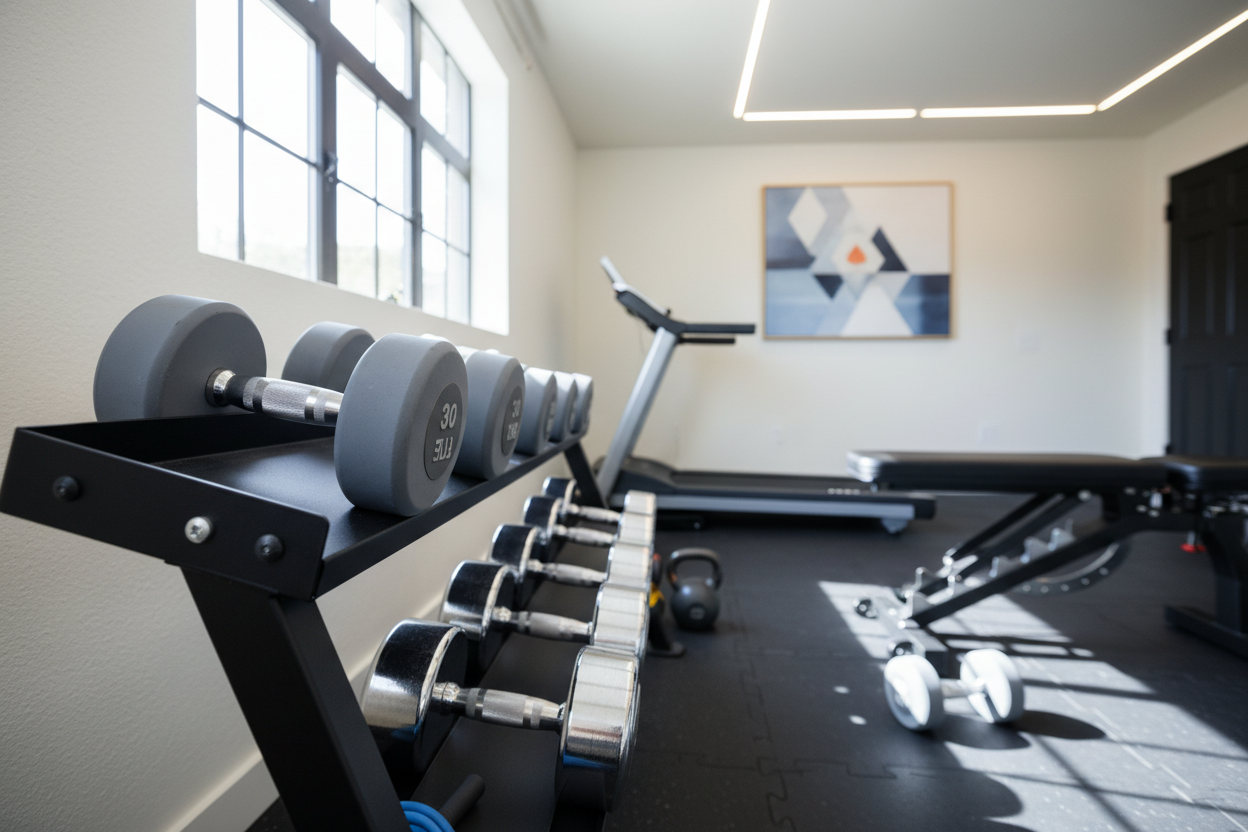
I remember the first time I graduated from the 'aerobic' rack to the real weights. I bought a 30 lb neoprene dumbbell thinking it would be gentler on my apartment floors and my hands. I was wrong. I spent forty bucks on a weight that eventually became a doorstop because it was too chunky to grip and too slippery to lift safely once my heart rate actually climbed.
We have all been there, scrolling through listings at midnight, trying to justify the cost of home gym gear. Neoprene is great for 5-pounders used during a Peloton session, but once you hit the 30-pound mark, the physics of the lift change. If you are serious about getting stronger, that soft, colorful coating is going to start working against you.
Quick Takeaways
- Neoprene becomes dangerously slippery once you start sweating during heavy sets.
- The handle diameter on a 30 lb neoprene dumbbell is often too thick for a secure, ergonomic grip.
- Rubber hex alternatives provide better floor protection without the bulk.
- At this weight bracket, knurled steel handles are essential for safety and performance.
The Awkward Leap from 15 to 30 Pounds
Neoprene is the king of the light-weight world. It feels soft, it looks clean, and it doesn't clank. But there is a massive difference between a 10-pounder and a 30-pounder. When you transition from light cardio weights to standard dumbbells, you are moving into the territory of compound movements like rows, presses, and goblet squats.
At 30 pounds, the internal cast iron core is significant. To get that much weight into a neoprene-wrapped package, manufacturers often make the heads massive and the handles thick. I have found that a 30 lb neoprene dumbbell feels twice as bulky as a professional-grade steel or rubber weight of the same mass. It feels less like a precision tool and more like you are trying to lift a giant, slippery marshmallow.
Why Thick Neoprene and Sweaty Hands Don't Mix
Grip is everything. If you can't hold the weight, you can't exhaust the muscle. Neoprene is porous. It absorbs sweat, skin oils, and chalk. After about three sets of heavy rows, that 'soft-touch' coating turns into a lubricant. I have nearly dropped a 30-pounder on my foot because the coating offered zero friction once my palms got damp.
Most neoprene dumbbells 30 lb options feature a contoured, 'bone-shaped' handle. This is supposed to be ergonomic, but it actually forces your hand into a specific position that might not align with your natural grip width. Compared to a straight, knurled handle, you are wasting half your energy just trying to keep the weight from rotating out of your hand. It is a recipe for forearm fatigue long before your back or chest actually gets a workout.
Floor Protection vs. Lifting Performance
The number one reason people buy these is floor protection. You don't want to crack your tile or dent your hardwood. I get it. But neoprene is thin. If you drop a 30-pound cast iron core wrapped in 2mm of neoprene, your floor is still going to lose that fight. It is a false sense of security that compromises your lifting mechanics.
If you are worried about your floors, a rubber hex dumbbell set is a much smarter play. The rubber is denser, the hex shape prevents the weight from rolling across the room, and you get a real steel handle. You get the protection you want without the 'toy-like' feel of a fully coated weight. Plus, rubber hex weights don't have that weird chemical smell that some cheap neoprene coatings off-gas for months.
What You Should Actually Buy for 30-Pound Lifts
If you are at the point where you are buying 30s, you are no longer a casual trainee. You are building a base. This is exactly why I reach for a 30 lbs dumbbell the most—it is the perfect weight for high-volume hypertrophy work. But you need a tool that respects the mechanics of the human hand.
Look for dumbbells with chrome-plated, knurled handles. That cross-hatch pattern is there for a reason: it bites into your skin just enough to stay put without needing a death grip. If space is an issue and you don't want a full rack of fixed weights, I highly recommend looking into adjustable dumbbells. They allow you to jump from 5 to 50 pounds in a single pair, saving you hundreds of dollars and a ton of floor space in the long run.
My Honest Experience
I once tried to do a set of Bulgarian split squats with a pair of 30 lb neoprene dumbbells. By the second leg, my hands were so sweaty that the weights were literally sliding out of my palms. I had to stop the set not because my quads were tired, but because my grip failed. I sold them on Facebook Marketplace the next day and bought a pair of knurled rubber hex weights. I've never looked back. Don't let the 'pretty' colors of neoprene fool you; they aren't built for heavy lifting.
FAQ
Can you clean neoprene dumbbells?
You can wipe them with a damp cloth, but don't soak them. The coating can actually peel away from the iron core if water gets underneath, leading to rust you can't even see.
Are neoprene dumbbells better for beginners?
Only for very light weights (under 15 lbs). Once you start doing 'real' lifting, the lack of grip on neoprene becomes a safety hazard rather than a benefit.
Do 30 lb neoprene dumbbells roll?
Usually, they have flat edges to prevent rolling, but because the coating is soft, they can still wobble or tip if the floor isn't perfectly level. Hex-shaped heads are always more stable.
Share:
How I Built the Best Home Gym for Legs in a 1-Car Garage
Please Stop Trying the Viral Leg Press With Bar Trend