
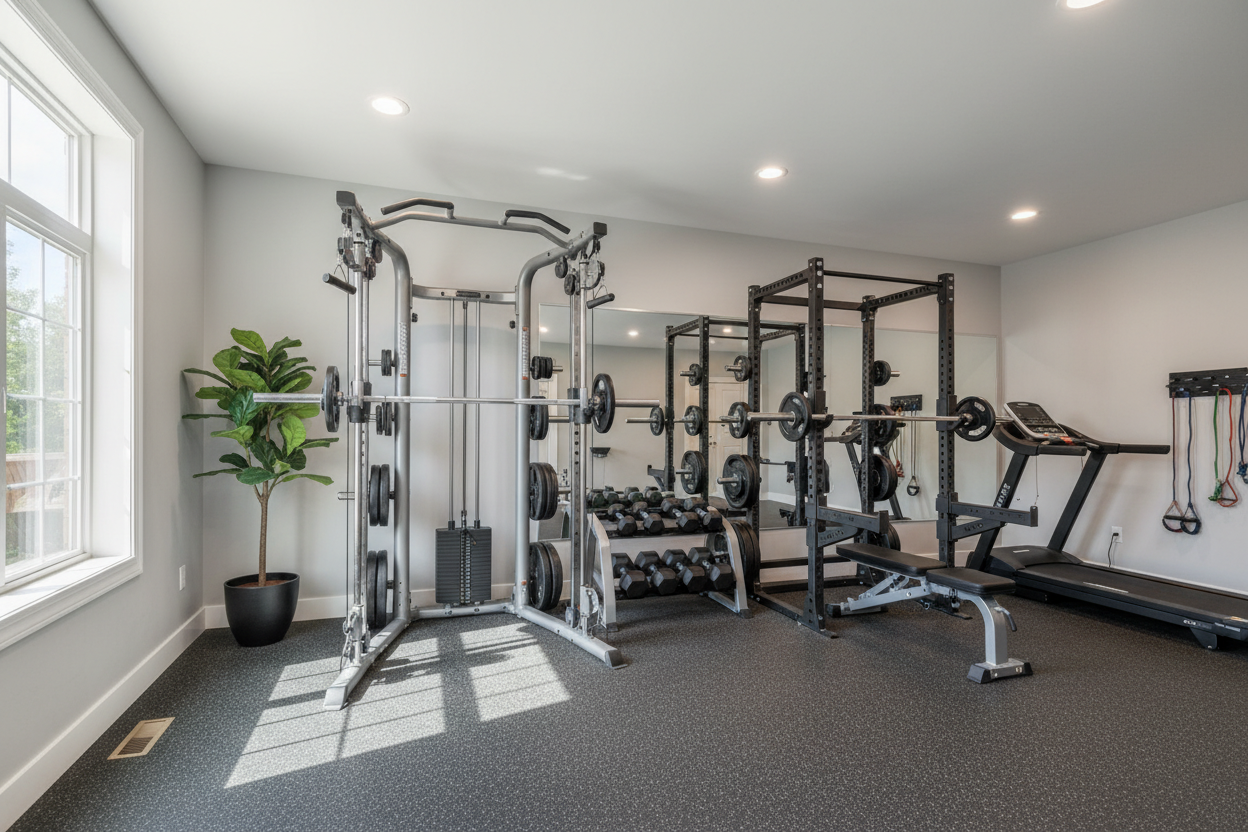
I remember the exact moment I realized my garage gym was out of control. I was trying to squeeze past a standalone leg press to reach my squat rack, and I tripped over a stray 45-pound plate. My wife’s car was relegated to the driveway, and my 'workspace' felt more like a scrapyard. That’s when the appeal of a multi smith machine started to make sense.
Quick Takeaways
- Space Savings: Replaces three to four separate machines in a single 6x8 foot footprint.
- Safety First: The fixed path is a lifesaver for solo lifters pushing to failure.
- Build Quality: Look for 11-gauge steel and linear bearings, not plastic bushings.
- Versatility: You can jump from heavy squats to cable flyes without walking five steps.
The Home Gym Space Trap (And Why I Wanted to Consolidate)
Most of us start with a bench and some dumbbells. Then comes the power rack. Then the cable tower. Before you know it, you’re doing a tactical shimmy just to change the weight on your barbell. It’s the classic space trap. I spent years defending my 'modular' setup, but the reality was I spent more time moving gear around than actually lifting it.
Consolidating isn't just about making room for the lawnmower. It’s about flow. When your gear is scattered, your rest periods get longer and your motivation dips. I wanted a centralized hub where I could hit a heavy compound lift and immediately pivot to accessory work without playing Tetris with my equipment.
What You Actually Get With a Multi Smith Machine
These rigs aren't just a bar on a track anymore. A modern Smith machine home gym station usually combines three distinct tools: a fixed-path Smith bar, a front-facing half rack for free weight work, and a dual-stack functional trainer. It’s a hybrid beast.
The magic happens in the footprint. You’re getting the stability of a Smith machine for those high-volume hypertrophy sets, but you still have the J-hooks on the outside for your 'real' squats and overhead presses. The cables are usually integrated into the uprights, giving you a full range of motion for everything from face pulls to cable crossovers without needing a separate 7-foot wide tower.
Do the Attachments Actually Hold Up to Heavy Lifting?
Here is where I get cynical. I’ve tested units that felt like they were held together by wishful thinking and recycled soda cans. If you’re moving serious weight, you need to look at the gauge of the steel and the quality of the pulleys. A multi training station smith machine DM01 is a solid example of what you want—heavy-gauge steel that doesn't wobble when you’re reacking 300 pounds.
Check the bearings. Cheap machines use plastic bushings that start to 'catch' after three months of sweat and dust. You want linear bearings for that buttery smooth glide. Also, pay attention to the pulley ratio. A 2:1 ratio is standard for functional trainers, meaning 100 pounds on the stack feels like 50 at the handle, which is perfect for isolation work. If the J-hooks look thin, they probably are. Don't trust your life to 14-gauge steel if you plan on squatting four plates.
The True Cost: Standalone Gear vs. All-in-One
Let’s talk numbers. A high-quality power rack ($800), a decent functional trainer ($1,500), and a standalone Smith machine ($1,000) will easily run you three grand before you even buy a single plate. Then add the shipping costs for three separate oversized crates. It’s a headache.
By comparison, an all in one Smith machine with cable crossover usually lands in the $2,000 to $4,000 range. You’re essentially getting the third machine for free while reclaiming about 40 square feet of floor space. For me, that floor space has a dollar value. Being able to actually park my car in the winter is worth the investment alone.
Programming Your Lifts on a Multi-Station Rig
The biggest shift for me was the efficiency. My workouts went from 75 minutes down to 50 because I wasn't wandering around. I’ll hit my heavy free-weight bench on the front J-hooks, then immediately slide the bench back six inches to do Smith machine incline presses for a massive pump. No waiting, no walking.
If you’re unsure how to transition your current split to a hybrid rig, check out this complete Smith machine workout guide. It’ll show you how to leverage the fixed path for movements like Bulgarian split squats where balance usually limits your strength. The ability to superset a heavy barbell row with cable lat pulldowns on the same machine is a total efficiency hack.
The Final Verdict: Who Should Actually Buy One?
If you have a 5,000-square-foot commercial warehouse, go ahead and buy standalone pieces. But if you’re working in a garage or a spare bedroom, the multi-station rig is the clear winner. It’s for the lifter who wants 95% of the performance of commercial gear with 100% of the convenience of a home setup. Just don't cheap out on the bearings—your joints will thank you later.
FAQ
Is the Smith bar 'cheating' compared to free weights?
It’s not cheating; it’s a different tool. It removes the stability requirement, which lets you isolate specific muscles and push closer to failure safely. Use both for the best results.
How long does it take to assemble?
Don't lie to yourself—this is a weekend project. Expect 6 to 10 hours of assembly. Grab a socket wrench set and a buddy; the included 'wrenches' are usually garbage.
Can I do pull-ups on these units?
Almost all of them come with a multi-grip pull-up bar at the top. Just make sure your ceiling height allows for your head to clear the top of the frame without hitting a joist.
Share:
The Real Reason People List Used Ab Machines for Sale
Sick of Floor Crunches? Try This Weighted Smith Machine Ab Workout