
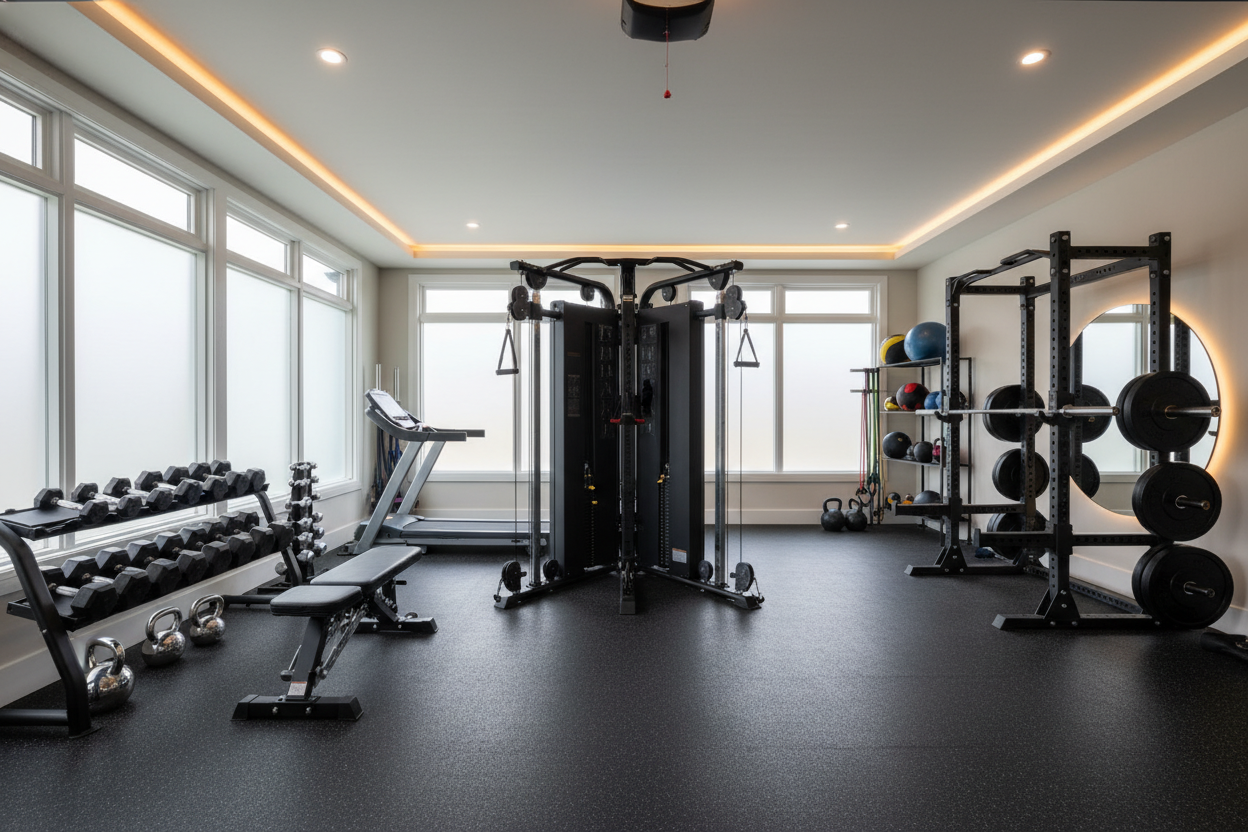
I remember the day I finally quit my commercial gym. I was tired of the $80 monthly fee and the guy who spent 20 minutes scrolling on his phone while sitting on the only squat rack. I rushed home and bought the first cheap 'all-in-one' rig I found online. Big mistake. It shook when I racked 135 pounds and the cables felt like they were dragging through gravel. Finding actual full body home workout equipment that doesn't suck is harder than a max-effort deadlift day.
Quick Takeaways
- Cheap multi-gyms use plastic pulleys that fray cables; look for aluminum or high-grade nylon.
- 11-gauge or 12-gauge steel is non-negotiable for safety.
- A 2:1 cable ratio is the sweet spot for functional movements and smooth travel.
- Modern rigs can save up to 30 square feet of floor space compared to individual machines.
Why I Used to Hate Multi-Station Gyms
If you grew up in the 90s or early 2000s, you know the 'plastic-coated' era of home fitness. Those machines were absolute garbage. They used thin, hollow steel tubes that felt like they’d fold if you sneezed on them. The weight stacks were often made of plastic-encased sand, and the 'smooth' travel lasted about three weeks before the friction became unbearable.
For years, I told everyone to buy a power rack and a barbell and forget about everything else. I hated the idea of a full body workout machine for home use because they were designed for catalogs, not for people who actually lift. They tried to pack 50 exercises into one machine, but none of them felt right. The range of motion was always off, and the 'leg extension' was clearly designed for someone with 12-inch shins.
The 'Jack of All Trades' Trap Most People Fall Into
The real problem with full body workout equipment for home is that most manufacturers prioritize quantity over quality. They’ll tell you that you can do 100 exercises, but they don't tell you that 90 of them feel like crap. Biomechanics matter. If the pivot point on a chest press isn't aligned with your shoulders, you're just asking for an impingement.
Cheap home gym full body setups often use fixed-path levers that force your joints into unnatural positions. When you're lifting heavy, you need the equipment to move with you, not against you. Most budget machines fail to scale as you get stronger, meaning you'll outgrow the machine's resistance or structural integrity within a year of consistent training.
What Actually Makes a Rig Worth the Floor Space?
If you're going to dedicate a 6x8 foot chunk of your garage to a single machine, it better be overbuilt. I look for 2.5mm to 3mm thick steel. If I can shake the uprights with one hand, I'm not putting 300 pounds on it. You also need a cable system that doesn't stutter. High-tensile strength aircraft cables (usually rated for 2,000 lbs) are the standard for anything I’d actually recommend.
A guided barbell system is another essential. If you’re training alone in a basement, a high-quality Smith machine home gym station is a literal lifesaver. It gives you the safety of a spotter without needing a neighbor to hang out in your garage. Look for linear bearings—not bushings—for that buttery smooth vertical travel.
Why I Stopped Recommending Single-Use Machines
I used to be a purist who wanted a separate leg press, a standalone cable crossover, and a dedicated power rack. Then I looked at my floor plan. A commercial leg press alone takes up about 25 square feet. Unless you live in a literal warehouse, you don't have the room for that. Buying full body workout equipment at home is about efficiency, not just iron.
Stop trying to fit five different machines in a one-car garage. You’ll end up with no room to move and a gym that’s impossible to keep clean. Finding the best at home full body workout equipment means finding a consolidated rig that uses a single footprint for multiple movements. If a machine lets you go from squats to lat pulldowns just by moving a pin, you've won the floor space battle.
The Exact Setup That Finally Changed My Mind
Modern engineering has finally caught up to the demands of serious lifters. We’re now seeing 'Functional Trainers' that aren't just for rehab or light toning. These things are tanks. They combine the versatility of dual cable stacks with the heavy-load capacity of a traditional rack. It’s the only way to get a true full body exercise equipment for home experience without compromising on the heavy stuff.
The full body multi training station is the kind of rig that changed my perspective. It uses a heavy-duty frame and commercial-grade pulleys that actually feel like the stuff you find at Gold's Gym. When you can do heavy cable rows, Smith machine squats, and pull-ups on the same piece of full body workout machines for home, you stop missing the commercial gym membership.
My Honest Experience
I once bought a 'bargain' multi-gym that arrived with misaligned bolt holes. I spent four hours with a metal drill bit just trying to get the frame together. On the first set of chest presses, the cable snapped and whipped across my arm. I learned the hard way: if the price seems too good to be true for 500 lbs of steel and cables, it probably is. I eventually sold that scrap metal for pennies and invested in a rig with a 12-gauge steel frame and proper bearings. My workouts went from 'frustrating' to 'productive' overnight.
FAQ
Do I need a concrete floor for these machines?
Ideally, yes. These rigs are heavy, and once you add weight plates, you're looking at 600-1,000 lbs in a small area. If you're on a second floor, check your joists. On concrete, just throw down some 3/4-inch stall mats and you're good.
Can I actually build muscle with just cables and a Smith machine?
Absolutely. Your muscles don't have eyes; they only know tension. As long as the machine allows for progressive overload (adding more weight over time), you can get as big and strong as you want.
How much ceiling height do I need?
Most full-scale rigs are between 80 and 84 inches tall. Standard 8-foot ceilings are fine, but if you're in a basement with low-hanging ductwork, measure twice before you buy. Don't forget to leave room for your head during pull-ups!
Share:
I Hunted for Gym Equipment in Quakertown PA (And Saved $400 on Shipping)
Can You Actually Build Serious Strength With Power Lift Dumbbells?