
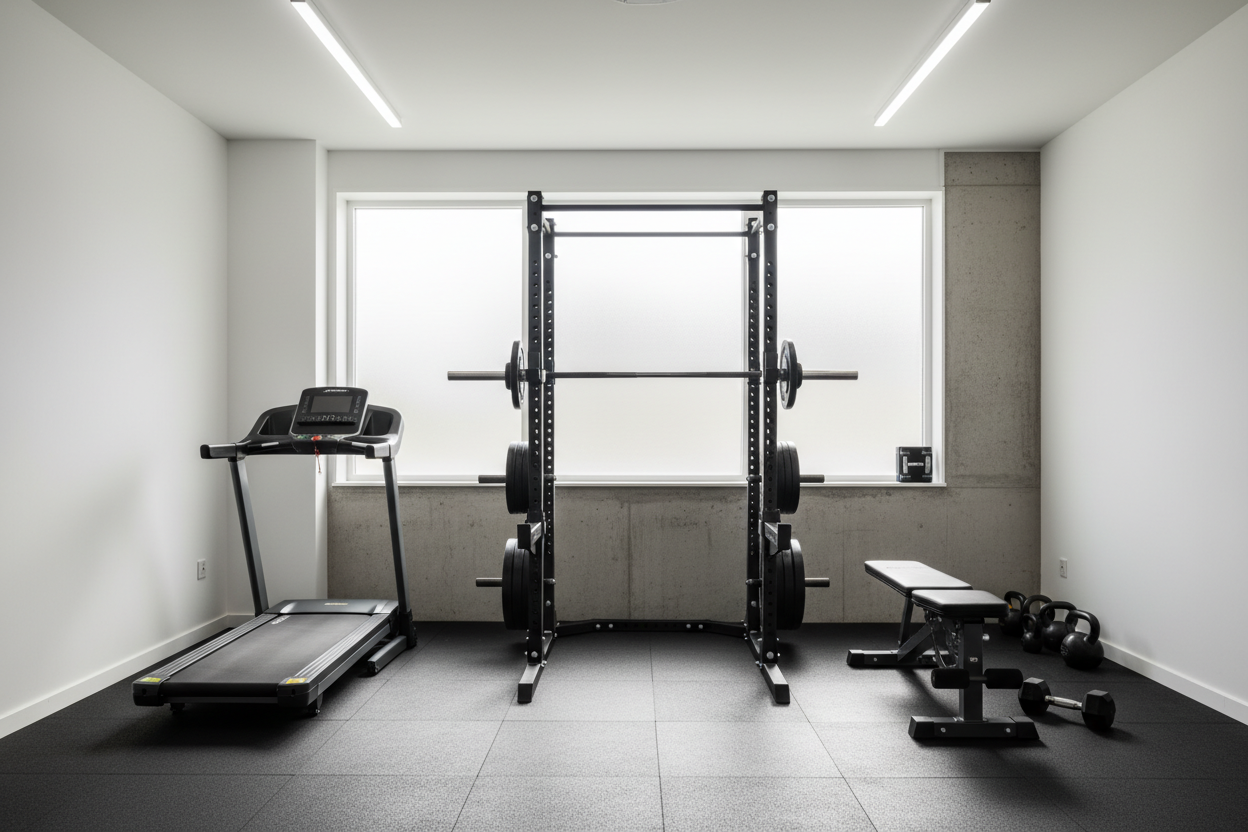
I was three beers deep and staring at a 11-gauge steel power rack on Alibaba that cost $210. In my head, I was already a genius. I figured the big domestic brands were just slapping a logo on this exact steel and charging me a 400% markup. I decided right then to become my own fitness equipment importer and bypass the middleman entirely.
The math seemed bulletproof. Even with a few hundred bucks for shipping, I’d have a commercial-grade setup for the price of a budget barbell. Two months later, I was standing in a rainy warehouse parking lot, paying a guy named 'Vinnie' $450 in 'destination charges' just to release a crate that looked like it had been dropped from a C-130 transport plane. It was the most expensive 'cheap' rack I’ve ever owned.
Quick Takeaways
- The Sticker Price is a Lie: The Alibaba price doesn't include customs, port fees, or the 'Less than Container Load' (LCL) nightmare.
- Zero Quality Control: If the holes are misaligned or the steel is thin, you have no recourse.
- Logistics are a Full-Time Job: You aren't just buying a rack; you're managing international freight.
- Domestic is Cheaper for Singles: Unless you're buying 20+ units, the overhead kills the savings.
The Alibaba Illusion: Why Direct Sourcing Looks So Good
When you first see those factory listings, it feels like you've found a glitch in the Matrix. You see a functional trainer with aluminum pulleys and a 300-lb stack for $450. You look at your local shop and see the same thing for $2,500. Your brain immediately starts doing 'gym math'—subtracting the retail profit and assuming the rest is just shipping.
The problem is that those factories are set up for volume. They want to move 40-foot containers, not a single crate for a guy in a suburban cul-de-sac. When you ask to import gym equipment as an individual, they’ll say yes, but they won't tell you about the labyrinth of fees waiting for you at the pier. They give you an 'FOB' (Free On Board) price, which basically means their job ends the second the crate touches the boat. After that, you're on your own in a world of maritime law and predatory brokers.
The Hidden Fees They Don't Put on the Spec Sheet
Here is where my $210 rack became a $2,000 anchor. Shipping a single heavy item is called LCL shipping. Because you aren't filling a whole container, your crate gets stuffed into a 'community' container. When it hits the US port, it has to be unpacked at a Container Freight Station (CFS). This is where the bloodletting begins.
I got hit with a $150 ISF filing fee, a $200 customs bond, and a $300 'terminal handling charge.' Then came the tariffs—25% on certain steel goods thanks to ongoing trade wars. By the time I hired a residential liftgate truck to actually bring the crate to my house because I didn't have a loading dock, I had spent more on paperwork and diesel than I did on the actual iron. I wasn't a savvy importer; I was a mark for every logistics company between Shanghai and Ohio.
What Actually Showed Up on My Driveway
The crate was splintered pine and hope. I spent an hour prying it open with a crowbar, expecting to see the majestic Smith Machine Home Gym Station I saw in the glossy renders. Instead, I found steel that felt suspiciously light. The listing promised 11-gauge steel (about 3mm thick). What I got was closer to 14-gauge—the kind of stuff that flexes when you rack a heavy squat.
The hardware bag was non-existent. I had to spend another $80 at the hardware store buying Grade 8 bolts because the few that were rolling around the bottom of the crate looked like they were made of compressed tin foil. There was no manual, the powder coating was already flaking off in sheets, and one of the uprights had a 2-degree lean that made the pull-up bar look like a slide. I realized then that I couldn't exactly 'return' 400 lbs of steel to China. I was stuck with a dangerous, ugly pile of metal.
When Does It Actually Make Sense to Import Gym Equipment?
Importing only works if you have scale. If you are opening a 10,000-square-foot black-iron basement gym and need 15 identical racks, the shipping and brokerage fees get spread out. For a single person, it’s a financial suicide mission. You are better off looking at how to Can You Replicate Fitness 19 Equipment On A Garage Gym Budget by sourcing from domestic companies that have already eaten those import risks for you.
Domestic retailers buy in bulk, inspect the quality at the factory, and handle the nightmare of the ports. When you buy from them, you’re paying for the insurance that the holes will actually line up and the steel won't collapse under a 400-lb load. More importantly, you're paying for a customer service rep who actually answers the phone when a part is missing.
The Smarter Way to Stretch Your Iron Budget
If you want to save money, stay off Alibaba. The best way to build a Home Gym without going broke is to buy the 'Big Three' from a reputable domestic brand and scour the used market for the rest. I’ve found that high-quality, second-hand commercial gear from a local gym liquidation is always better than 'new' mystery metal from overseas.
Stop chasing the shiny all-in-one machines that promise to do everything. Most of the time, The Best Home Gym Fitness Equipment Is Just 3 Things: a solid rack, a good bar, and enough plates to keep you honest. Focus on those. My $2,000 mistake sits in the corner of my garage now, mostly used as a glorified laundry rack, while my domestic-bought squat stand does the actual heavy lifting.
FAQ
Is buying gym equipment from Alibaba cheaper?
Only for the initial price. Once you add in customs bonds, ocean freight, port handling, and domestic trucking, a single item usually costs 2-3 times the listed price. For one rack or one bench, it's almost always more expensive than buying domestic.
What is the biggest risk of importing your own gear?
Quality control and shipping damage. If the frame is warped or the parts are missing, you have no realistic way to get a refund or replacement. You are essentially gambling your entire budget on a crate that might be junk.
Do I need a license to import gym equipment?
You don't necessarily need a business license for a one-time personal import, but you will need to file an ISF (Importer Security Filing) and likely hire a customs broker to navigate the HTS codes and duties. It's a massive administrative headache for a single person.
Share:
Are Freestanding Pull Up Machines for Home Worth the Space?
Is a Multi-Station Gym Machine All You Need to Build Muscle?