
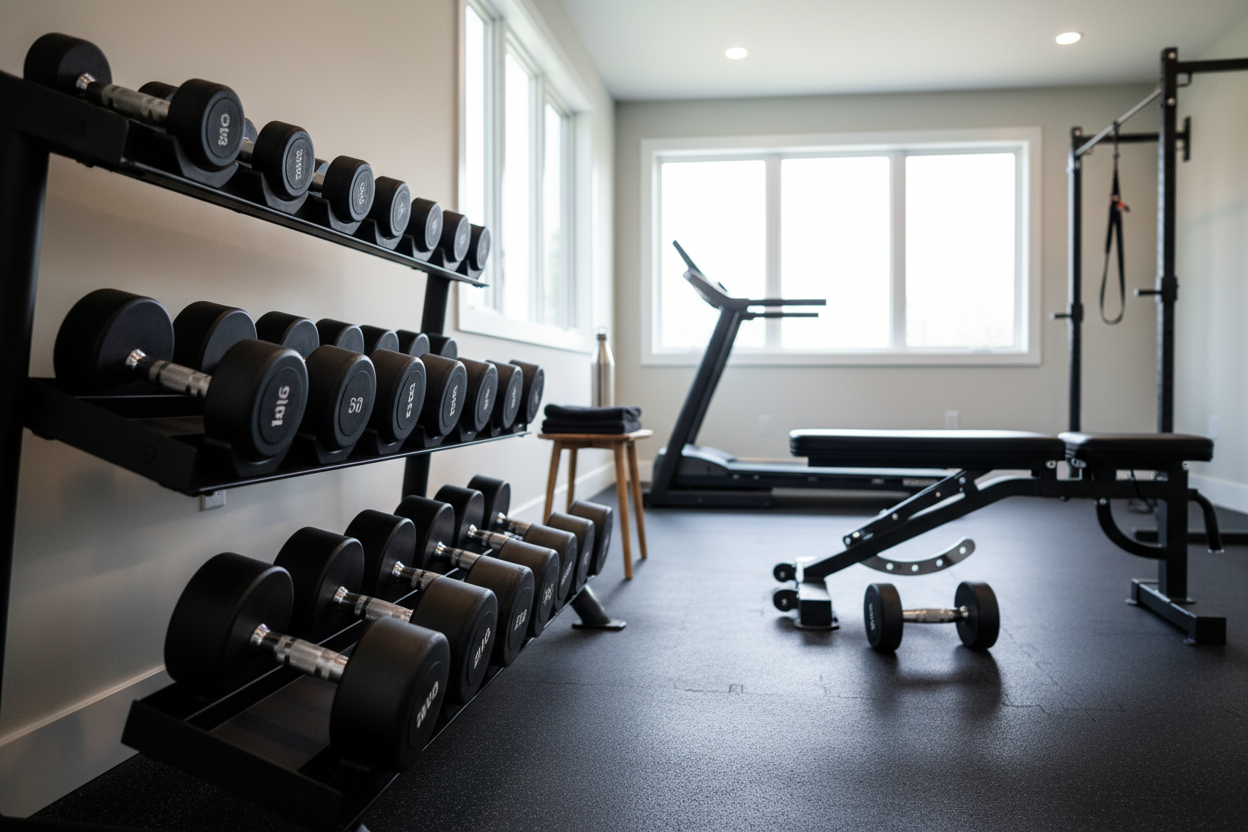
I remember the day my first set of budget weights arrived. I opened the boxes in my garage, and within thirty minutes, the entire space smelled like a North Dallas tire fire. It wasn't just a new car smell; it was a headache-inducing chemical off-gassing that lingered for months. If you have spent any time scrolling through forums or looking at urethane dumbbell options, you know exactly what I am talking about.
Quick Takeaways
- Urethane is completely odorless; rubber off-gasses for months.
- Polyurethane is significantly more abrasion-resistant and won't mark your floors.
- Urethane heads are typically shrunk-fit or welded to the handle, meaning no more loose, rattling heads.
- While the initial cost is higher, the lifespan is triple that of standard rubber.
The Day I Got Sick of the 'Tire Shop' Smell
Cheap rubber hexes are made from recycled crumb rubber and sulfur-based adhesives. In a climate-controlled commercial gym, you might not notice it. In a 90-degree garage with zero airflow? It is suffocating. I spent weeks leaving my garage door cracked just to breathe during a superset. This is the primary reason lifters make the jump to a PU dumbbell.
Polyurethane is a different beast entirely. It is chemically inert, meaning it doesn't off-gas. When you buy urethane dumbbells, you are paying for the luxury of breathing clean air. It sounds like a small thing until you are buried under a heavy set of presses and all you can smell is a burning radiator. If your gym is inside your house or a poorly ventilated spare room, urethane isn't just a want; it is a necessity.
Rubber vs. Polyurethane Weights: The Science of Surviving Concrete
Standard rubber is soft. It is designed to cushion, but over time, it dries out, cracks, and eventually begins to peel away from the iron core. I have seen countless sets of Rubber Hex Dumbbell Set Ds01 that have served people well for years, but if you are the type to drop your weights on raw concrete, rubber will eventually fail you. Polyurethane weights are much denser and harder. Think of the wheels on a high-end skateboard versus a pencil eraser.
Urethane coated dumbbells are also UV-resistant. If your garage gets direct sunlight, rubber will turn a chalky grey and start to crumble within two years. Urethane stays pitch black and maintains its finish. It is also non-marking. If you have ever dragged a rubber dumbbell across a light-colored stall mat and left a permanent black streak, you will appreciate why the best urethane dumbbells are the standard in every high-end facility.
Do Round Urethane Dumbbells Actually Roll Away?
This is the classic debate: round urethane dumbbells versus the traditional urethane hex dumbbells. People fear that a round dumbbell will turn their garage into a bowling alley the moment they set them down. In my experience, unless you are training on a 5-degree incline, they stay put. The benefit of the round head is actually the 'commercial' feel. They are more compact than hexes, making them much easier to rack and unrack without smashing your knuckles.
The ergonomics of a round head also help during movements like dumbbell snatches or cleans. There are no sharp edges to dig into your shoulders or thighs when you are prepping for a set of heavy presses. While urethane hex dumbbells exist and offer that 'no-roll' security, most serious lifters eventually gravitate toward the round style for the better balance and cleaner aesthetics.
The 'Buy Once, Cry Once' Math on a 5-50 Set
Let's talk about the 'Urethane Tax.' A premium urethane dumbbell set 5-50 is going to cost you about 40% to 60% more than a standard rubber set. It is a bitter pill to swallow on day one. But I want you to look at the handles. Most high-end urethane sets use a solid steel bolt and a press-fit head that is often welded. They don't loosen. I have owned rubber sets where the head started to spin after six months of heavy rows. That is a safety hazard, not just an annoyance.
When you read Are High End Dumbbells Actually Worth the Urethane Tax?, you realize you aren't just paying for the material. You are paying for the precision of the weight. Urethane sets usually have a much tighter weight tolerance—often within 1% of the stated weight. Cheap rubber can be off by as much as two or three pounds on a 50lb bell. If you are serious about your programming, that variance matters.
Who Actually Needs to Pay the Urethane Premium?
If you are just starting out and don't know if you will still be lifting in twelve months, don't buy the urethane dumbbell set 5-100. It is a massive investment that you might not need. However, if you are building your 'forever' gym, skipping the middle step will save you money. I wasted $500 on a mid-grade set only to sell it for half-price two years later when I finally realized I wanted the quality of polyurethane.
For most of us, a 5-50 set covers 90% of our training. You can always supplement with a few heavy pairs of rubber hexes for your 80s or 100s to save cash. Go ahead and browse the different Dumbbells available and look closely at the knurling and the head-to-handle connection. If you want a gym that looks and performs like a professional facility, urethane is the only way to go.
FAQ
Is urethane better than rubber for dumbbells?
Yes, in almost every measurable way. It is more durable, odorless, and more resistant to heat and sunlight. The only downside is the higher price point.
Do urethane dumbbells crack?
It is extremely rare. While rubber can dry rot and crack over time, polyurethane is a much more stable polymer that maintains its integrity even after years of heavy use and drops.
Why are urethane dumbbells so expensive?
The raw material for polyurethane is more costly than recycled rubber, and the manufacturing process—often involving precision welding and chrome plating for the handles—is much more intensive.
Share:
Your Premium Iron Came From the Same Dumbbells Factory as Mine
Are Fitness Gear Weight Benches Actually Safe for Heavy Lifting?