
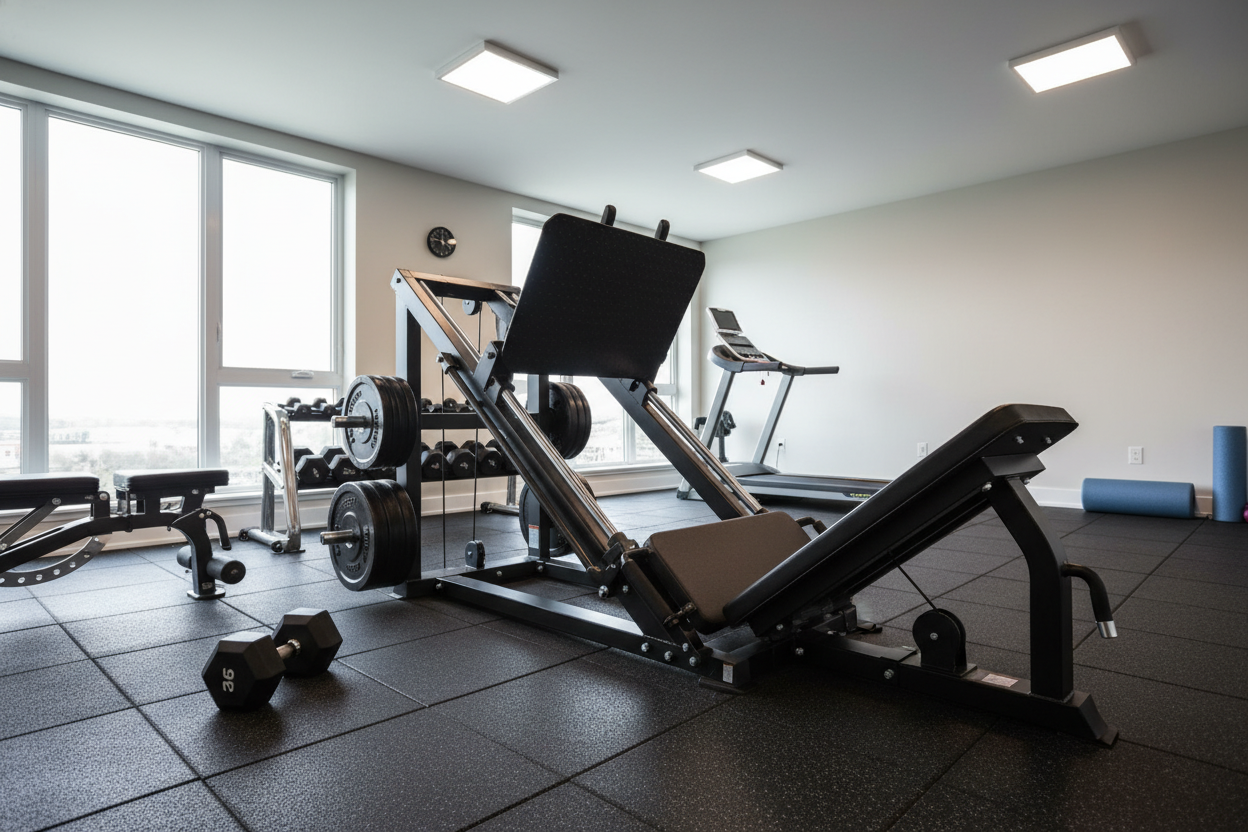
I spent twenty minutes yesterday just stripping 45-pound plates off a leg press because the guy before me thought he was training for the Olympics but forgot the cleanup part of the job. By the time I was done, my lower back was tighter than my hamstrings. It made me wonder if there is a better way than constantly wrestling with iron, which is usually when someone mentions a hydraulic leg press.
We have all seen them in senior centers or those 'express' circuit gyms. They look clean, they do not make a clanging sound, and they do not require a stack of plates that cost more than your first car. But can a machine that relies on fluid actually give you the wheels you are looking for, or is it just a glorified cardio bike for your quads?
Quick Takeaways
- Resistance is speed-dependent: the faster you push, the harder it gets.
- Concentric-only movement means almost zero muscle soreness the next day.
- Safety is the top selling point; you cannot get pinned under a heavy load.
- Hypertrophy is limited because there is no 'negative' or eccentric phase.
Wait, How Does Fluid Resistance Actually Feel?
A hydraulic leg press machine does not care about gravity. When you use a traditional sled, you are fighting a constant force. On a hydraulic unit, you are fighting a piston filled with oil. It feels like trying to run through a waist-deep swimming pool. If you move slowly, the resistance is light. If you try to explode, the machine fights back with everything it has.
The most jarring thing for a regular lifter is the lack of a 'sticking point.' In a standard press, there is always that moment at the bottom where you feel like you might die. With hydraulics, if you stop pushing, the resistance just stops. You can literally let go of the handles at any point in the range of motion and nothing falls. It is a bizarre sensation of total control, but it feels 'mushy' compared to the crisp, mechanical feel of a high-end roller system.
Because the resistance is fluid, you also do not get that satisfying inertia. You cannot 'cheat' a rep by using momentum. Every single inch of the movement requires active force. It is a different kind of burn—more of a metabolic fire than a structural struggle against a heavy load.
The Joint-Saving Magic of Concentric-Only Lifting
Physical therapists treat these machines like holy grails, and for good reason. Most of the damage to our joints and the subsequent 'DOMS' (delayed onset muscle soreness) comes from the eccentric phase—the part where you lower the weight. A hydraulic system is concentric-only. You push out, and then you usually have to pull back or just let the piston reset with minimal effort.
This makes it significantly safer for your lower back and knees. When you compare this to a leg press Smith machine setup, the difference in spinal compression is massive. In a Smith machine or a standard sled, that weight is always pressing down on your frame. With hydraulics, there is no 'down.' There is only 'away.' If your knees feel like they are full of broken glass every time you squat, this fluid resistance is a legitimate way to get blood into the muscle without the inflammatory price tag.
I have used these during rehab stints, and the recovery time is incredible. You can absolutely torch your quads at noon and be ready to go for a hike by 5:00 PM. That is unheard of with heavy plate-loaded training.
The Brutal Drawback of a Hydraulic Leg Press Machine
Now, let's get real. If your goal is to look like a bodybuilder, the hydraulic leg press machine is going to let you down. Muscle growth (hypertrophy) thrives on mechanical tension and eccentric overload. By removing the 'lowering' phase of the lift, you are essentially cutting your muscle-building potential in half.
You also run into the 'ceiling' problem. Most hydraulic pistons have a maximum flow rate. Once you reach a certain level of strength, you can actually outpace the machine. You end up moving your legs as fast as possible, but the resistance cannot keep up with your power output. For a pro athlete or a serious powerlifter, it becomes a high-speed aerobic exercise rather than a strength builder.
There is also the 'feel' factor. Part of the psychological benefit of training is seeing the plates on the bar. Moving a dial from '3' to '4' on a hydraulic cylinder just does not provide the same dopamine hit as sliding another 45-pound wheel onto a sleeve. If you live for the grind of heavy iron, hydraulics will feel like a toy.
Fluid vs. Iron: Should You Just Buy a Plate-Loaded Sled?
If you are looking at your garage floor wondering what to buy, consider the footprint. A hydraulic unit is often more compact because it does not need long weight horns to hold 800 pounds of iron. However, it is a one-trick pony. For the same amount of floor space, a 3 in 1 hack squat leg press combo gives you three different movements and the ability to load actual weight.
If space is your absolute primary concern, but you still want the feel of a real gym, a compact 30 degree leg press hack squat is a better middle ground. It gives you the small footprint you want without sacrificing the eccentric loading that builds real muscle mass. Hydraulics are great for a circuit, but for a home gym where you only have room for one big leg piece, iron usually wins.
Maintenance is another factor. If a hydraulic seal blows, you are looking at a messy floor and a specialized repair. If a plate-loaded machine gets a bit squeaky, you just hit the rails with some silicone spray and get back to work. Iron is simple; fluid is complicated.
The Final Verdict: Who Actually Needs Fluid Resistance?
So, should you buy one? If you are a silver sneaker athlete, someone coming off a major knee surgery, or a coach running high-intensity circuit classes where speed of transition is everything, then yes. It is a fantastic tool for general health and 'pumping' the muscle full of blood.
But if you are under 50 and your joints are mostly intact, you are likely going to get bored of a hydraulic unit within a month. You will miss the struggle of the eccentric phase. If you want to actually change the shape of your legs and build serious strength, skip the pistons. You are better off browsing a dedicated leg press hip thrust machine collection to find something that actually challenges your central nervous system.
Personal Experience: The 'Piston' Mistake
I remember the first time I tried a full hydraulic circuit. I was coming off a back injury and thought I was being 'smart.' I spent 45 minutes blasting my legs on the hydraulic press, feeling like a hero because I could move the setting to the max. I didn't feel a thing the next day. No soreness, no stiffness. At first, I thought it was a miracle. After three weeks, I realized my legs actually looked smaller. I had traded intensity for comfort, and my quads paid the price. I went back to a plate-loaded sled, dropped the weight, focused on the slow negative, and my strength returned in half the time.
FAQ
Is a hydraulic leg press good for weight loss?
It is excellent for high-intensity interval training (HIIT). Because you can move fast without the risk of injury, you can keep your heart rate high, which burns more calories during the session.
Can you build big legs with hydraulics?
It is much harder. Without the eccentric (lowering) phase, you miss out on the micro-tears in the muscle fiber that lead to significant growth. It is better for toning and endurance than raw mass.
Does it make a lot of noise?
No, they are nearly silent. There are no plates clanging and no heavy sleds slamming into the stops. It is one of the quietest pieces of gym equipment you can own.
Share:
Why Your Sitting Exercise Machine Feels Like a Flimsy Footrest
Stop Hating the Smith Machine Squat (Why It Works)