
I remember scrolling through Craigslist at midnight a decade ago, looking for a shortcut to a home gym. I saw those shiny ads for a 'complete' benches and weights package at a big-box store and thought I’d cracked the code. It looked like everything I needed for $200. I was wrong.
Most of these bundles are built for a person who plans to use them as a laundry rack three weeks after purchase. If you actually intend to move heavy iron, these 'all-in-one' setups are often the most dangerous piece of equipment you can put in your garage. They look like a deal, but they’re usually a liability.
Quick Takeaways
- Narrow uprights on bundled sets force a 'pinky-pinch' grip that ruins your bench press form.
- Standard 1-inch bars included in kits are non-standard and won't fit Olympic plates.
- A standalone bench paired with a separate rack is infinitely safer and more versatile.
- Weight ratings on cheap sets are often 'static' loads, not 'dynamic' (moving) loads.
The All-In-One Trap: Why Most Starter Kits Suck
The typical gym weight bench set you find at Walmart or on Amazon is built from thin, 14-gauge tubular steel. It feels light because it is light. When you're lying under 135 pounds, 'light' is the last word you want to describe the structure holding the weight over your throat.
The biggest design flaw is the upright width. Most of these units have uprights that are about 24 to 28 inches apart. That is exactly where your hands need to be for a proper bench press. You end up having to grip the bar outside the uprights, which is awkward, or inside them, which is too narrow for most people. It’s a recipe for shoulder impingement and smashed fingers.
Manufacturers also love to inflate their max capacity ratings. They might claim a 400-lb limit, but that usually includes the user's body weight. If you weigh 200 lbs, you’ve only got 200 lbs of 'safe' lifting room. In reality, these frames flex and groan long before you hit that limit.
What Happens When You Actually Try to Lift Heavy?
There is a specific, terrifying sensation when a cheap weight lifting bench press combo starts to wobble. It usually happens right as you’re unracking a personal best. Because the bench is physically bolted to the rack, every movement you make on the seat translates to the bar sitting on the hooks. It’s a closed-loop system of instability.
I’ve seen guys outgrow these setups in less than six months. Once you start hitting two plates, the structural integrity of a budget combo unit becomes a serious concern. You have to ask yourself how far a Marcy weight bench setup or a similar entry-level bundle can actually take you before you're forced to buy everything a second time.
The Sketchy Math Behind Those Included Barbells
Most 'weight set benches' come with a 5-foot or 6-foot 'standard' barbell. In the lifting world, 'standard' actually means 'not standard.' These bars have 1-inch diameter sleeves, while the rest of the serious lifting world uses 2-inch Olympic sleeves. This means the plates you buy for this bar won't fit on a real bar later, and vice versa.
These bars also lack rotating sleeves. When you curl or press, the entire weight plate has to spin with the bar, which puts massive torque on your wrists. Furthermore, these bars rarely weigh 45 lbs. They are often 15 or 25 lbs, which makes calculating your real matrix bench press bar weight a guessing game. If you can't track your progress accurately, you aren't training; you're just moving stuff around.
How to Piece Together a Setup That Won't Wobble
The smart move is to decouple your equipment. Instead of a 'weight and weight bench' combo, buy a standalone heavy duty weight bench first. Look for 11-gauge steel and a tripod foot design so your feet have room to drive into the floor. A good bench should feel like a tank, not a lawn chair.
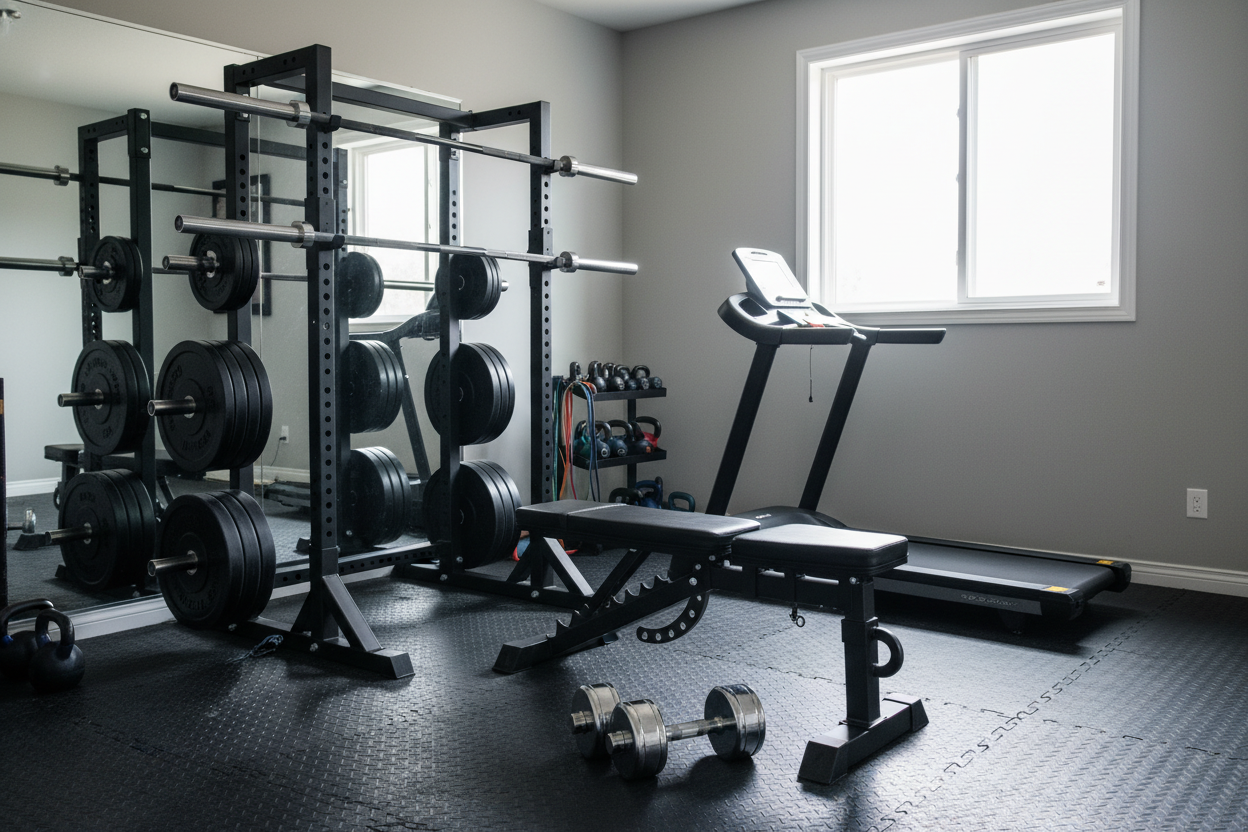
Pair that bench with a separate squat stand or a half-rack. This gives you the freedom to move the bench out of the way for squats, overhead presses, and rows. It also means if you ever want to upgrade your rack, you don't have to throw away your bench. You’re building a modular system that grows with your strength, rather than a disposable unit that ends up on the curb.
Are There Any Pre-Packaged Sets Actually Worth Buying?
I’m not a total hater. There are rare exceptions where a 'multi purpose weight lifting bench' actually makes sense. You’re looking for 'Olympic-width' uprights—usually 42 to 48 inches apart—and a frame that uses 2x3 or 3x3 inch steel tubing. If the unit uses 2-inch Olympic plates and has independent safety spotters, it’s a different conversation.
For example, a high-end bench with barbell rack and leg extension can be a great space-saver if the engineering is solid. The key is looking for features like reinforced gusset plates and a footprint that doesn't tip when you sit on the edge of the seat. If it weighs less than 75 lbs total, stay away.
My First-Hand Fail
My first home setup was a 'Gold's Gym' special I bought for $120. The first time I tried to bench 185 lbs, the uprights swayed so much I thought the welds were going to snap. I actually had to have my roommate stand behind the rack just to hold the frame steady while I lifted. It was pathetic. I ended up selling it for $40 three months later and buying a real rack. I wasted $80 and a lot of skin on my knuckles learning that lesson.
FAQ
Can I use an Olympic bar on a standard narrow bench?
No. An Olympic bar is 7 feet long. If you try to use it on a narrow 'standard' bench, the bar will be incredibly unstable and could flip the entire rack over if you load one side too quickly.
What should I look for in a heavy duty weights bench?
Check the steel gauge (11 or 12 is best), the pad density (you don't want to feel the wood board underneath), and the weight capacity. If it doesn't list a capacity over 600 lbs, it's probably not heavy duty.
Is a bench with a leg developer worth it?
Only if the pivot point aligns with your knee. Most cheap ones are designed poorly and end up hurting your shins more than helping your quads. If you're serious, buy a dedicated leg machine later.
Share:
Is the Best Rated Home Workout Equipment Actually Worth the Hype?
Why the Best Exercise Machine at Home Doesn't Plug In