
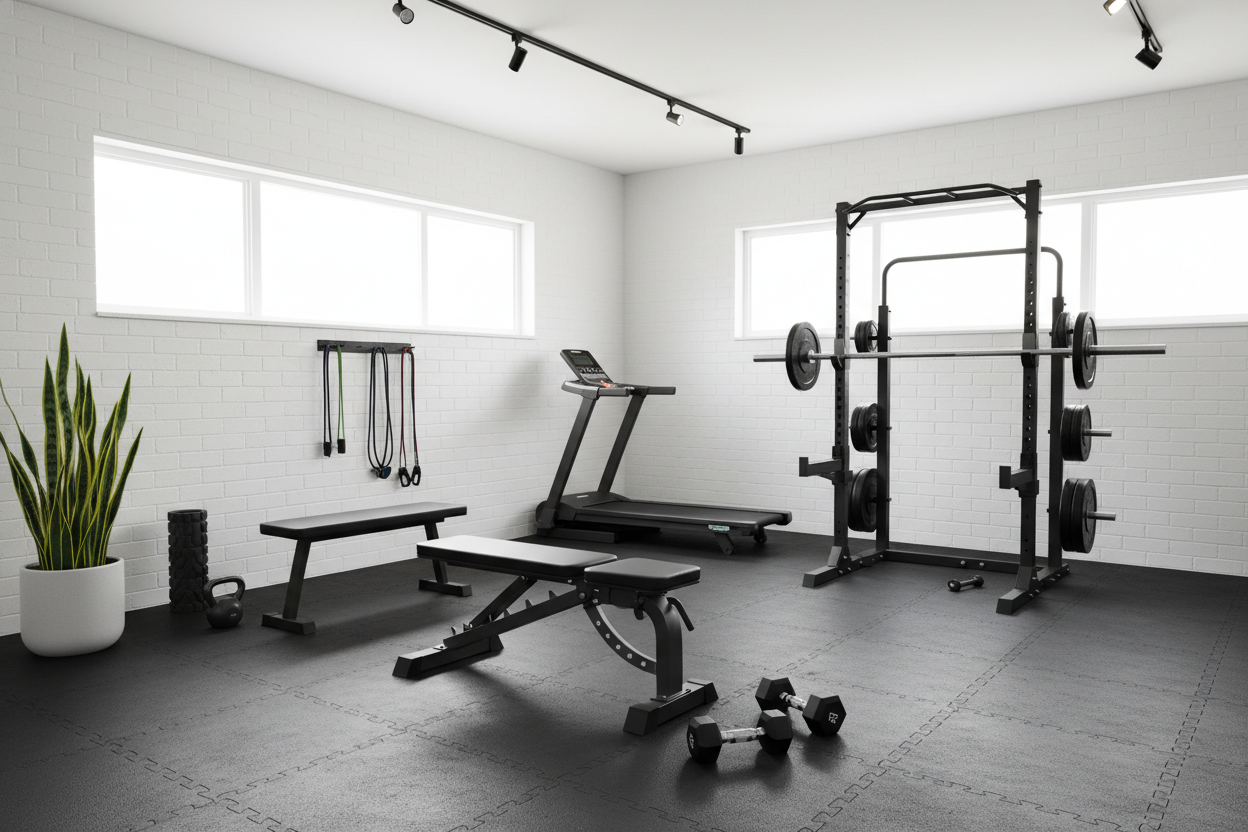
I remember the day I finally quit my commercial gym. I was tired of waiting for the power rack while some guy scrolled TikTok, so I went out and bought the biggest, heaviest bench I could find. I thought 'heavy equals quality.' I was wrong. Buying benches for weight lifting that weigh as much as a small car is the fastest way to ruin a garage gym layout before you even get your first session in.
Quick Takeaways
- Mobility is king in small spaces; if it doesn't have wheels, don't buy it.
- Avoid 'all-in-one' bundles with sand-filled plastic weights.
- A 600-lb weight capacity is the minimum for serious lifting.
- Adjustable benches offer more versatility for shoulder health than fixed flat pads.
The Commercial Gym Illusion
Most people see those massive, bolted-down bench press benches at the local powerhouse and think that's the gold standard. Those units are tanks, sure, but they are designed for a 10,000-square-foot facility where nothing ever moves. In a 20x20 garage, a 150-pound beast of a Weight Bench becomes a permanent obstacle.
I’ve seen guys buy specialized competition benches only to realize they can't park their car or even find floor space to deadlift. You need professional-grade stability, not professional-grade bulk. Look for 11-gauge steel, but make sure the footprint doesn't swallow your entire floor plan.
Why a Workout Bench With Wheels Will Save Your Back
If your bench doesn't have wheels, you are going to hate leg day. A workout bench with wheels allows you to glide the unit out of the rack in three seconds. I’ve watched lifters try to 'hop' a heavy flat bench across rubber stall mats. The feet catch, the mat tears, and it is a fantastic way to tweak your lower back before your first warm-up set.
Look for high-durometer wheels—the kind that look like rollerblade wheels. Cheap plastic wheels will flatten under the weight of the bench over time, making them useless. A handle integrated into the front foot is also a must-have so you aren't grabbing greasy frames to move your gear.
Should You Buy an Incline Bench Set or Keep It Flat?
I love the rock-solid feel of a dedicated flat bench, but for most home lifters, an incline bench set is the smarter investment. You get access to incline presses, seated curls, and chest-supported rows without needing three different pieces of equipment. The trade-off is often a 'gap' between the seat and the back pad.
Some manufacturers try to solve this with sliding mechanisms or extra padding. You might wonder, Is an Adjustable Weight Bench With Resistance Bands Worth It? Generally, the bands are a gimmick you'll toss in a corner, but the adjustability itself is mandatory for hitting different muscle angles and keeping your shoulders from getting grinded down by flat-only pressing.
The Truth About Buying Weight Benches With Weight Included
You will inevitably see those 'starter kits' featuring weight benches with weight included for a suspiciously low price. Do yourself a favor and keep scrolling. Usually, that lifting weight bench is made of thin 14-gauge steel that wobbles the moment you load 135 pounds on the bar.
The weights in these bundles are often cement-filled plastic shells. They are bulky, they leak sand, and they have zero resale value. You are better off buying a standalone, high-quality bench and sourcing real iron or bumper plates separately. Don't settle for a setup you'll outgrow in twelve weeks.
When Does an All-In-One Setup Actually Make Sense?
There is one scenario where a workout bench and weights system integrated together actually works: high-end leverage machines. If you train alone and don't have a spotter, a machine like the Weight Bench Chest Press Machine Independent Arms Z1 Pro is a legitimate alternative to a traditional rack.
These systems use independent arms to mimic the feel of a barbell while providing a built-in safety net. It’s a specialized tool for people who want to push heavy volume safely. It's not the 'rookie' bundle you find at a big-box store; it's a piece of engineering meant for solo lifters who value their ribcage.
Personal Experience: The 'Permanent' Bench Mistake
My first home gym featured a 95-pound flat bench with no wheels. It was built like a tank and I loved it—for exactly one week. Then I realized that to do pull-ups in my rack, I had to deadlift the bench out of the way. After a month of this, I just stopped doing pull-ups because I was too lazy to move the equipment. I eventually sold it for a loss and bought a mobile version. Learn from my laziness: mobility isn't a luxury, it's a requirement.
Frequently Asked Questions
How much weight capacity do I actually need?
Don't just look at your max lift. You need to combine your body weight plus the weight on the bar. A 600-lb rated bench is the bare minimum for most adult men who plan on getting stronger.
Are 3-post benches better than 4-post?
A 3-post design (one foot in the front) is better for benching because it gives your feet more room to set your 'drive.' 4-post benches can sometimes get in the way of your heels.
What is the ideal bench height?
The IPF standard is about 17 inches. If a bench is 20 inches high, your feet might dangle, which ruins your stability and power output. Always check the height spec before hitting buy.
Share:
Why a Single 40lb Dumbbell Pair Is All You Actually Need
I Finally Admitted a Dumbbell Set 5 25 Is the Perfect Starter Rack