
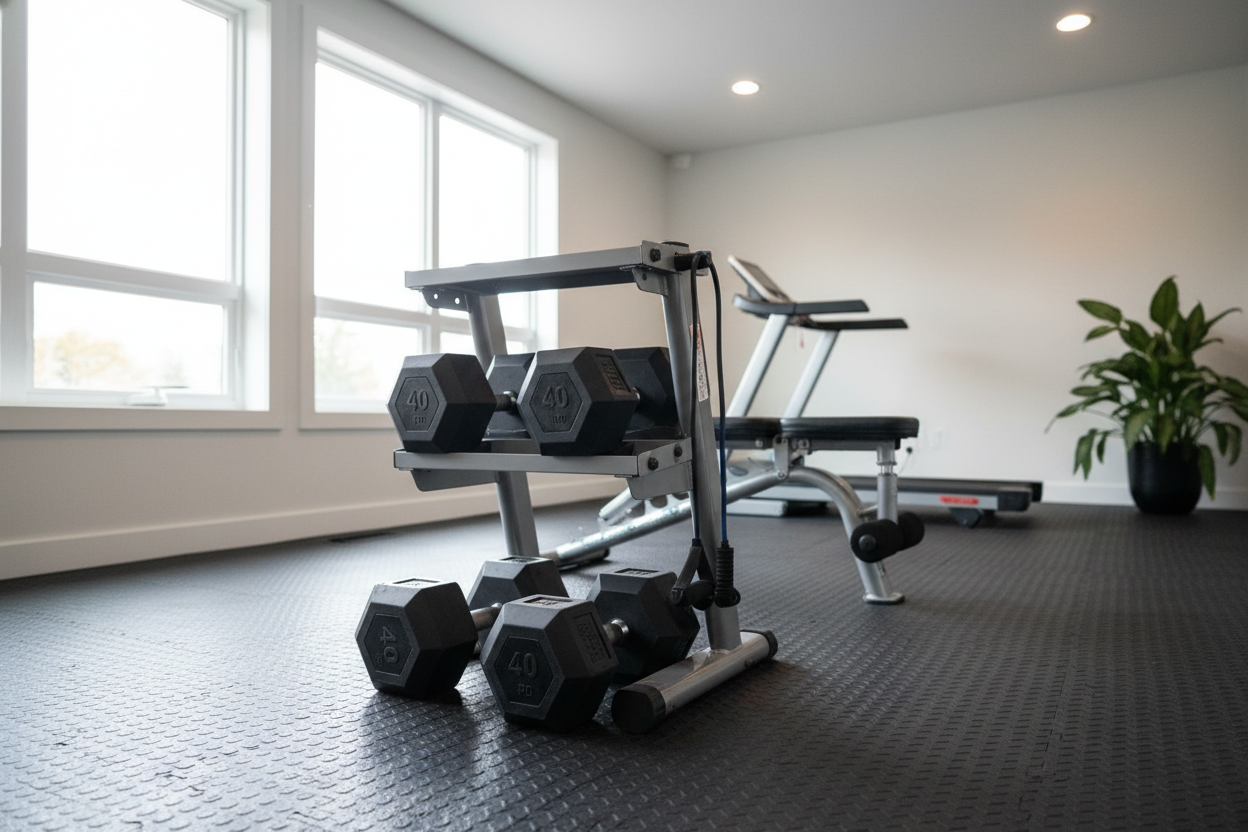
I remember the exact moment my cheap beginner weights became a liability. I was midway through a set of rows, and the plates started rattling like a loose muffler on a 2002 Civic. That is the day I realized the 40lb dumbbell is the ultimate gatekeeper of the home gym. It is heavy enough to build real muscle, but awkward enough to expose every flaw in a low-quality design.
If you are currently scrolling through listings for 40 lbs weights, you are at a crossroads. You are moving past the 'fitness as a hobby' phase and into actual strength training. At this weight, the diameter of the handle and the quality of the finish matter just as much as the number on the side of the bell.
Quick Takeaways
- Durability: 40 lbs is where plastic-heavy adjustable systems often fail or feel 'clunky.'
- Safety: Look for knurled steel handles; smooth chrome will slip when your palms get sweaty.
- Floor Protection: Rubber hex is the gold standard for garage gyms to prevent concrete chipping.
- Versatility: A 40 lb dumbbell pair covers the 'sweet spot' for intermediate hypertrophy work.
The 40-Pound Turning Point in Your Garage Gym
When you are swinging around 10 or 20 pounds, grip doesn't really matter. You could lift a gallon of milk and get a workout. But once you move up to a 40 pound dumbbell, physics starts to get mean. This is the threshold where beginners transition to intermediates. You are no longer just 'toning'; you are moving significant mass.
At this weight, the grip diameter becomes vital. Most budget 40 lb dumbbells for sale use a standard 28mm to 30mm handle. If the knurling is too passive, your forearms will give out long before your chest or back during a heavy set. I prefer a slightly aggressive knurl that bites into the skin—it gives you the confidence to push that 40 lb weight set to failure without worrying about a drop.
Why Cheap Adjustables Rattle When You Hit 40 Pounds
I have tested plenty of budget adjustable sets that claim to go up to 50 pounds, but they feel terrifying once you hit the 40lb weight set mark. The plates shift. They clank. Sometimes, the locking mechanism feels like it is one sneeze away from catastrophic failure. If you are doing overhead presses with a 40 lb adjustable dumbbell, you need to trust that the plates won't slide off and hit you in the temple.
If you want the convenience of changing weights without the 'bucket of bolts' sound, you have to invest in sturdy adjustable dumbbells that use steel or high-grade alloy components. Cheap dial-systems are fine for curls, but for 40-pound adjustable dumbbells, you want a mechanism that locks in with a definitive, solid 'thud.'
Rubber Hex vs. Cast Iron: Picking Your 40lb Weapon
If you are training on a concrete garage floor, do not buy bare cast iron 40 pound weights. They will chip, they will rust, and they will make a deafening noise every time you set them down. A 40 lb rubber hex dumbbell is the superior choice for 90% of home lifters. The rubber coating deadens the noise and protects your floor from the inevitable heavy drop at the end of a grueling set.
The hex shape is also a safety feature. A round 40 lbs dumbbell for sale might look cool, but it will roll across your floor the second you put it down. I recommend a durable rubber hex dumbbell set because it stays exactly where you leave it. In fact, the stability of a fixed head is why I ditched my adjustables for my primary heavy movements. There is zero 'slop' in the weight distribution.
3 Lifts Where 40 Pound Dumbbells Shine
A pair of 40lb dumbbells set of 2 is the 'Goldilocks' weight for hypertrophy. For heavy goblet squats, holding a single 40lb dumbbell against your chest provides enough resistance to torch your quads without requiring a full squat rack. For strict one-arm rows, 40 pounds is often the perfect weight to ensure you are using your lats rather than momentum.
Even for the flat bench press, a 40 lb dumbbell pair allows for a deep range of motion that you just can't get with a barbell. You don't need a massive commercial rack of heavy fixed dumbbells to see results. If you can master the 40-pound mark with perfect form, you are ahead of the vast majority of people training at home.
When to Finally Ditch the Dumbbells
There comes a day when even a 40 lb dumbbells set of 2 feels light. This usually happens first on lower-body movements. If you find yourself doing 30+ reps of lunges just to feel a burn, you have outgrown the 40lb dumbbell for that specific lift. Don't try to get 'creative' with awkward triple-stacked dumbbell holds—that is how injuries happen.
When you hit this ceiling, it is better to stop forcing dumbbell lifts and transition to heavier implements like barbells or specialized machines. Recognition of your own progress is key. A 40lb weight set is a tool, not a lifetime contract.
Personal Experience: My 40lb Lesson
Years ago, I bought a pair of 40lb weights from a 'no-name' brand because they were $20 cheaper. The handles were finished in a slick, glossy chrome that felt like it was coated in WD-40 the second I started sweating. I actually dropped one during a set of overhead extensions and put a dent in my floor. Since then, I only buy dumbbells with a matte finish or high-quality knurling. Saving twenty bucks isn't worth a trip to the ER or a cracked floor.
FAQ
Is a 40lb dumbbell too heavy for a beginner?
For isolation moves like curls, yes. For compound moves like rows or squats, it is a great goal weight. Start lighter and work your way up to the 40lb mark.
What is the best handle diameter for a 40lb weight?
Look for 28mm to 30mm. Anything thicker starts to become a 'fat grip' workout, which is great for forearms but bad for hitting your target muscles.
Can I use 40lb dumbbells on a second-floor apartment?
Only if they are rubber-coated and you have a thick mat. Dropping 40 lbs of iron will definitely get you an angry knock from the neighbors.
Share:
Stop Buying Neoprene: How to Pick Hand Weight Sets That Last
Stop Buying Massive Benches for Weight Lifting You Can't Move