
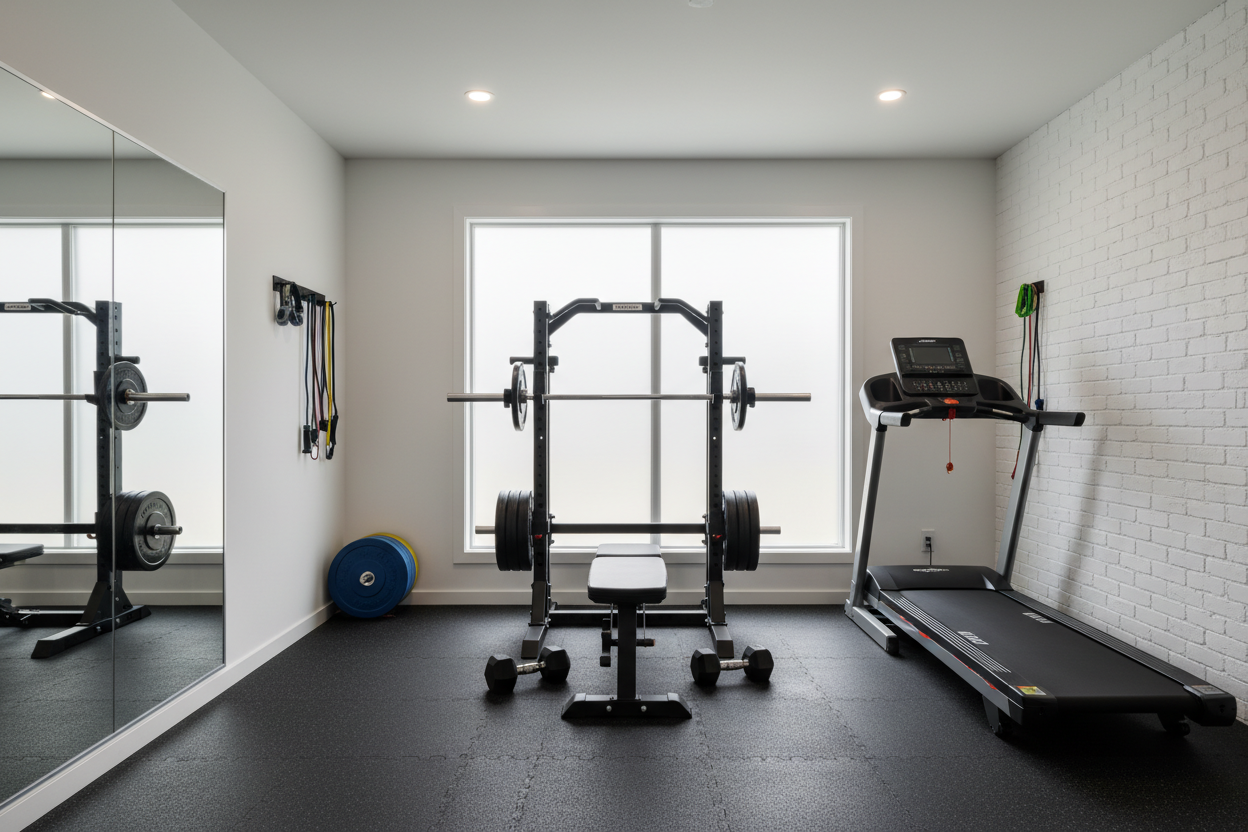
I remember the day I cancelled my big-box gym membership. I felt like I'd finally beaten the system. I bought a set of adjustable dumbbells, a flat bench, and a pull-up bar, thinking I was ready to get ripped in my garage. Then, a week later, I found myself standing in my gym shoes, staring at the wall, doing random sets of curls and lateral raises because I didn't have a plan. Learning how to exercise at home with equipment is a skill, and most people fail because they treat their gear like a playground instead of a training tool.
Quick Takeaways
- Stop 'winging it'—pick a structured program (like PPL or Upper/Lower) and stick to it.
- Intensity is the missing ingredient; you must train close to failure.
- Map your movements (Push, Pull, Squat, Hinge) to the gear you actually own.
- Track your lifts in a notebook or app to ensure progressive overload.
The Trap of the 'Frankenstein' Home Workout
The biggest mistake I see in the home gym community is the 'Frankenstein' workout. You buy a kettlebell because it was on sale, find some old bands in the closet, and maybe grab a cheap barbell. Then, you try to use every single piece of gear in one session without any rhyme or reason. This results in 'junk volume'—you're getting tired, but you aren't getting stronger.
Without a cohesive plan, your motivation will crater. It's the primary reason why so much high-quality gear ends up on Marketplace within months of being purchased. People get frustrated when their 'home workout with equipment' doesn't produce the same results as the commercial gym. The problem isn't the gear; it's the lack of structure.
How to Structure an At Home Workout With Equipment
You don't need a 2,000-square-foot facility to see results. You need a framework. I recommend a simple Push/Pull/Legs split or a 4-day Upper/Lower split. If you only have three days to train, go with Full Body sessions. The goal is to hit every major muscle group at least twice a week.
When you're doing an at home workout with equipment, focus on the big movers first. If you have a barbell or heavy dumbbells, start with your presses or squats. Save the resistance band work for the end of the session to 'finish' the muscle. This hierarchy ensures you're spending your limited energy on the exercises that provide the most bang for your buck.
Matching Movement Patterns to Your Gear
Don't get hung up on specific exercises. Instead, think in movement patterns. If a program calls for a cable row but you only have bands, do a banded seated row. If it calls for a leg press but you have dumbbells, do a heavy Bulgarian split squat. This logic applies to basic home gym setups just as much as it does to a professional-grade garage rig.
- Push: Dumbbell floor press, overhead press, banded push-ups.
- Pull: Pull-ups, dumbbell rows, face pulls with bands.
- Hinge: Kettlebell swings, Romanian deadlifts, glute bridges.
- Squat: Goblet squats, lunges, step-ups.
Stop Blaming the Gear: The Intensity Factor
Here is the hard truth: most people don't train hard enough at home. At a commercial gym, you have the 'social pressure' of other lifters watching, which usually coaxes out that last rep. At home, it's just you and your dog. A workout at home with equipment only works if you push to within 1 or 2 reps of muscular failure.
I personally survived using cheap gear for a long time, including a rack that wobbled if I breathed on it too hard. I still made gains because I focused on intensity. It doesn't matter if your plates are rusty or your dumbbells are plastic; if you are pushing your limits, your body will adapt. Stop looking at the brand name on the steel and start looking at your effort level.
When You Actually Need to Upgrade Your Space
There comes a point where 'making it work' stops working. If you're doing 30 reps of goblet squats with your heaviest dumbbell and still not feeling a burn, you've outgrown your kit. You need to strategically add pieces that allow for heavier loading without cluttering your entire living room.
If you're training solo and want to go heavy, a Smith machine home gym station is a smart move. It provides a self-spotting mechanism that keeps you safe during heavy presses and squats. For those looking to add conditioning, skip the massive treadmills. A foldable upright exercise bike gives you high-level magnetic resistance for intervals but can be tucked into a closet when you're done. Buy gear that solves a specific problem, not just because it looks cool.
My Personal Gear Mistake
Early on, I bought a 'complete' home gym set from a big-box store for $300. It came with a bar that wasn't even standard size and weights that were filled with sand. Within two months, the bar bent and the sand started leaking. I learned that it's better to buy one high-quality pair of 50-lb dumbbells than a 200-lb set of garbage. Quality over quantity, every single time.
FAQ
Can I build muscle with just dumbbells at home?
Yes. Muscle doesn't know the difference between a $1,000 cable machine and a $50 dumbbell. It only knows tension. Use slow eccentrics and high reps to make light weights feel heavy.
How do I stay motivated training alone?
Stop relying on motivation and start relying on a schedule. Train at the same time every day. Put on your gym shoes—even if you're just walking into the next room. The 'uniform' helps flip the mental switch.
What is the best 'bang for your buck' equipment?
An adjustable bench and a pair of adjustable dumbbells. You can perform hundreds of exercises with just those two items, and they take up almost zero floor space.
Share:
Is the Donow Smith Machine Just Another Wobbly Budget Rig?
How to Spot a Sketchy Fitness Equipment Retailer Online