
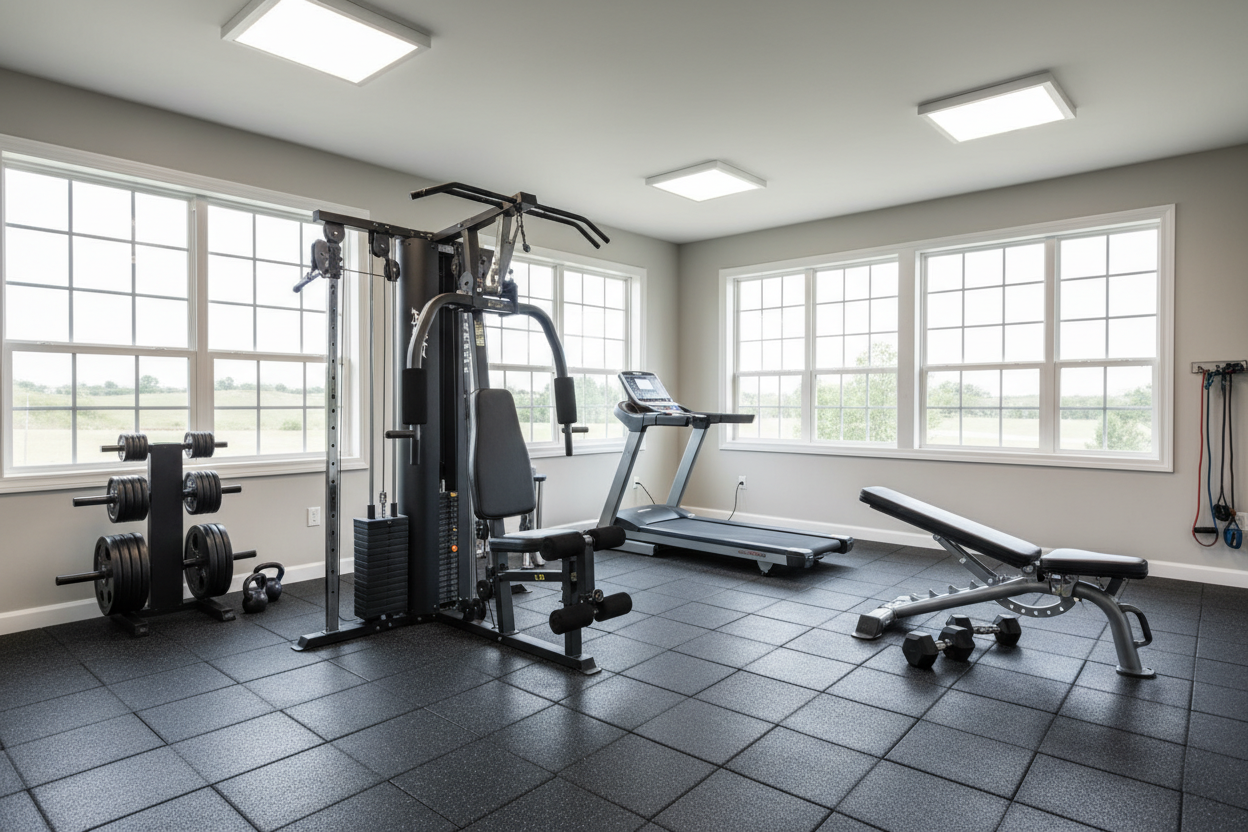
I spent three months staring at the same cracked plastic display on a commercial treadmill, watching the 'calories burned' counter lie to my face. I was hungry, my knees felt like they were filled with gravel, and the scale wouldn't budge. It is a common trap: thinking that the only way to shed a few pounds is to punish yourself with low-impact cardio until your joints give out. But if you want to actually change how you look in the mirror, you need to step off the belt and head for the selectorized equipment. are weight machines good for weight loss? The answer is a resounding yes, but probably not for the reasons you think.
Quick Takeaways
- Weight machines allow you to train to failure safely, which is key for metabolic stress.
- Building muscle increases your resting metabolic rate, burning more fat while you sleep.
- Fixed-path equipment protects your joints when you are fatigued from a calorie deficit.
- High-intensity machine circuits can burn as many calories as a moderate run, with better aesthetic results.
Why the Treadmill Crowd Has It All Wrong
Most people treat weight loss like a math problem where cardio is the only addition. They think, 'I ate a slice of pizza, so I need to run for 40 minutes.' That is a losing game. Cardio burns calories while you are doing it, but once you step off that machine, the burn stops. Worse, if you do too much cardio without resistance training, your body often starts eating its own muscle for energy. You end up as a smaller, softer version of yourself—the classic 'skinny fat' look.
Lifting weights flips the script. When you use resistance, you are telling your body that it needs to keep its muscle mass. This is vital because muscle tissue is metabolically expensive. It takes energy just to exist. By prioritizing the weight room, you are essentially upgrading your internal engine from a four-cylinder to a V8. You might burn fewer calories in the actual 45-minute session compared to a frantic run, but your body will be working harder to recover and maintain that muscle for the next 24 to 48 hours.
I have seen it dozens of times: the person who switches from 5 days of running to 3 days of lifting and 2 days of walking actually starts seeing their abs. It is not magic; it is biology. You are shifting your body composition, not just chasing a smaller number on a scale that doesn't know the difference between fat and hard-earned muscle.
So, Do Weight Machines Help You Lose Weight?
The short answer is that do weight machines help you lose weight by providing the stimulus needed to build muscle without the high technical barrier of a barbell. A calorie deficit is what loses the weight, but resistance training determines what that weight is. If you aren't lifting, a significant chunk of your weight loss will be muscle. If you are lifting, you force your body to tap into fat stores for energy instead.
Some purists will tell you that if it isn't a barbell, it doesn't count. They are wrong. Your muscles don't have eyes; they only know tension and fatigue. Whether that tension comes from a 45-lb iron plate or a 200-lb selectorized stack, the metabolic response is remarkably similar. In fact, machines offer a unique advantage for weight loss: isolation. You can hammer your quads on a leg extension or your lats on a pulldown until they are completely exhausted.
This is what the free weights crowd misses. When you are training for fat loss, you are often in a calorie deficit, which means your focus and energy might be lower than usual. Trying to set a PR on a back squat when you are running on fumes is a recipe for a hospital visit. Machines allow you to reach that metabolic 'sweet spot' of high intensity and high heart rate without the risk of a bar crushing your windpipe.
The Real Reason Machines Shine During a Cut
When you are cutting weight, your recovery is compromised. You aren't eating enough to bounce back like a teenager on a bulk. This is where the fixed-path of a machine becomes your best friend. In my experience, the first thing to go when I'm deep into a diet is my stabilization. My core feels sluggish, and my joints start to ache. If I try to do heavy overhead presses with dumbbells, my shaky shoulders become the limiting factor, not my actual strength.
Machines remove the stabilization requirement. This sounds like a negative to the 'functional fitness' crowd, but for weight loss, it is a massive win. It means you can push your primary movers—your chest, back, and legs—to the absolute limit without your stabilizer muscles giving out first. You get more work done in less time, and you do it with a much lower 'injury tax.'
Think about the leg press versus the squat. On a squat, your lower back or your balance might fail before your quads do. On a leg press, you can keep going until your legs literally won't move another inch. That level of intensity is what triggers the hormonal and metabolic changes necessary to torch fat while keeping your muscle exactly where it belongs.
How to Program a Fat-Melting Machine Circuit
If you want to use machines for weight loss, you can't just sit there scrolling on your phone between sets. You need to keep the intensity high. My favorite way to do this is through 'Giant Sets' or circuits. Pick four machines that target different muscle groups and move between them with zero rest. Only rest after you have completed all four. This keeps your heart rate in the 'cardio zone' while your muscles are screaming.
For example, try this upper-body burner: Lat Pulldowns, followed immediately by a chest press machine with independent arms, then Seated Rows, and finally Shoulder Presses. The independent arms on the chest press are key here because as you get tired, your dominant side will try to take over. Using a machine that forces both sides to work equally ensures you don't end up with an asymmetrical physique once the fat starts melting away.
Aim for 12 to 15 reps per set. You want to reach 'mechanical failure'—the point where you cannot physically complete another rep with good form—by the end of each set. Because you are on a machine, you can safely hit this point without needing a spotter to bail you out. Do four rounds of that circuit, and I guarantee you'll be sweating harder than you ever did on a stationary bike.
Setting Up Your Own Fat-Loss Station at Home
Building a home gym specifically for weight loss doesn't mean you need a 2,000-square-foot commercial space. You need versatility. The biggest mistake I see is people buying those 'as-seen-on-TV' total body gyms that use rubber bands for resistance. They feel cheap, they break, and they don't provide enough tension to actually build muscle. If the equipment feels like a toy, your body will treat it like one.
Instead, start with a solid weight bench. A high-quality adjustable bench is the foundation of everything. From there, look for a functional trainer or a high-quality cable tower. Cables provide constant tension, which is incredible for the 'mind-muscle connection' and keeps the intensity high throughout the entire movement. If you are looking at all-in-one units, be careful. There are plenty of red flags I look for when browsing weight machines, such as plastic pulleys that skip or frames made of thin 14-gauge steel that wobbles when you load more than 100 pounds.
Prioritize machines with a smooth travel and a weight stack that actually challenges you. If you outgrow the machine in three months, it was a waste of money. Look for 11-gauge steel and commercial-grade cables. It might cost more upfront, but the safety and the 'feel' of the machine will actually make you want to use it every morning.
Personal Experience: The Lesson I Learned the Hard Way
Back in 2019, I was determined to get 'shredded' for a beach trip. I was doing a heavy 5/3/1 powerlifting program while eating about 1,800 calories a day. About six weeks in, I was a wreck. I tried to hit a heavy set of back squats, felt a sharp 'zip' in my lower back because I was too fatigued to keep my core tight, and ended up sidelined for a month. That injury actually set my weight loss back because I couldn't do anything for weeks.
I spent the rest of that cut using the leg press, the hack squat machine, and the chest press. To my surprise, I ended up leaner and looked more 'muscular' than I ever had using free weights alone. I wasn't fighting the weight; I was using the machine to target the muscle. I learned that during a cut, the machine isn't the 'easy way out'—it is the smart way to stay consistent when your body is under stress.
FAQ
Are weight machines better than cardio for fat loss?
Yes, for long-term results. While cardio burns more calories per minute, machines build muscle which raises your metabolism and improves your body composition. Ideally, you should do both, but prioritize the weights.
Can I lose belly fat by using ab machines?
No. You cannot 'spot reduce' fat. Using an ab machine will build the muscle underneath, but you need a calorie deficit to burn the fat covering them. However, machines help you maintain muscle elsewhere, making the fat loss look better.
How many days a week should I lift for weight loss?
Three to four days is the sweet spot. This allows for enough stimulus to keep your muscle mass while giving your body time to recover, which is especially important if you are eating fewer calories than usual.
Share:
Why Your Weight Machine Leg Press Feels Terrible at Home
I Wasted $2K on Bodybuilder Equipment Before Learning This