
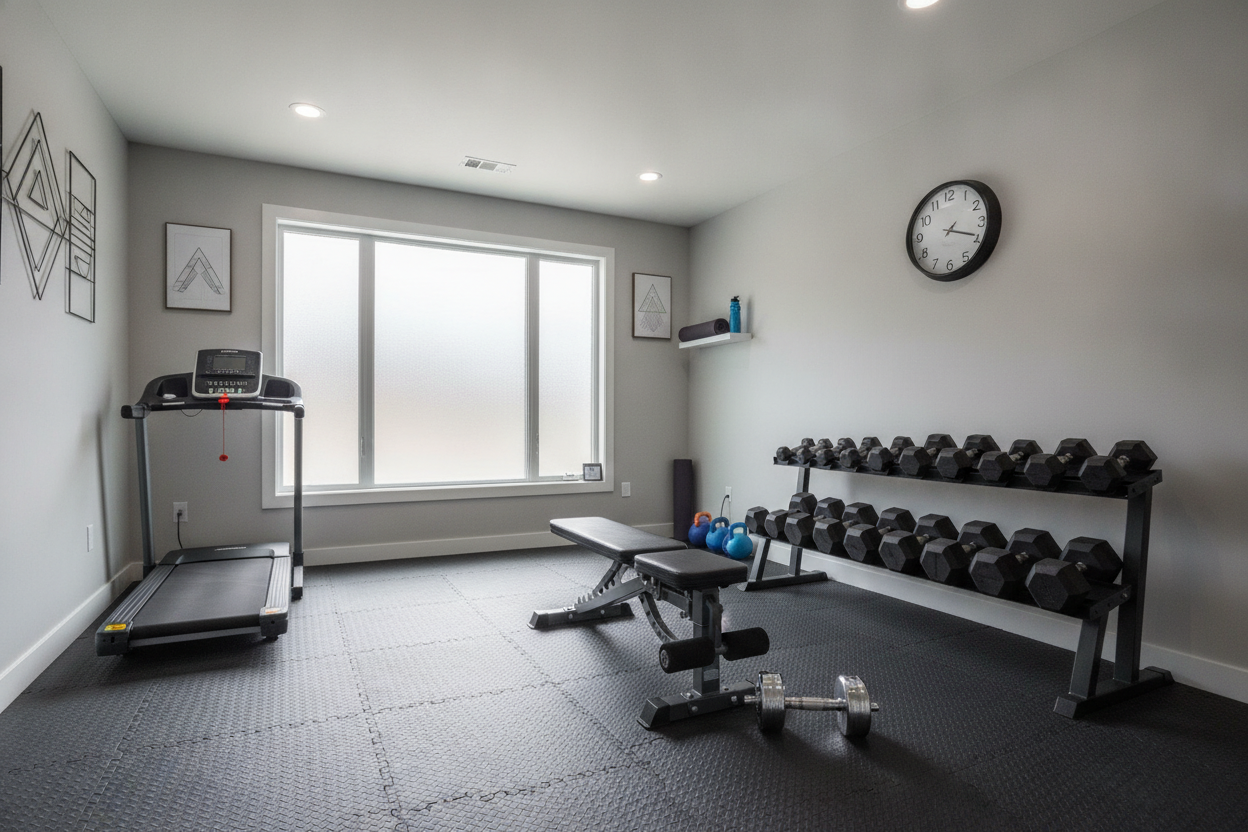
I remember walking into my garage three years ago and feeling claustrophobic. I had a massive, seven-foot-tall multi-gym taking up the entire left wall, a cardio bike gathering dust, and a rack of mismatched plates. It looked like a fitness equipment graveyard. The irony? I was spending half my workout time adjusting cables and the other half wishing I had more floor space to actually move. That was the day I realized a high-quality free weight and bench setup beats a room full of expensive junk every single time.
- Space Efficiency: You can fit a pro-level workout in a 6x8 foot corner.
- Better Muscle Activation: No tracks or pulleys to do the stabilizing for you.
- Resale Value: Iron and steel hold their value; plastic machines don't.
- Versatility: One bench and two dumbbells offer over 50 distinct exercises.
The Trap of the 'Do-It-All' Multi-Gym
Beginners often fall for the marketing of 'all-in-one' home gyms. They see a machine that promises 30 different exercises and think they’re getting a steal. In reality, those machines usually feel like sliding a brick across sandpaper. The pulleys are cheap, the range of motion is fixed to a generic body type, and they wobble the second you put any real weight on them. It’s a frustrating way to train.
The moment I Downsized My Garage Gym to Just Free Weights and Bench, my progress actually accelerated. Stripping away the clutter meant I stopped 'fiddling' with equipment and started lifting. When you move from a machine press to a dumbbell press, you immediately feel the difference. Your stabilizers fire up, your core tightens, and you're forced to control the weight rather than just pushing against a fixed lever. It’s harder, and that’s exactly why it works.
Why a Bench and Free Weights Force Better Form
Machines are designed to make lifting easier by removing the need for balance. While that’s fine for high-level bodybuilders looking to isolate a specific muscle, it’s a waste of time for the rest of us. A bench and free weights setup demands that you own the movement. If your left shoulder is weaker than your right, a barbell or machine will hide that imbalance. Dumbbells will expose it instantly.
This setup also respects your natural joint path. We aren't robots; our joints don't move in perfectly straight lines. Using free weights allows your wrists and elbows to find their most comfortable, strongest path. This reduces the 'nagging' joint pain that often comes from being locked into a machine's rigid track. You get stronger, but you also stay healthier in the long run.
Picking a Pad That Won't Collapse Mid-Press
If you're going to hold 80-lb dumbbells over your face, you need to trust the steel underneath you. I’ve used cheap benches that felt like they were made of soda cans, and there is nothing more distracting than a 'hinge wobble' when you're nearing failure. You want a frame made of at least 11-gauge or 12-gauge steel and a tripod or wide-base design for stability. A 12-inch wide pad is the sweet spot—it’s wide enough to support your scapula but narrow enough to let your shoulders move freely.
For most home lifters, the Adjustable Weight Bench Owb01 is a great example of what to look for. It’s stable, handles incline work without a massive gap between the seat and backrest, and doesn't take up a massive footprint. If you're serious, don't just grab the cheapest thing at a big-box store. Spend five minutes browsing a dedicated Weight Bench collection to find something with a 600-lb plus weight capacity. It’s a one-time purchase that should last a decade.
The 5-Move Minimalist Workout Arsenal
You don't need a 20-piece circuit to build a physique. With just a bench and some iron, you can hit every major muscle group with high intensity. Here is the core of my routine when I’m short on time:
- Incline Dumbbell Press: Better upper-chest recruitment than the flat version.
- Chest-Supported Rows: Lay face down on the incline bench to take your lower back out of the equation and torch your lats.
- Bulgarian Split Squats: Hook your back foot on the bench. It’s the most hated leg exercise for a reason—it works.
- Seated Overhead Press: Use the back support to keep your spine neutral while you build boulder shoulders.
- Dumbbell Pullovers: An old-school move that hits the lats and the serratus simultaneously.
When Do You Actually Need to Upgrade to a Rack?
I’m a huge advocate for the minimalist approach, but it does have a ceiling. If your primary goal is to squat 400 pounds or compete in powerlifting, you eventually need a barbell and a cage. Dumbbells usually top out at 100–120 lbs in most home setups, and cleaning heavy weights into position for a shoulder press becomes a workout in itself. When you find yourself maxing out the heaviest weights you own for sets of 15+, it’s time to look at a power rack. But for 90% of people training for health and aesthetics, the bench and weights setup is more than enough.
Is an adjustable bench better than a flat bench?
Yes. A flat bench is slightly more stable for heavy powerlifting, but an adjustable bench opens up incline and seated movements. The versatility is worth the extra cost.
How much space do I really need?
A standard bench is about 4-5 feet long. Give yourself an extra 2 feet on all sides for arm movement. A 6x8 foot area is plenty.
Are adjustable dumbbells as good as fixed ones?
They are great for saving space. High-end adjustable sets feel solid, though they can be a bit bulkier than traditional iron hex dumbbells. If you have the room, fixed sets are more durable.
Share:
How to Spot 'Ghost' Gym Equipments Companies Before You Buy
I Refuse to Buy Junk: Building the Best Home Gym Under 2000