
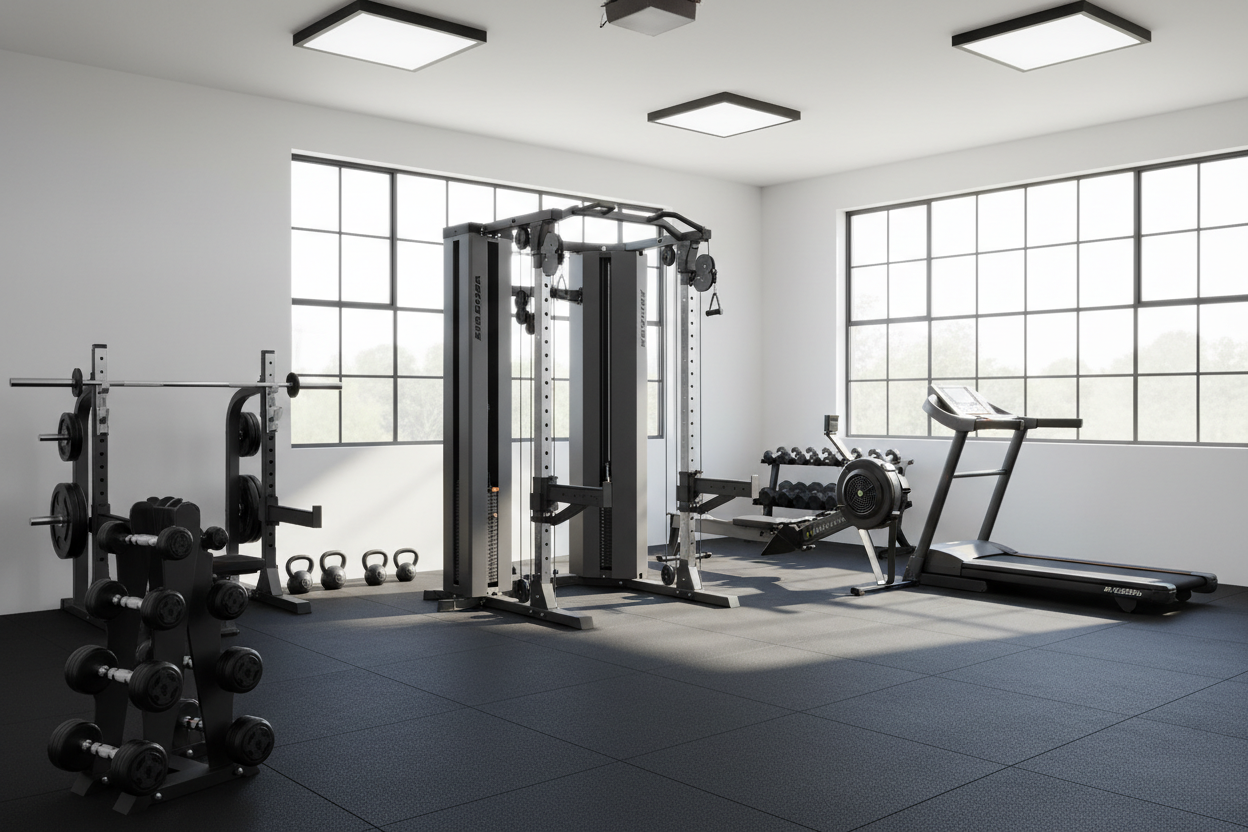
I remember the first time I bought a 'multi-gym' from a big-box store. It had a 150-lb weight stack, a seat that wobbled every time I tried to press, and cables that felt like they were coated in maple syrup. It didn't take long to realize that finding the best all in one exercise machine meant looking past the shiny plastic shrouds and focusing on heavy-duty steel that doesn't scream for mercy when you load a second plate.
Quick Takeaways
- Avoid 14-gauge steel; look for 11 or 12-gauge frames for stability.
- Prioritize cable systems with a 2:1 ratio for smoother accessory work.
- Ensure the footprint allows for 'plate math'—you need clearance to load the bar.
- A Smith-hybrid rack is safer for solo lifters training to failure.
The Infomercial Curse (Why Most Multi-Gyms Suck)
Most 'all-in-one' units you see on late-night TV are built for people who want to look at a machine, not actually lift on it. They use thin-walled steel and plastic pulleys that develop flat spots after a month of use. Biomechanically, they are a nightmare. Most fixed-path machines are designed for a 'standard' 5'9' user; if you’re taller or shorter, your shoulders and knees are forced into positions that feel unnatural and eventually cause injury.
If you're serious about strength, you need the best all in one workout machines to be rack-based. If a machine relies on a single pivot point for every exercise, it’s going to fail you the moment you try to move real weight. You want a system that mimics the natural bar path of free weights while providing the versatility of a commercial gym.
What Actually Makes a Good All In One Setup?
A real setup starts with a heavy-duty frame. We’re talking about integrating a power rack, a functional trainer, and a pull-up station into one footprint. You shouldn't have to sacrifice the raw feel of a barbell just to save a few square feet. A high-quality Smith machine home gym station bridges that gap by giving you a guided path for safety without the flimsy feel of a department store toy.
The Importance of Smooth Cable Ratios
Cheap pulleys are the fastest way to ruin a workout. If the cable jerks when you're doing lateral raises, you aren't hitting the muscle—you're just fighting the machine. I look for a 2:1 cable ratio. This means 100 lbs on the stack feels like 50 lbs at the handle, but you get double the cable travel. It’s essential for functional movements where you need range of motion more than raw weight stack numbers.
Don't Fear the Combo Rack
Barbell purists love to hate on Smith machines, but when you're training solo in a garage at 5 AM, those safety catches are a literal lifesaver. It is easily the best all-in-one gym machine for pushing your limits on incline press or squats when there's nobody around to spot you. Modern combo racks allow you to use a free barbell for your main lifts and the Smith bar for high-volume burnout sets.
Space vs. Functionality in a 1-Car Garage
Before you buy the best all in one fitness machine on the market, get your tape measure out. You need at least 8 feet of ceiling height for pull-ups, but the real killer is width. A standard Olympic bar is 7.2 feet long. If your machine is 4 feet wide, you still need enough clearance on both sides to slide 45-lb plates onto the sleeves without hitting your lawnmower or the wall.
I recommend a minimum working area of 8x8 feet. This gives you enough room to move around the machine and perform cable crossovers without feeling like you're trapped in a phone booth. If you're tight on space, look for units with front-facing weight horns or integrated plate storage to keep the floor clear.
My Top Pick for Consolidating Your Gear
If you're looking for one piece of kit to rule them all, I’ve found that a high-end all in one Smith machine is the most efficient way to build a serious gym. It replaces a power rack, a cable crossover, a chin-up bar, and a landmine station. I know lifters who replaced 5 pieces of gear with a single unit and actually ended up with more floor space and a better workout flow.
The build quality on these heavy-duty units uses linear bearings—the kind that glide on solid steel rods—rather than cheap plastic rollers. It’s the difference between a smooth, professional lift and a frustrating, clunky mess. If you're going to spend the money, buy something that can handle a 300-lb squat without shaking.
Personal Experience
I once bought a budget 'functional trainer' because it was 40% cheaper than the leading brand. The first time I tried a heavy lat pulldown, the entire frame tilted toward me because it wasn't heavy enough to counter-balance the weight stack. I had to bolt it to a piece of 3/4-inch plywood just to keep it from tipping. My mistake was prioritizing price over the weight of the actual machine. In the gym world, heavy is usually a sign of quality.
FAQ
Does an all-in-one machine replace a squat rack?
A good one does. If it has adjustable J-cups on the front of the frame, you can use a standard barbell for free-weight squats just like a traditional power rack.
How do I maintain the cables?
Don't use WD-40. Use a dry silicone spray on the guide rods about once a month. It keeps the movement buttery smooth and won't attract dust or hair like grease does.
Is a 2:1 ratio better than 1:1?
For most people, yes. A 2:1 ratio allows for a longer cable reach and finer weight increments, which is much better for isolation exercises and 'functional' movements.
Share:
I Refuse to Ruin My Decor With Living Room Exercise Equipment
How to Tell Which Types of Workout Machines You Actually Need