
I remember staring at my monthly bank statement, seeing that $85 'membership fee' for a gym I hadn't visited in three weeks because the commute was a nightmare. I started doom-scrolling for the best at home gym, hoping for a silver bullet that would fit in my spare bedroom and magically give me a 400-pound squat. I bought a cheap, plastic-clad multi-station that looked great in the render but shook like a leaf the first time I loaded it.
After years of testing, breaking, and selling off gear, I've realized the 'perfect' setup is a myth. You don't want a single machine; you want a system that grows with you. Here is how to stop wasting money and start building a rig that actually holds its value.
Quick Takeaways
- Modular setups (rack + bench + weights) beat 'all-in-one' plastic machines every time.
- Prioritize 11-gauge or 14-gauge steel for structural integrity.
- Cables are great for hypertrophy, but free weights are the foundation for strength.
- If you lift solo, a guided system or a rack with spotter arms is non-negotiable.
The Trap of the Infomercial All-in-One System
We've all seen them: the 'best home weight machine' that promises 50 exercises in a four-foot footprint. They usually rely on tension bands or thin cables that feel like they're going to snap at the top of a rep. These are marketed as the best home gym system for beginners, but they're actually a trap. You outgrow the resistance in three months, and the resale value is basically zero.
A real 'best home gym' needs to allow for progressive overload. If the machine only goes up to 150 lbs and you're already rowing that for reps, you've just bought a very expensive clothes rack. Look for heavy-duty steel and standard-sized plates. If it's made of plastic and thin-walled aluminum, leave it on the shelf.
The Foundation: What a Real Garage Setup Actually Needs
When you're building a functional home gym, you have to think about 'anchor pieces.' These are the items that everything else revolves around. You don't need a dozen different best machines for home gym; you need three things that do 90% of the work. Focus on a heavy-duty rack, a solid bench, and enough weight to keep you challenged for a year.
A 'best universal home gym' shouldn't feel like a toy. It needs to be stable enough that you aren't worried about it tipping over during a pull-up or a heavy press. This is where you spend the bulk of your budget. Don't cheap out on the frame.
Why You Need to Start With a Heavy-Duty Rack
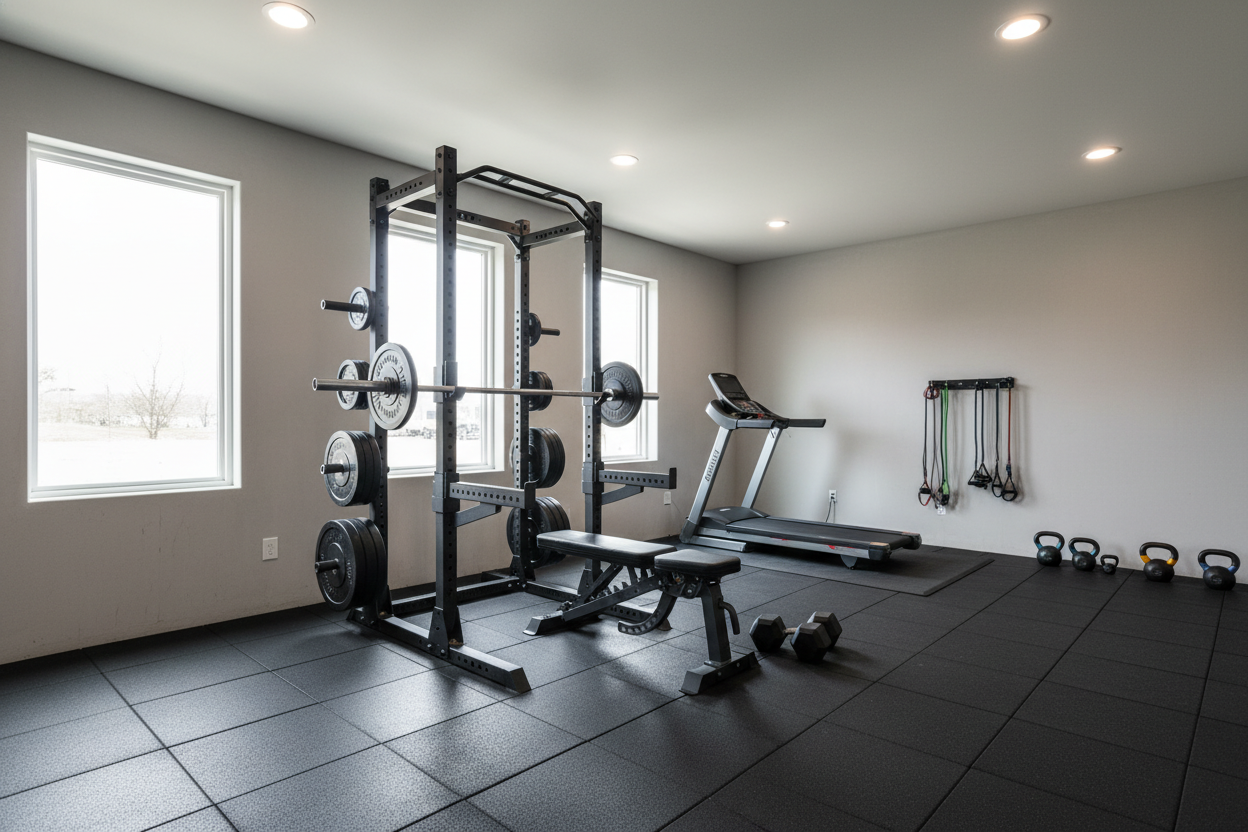
The rack is the heart of your best home fitness gyms. It’s where you squat, press, and pull. If you’re tight on space or worried about safety while lifting alone, a Smith machine or a half-rack is a solid choice. I spent a lot of time testing the best Smith machine for a garage gym, and the difference between a commercial-grade unit and a 'home' unit is night and day.
A good rack provides safety. It gives you a place to bail when a PR attempt goes south. It also opens up the door for attachments like dip bars, landmines, and jammer arms. This modularity is what makes it a 'best full body home gym'—you can keep adding to it as your goals change.
Your Bench Is More Important Than You Think
People spend $2,000 on a rack and then buy a $60 bench. Don't do that. A cheap bench will wobble under load, which ruins your stability and kills your force production. You want a bench with a high weight capacity—at least 800 lbs. Look for a 'best universal weight machine' feel, where the padding is firm and the gap between the seat and the backrest is minimal. If the bench feels like a pool noodle, your bench press will feel like one too.
Cables vs. Free Weights: Finding the Perfect Balance
The 'best home gym for the money' usually involves a mix. Free weights are the undisputed king for building raw strength, but cables provide constant tension that is hard to beat for accessory work. The 'best weight system for home' usually combines these two into one footprint.
A versatile Smith machine home gym station is often the smartest move for a garage. It gives you the guided barbell for safety and the dual cable pulleys for everything else. This is the 'best workout station' for someone who wants to do bodybuilding-style training alongside their heavy compound lifts without needing a 2,000-square-foot facility.
My Exact Blueprint for a Rig You Won't Outgrow
If I were starting over today, I wouldn't buy a 'best home gym strength training' kit in a single box. I'd buy a 3x3 steel rack first. Then, I'd get 300 lbs of iron plates and a high-quality barbell. Third, I'd add a functional trainer or a cable attachment to the rack. This ensures your 'best home gym weight machine' is actually something you'll still be using in five years.
For those looking to specialize after the basics are covered, adding something like the Weight Bench Chest Press Machine Independent Arms Z1 Pro can give you that commercial-gym feel for chest and shoulder days. It’s about building layers, not buying a finished product that you'll hate in six months.
Personal Experience: The 'Wobble' Lesson
I once bought a 'best all in one gym' from a big-box store because it was on sale for $400. The first time I tried to do a heavy lat pulldown, the entire machine tilted toward me. I had to bolt it to a piece of plywood just to keep it on the ground. It was noisy, the cables weren't smooth, and the '100-lb stack' felt like 60 lbs because of the friction in the pulleys. I sold it for $100 two months later and bought a real power rack. Learn from my mistake: weight is weight, but the frame matters.
FAQ
Is a Smith machine better than a power rack for a home gym?
It depends on your goals. A power rack is better for raw strength and functional movement. A Smith machine is better for hypertrophy and safety if you always train alone. The best home gym strength training setups often combine both.
How much space do I really need?
Most 'best home gym' setups require at least an 8x8 foot area to account for the barbell width and your movement. If you're using a cable-based 'best home gym system,' you might get away with a 6x6 corner.
Are plate-loaded machines better than selectorized stacks?
Plate-loaded machines are usually cheaper and easier to move. Selectorized stacks (with the pins) are faster for supersets. For a 'best home gym for the money' perspective, plate-loaded wins every time.
Share:
The Best Workout Bench for Apartment Gyms Doesn't Have to Wobble
How to Hide Heavy-Duty Compact Exercise Equipment in a Tiny Condo