
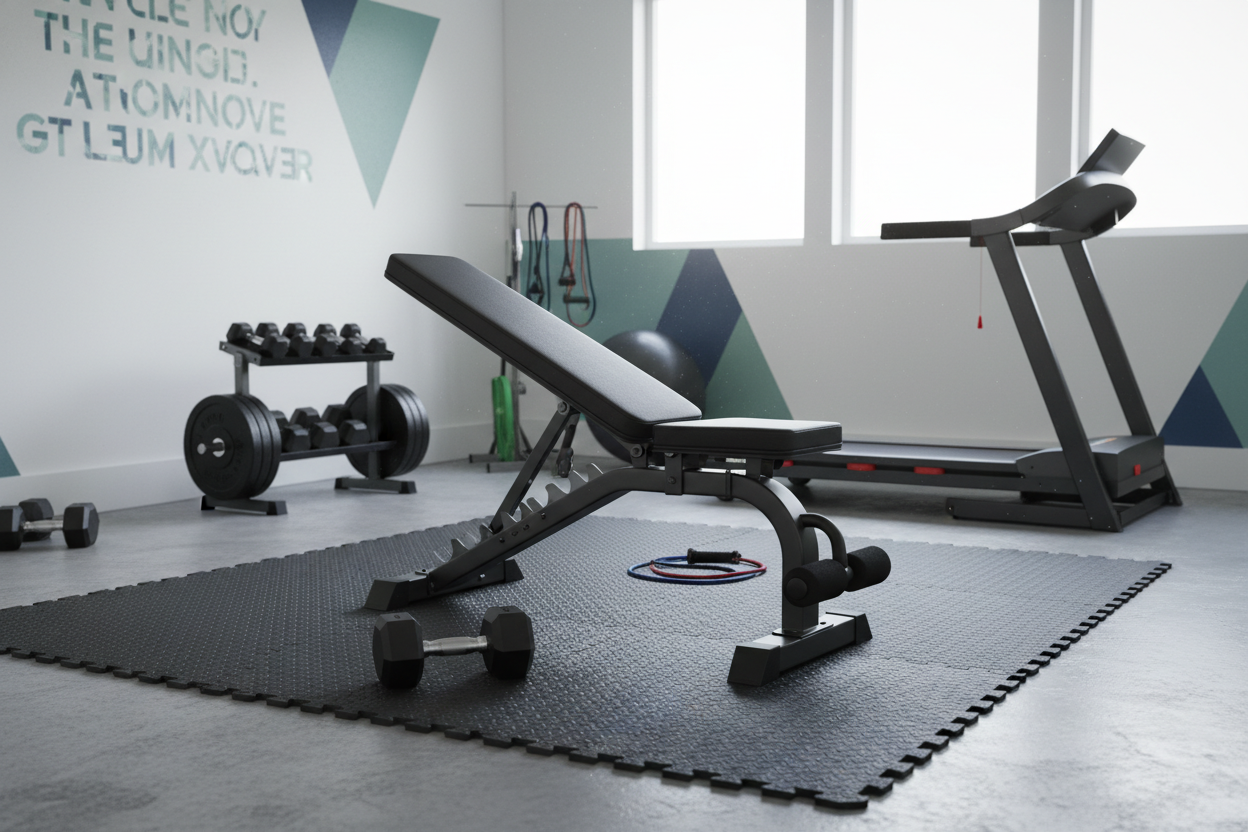
I spent three years training in a 550-square-foot walk-up where my living room doubled as a kitchen and a home gym. I’ve lived the nightmare of moving a heavy coffee table every morning just to squeeze in a chest day. When you are working with limited real estate, finding the best workout bench for apartment living is the difference between a productive session and a frustrating mess of sliding metal and pinched fingers.
Quick Takeaways
- Vertical storage is the only way to reclaim your floor space after a workout.
- Avoid benches under 50 lbs; they lack the mass to stay stable during heavy lateral movements.
- Urethane wheels are a must if you want to keep your security deposit on hardwood floors.
- Look for a minimum 800-lb weight capacity to ensure the frame doesn't flex under load.
The Living Room Gym Dilemma
The struggle is real: you want to lift heavy, but you also want to invite people over without them tripping over a piece of 11-gauge steel. Most apartment dwellers settle for flimsy gear because they think 'heavy duty' means 'permanent.' That is a mistake that leads to bad form and skipped workouts. You need a bench that feels like it belongs in a commercial facility but disappears when the clock stops.
I have tested dozens of units that claimed to be 'space-saving' only to find they were made of thin, hollow tubes. If your equipment feels like a toy, you will treat your training like a hobby. We are looking for gear that supports a serious compact weight bench set without turning your bedroom into a cluttered iron asylum.
Why Most Folding Benches Are Death Traps
The market is flooded with $80 benches that fold into a tiny square. Stay away from them. Most of these use cheap pop-pins and thin hinges that develop 'slop' after just a few months. When you are lying back with 80-lb dumbbells in your hands, the last thing you want is a frame that shifts two inches to the left.
In my experience, if your compact workout bench feels like a cheap ironing board, you are going to subconsciously limit your intensity. Cheap benches often have a massive gap between the seat and the back pad that swallows your lumbar spine. A quality apartment bench uses a tighter hinge mechanism and thicker steel to ensure that 'folding' doesn't mean 'failing.'
3 Specs That Actually Matter for Small Spaces
First, check the storage footprint, not just the working footprint. A bench that stands vertically on its head is worth its weight in gold. It takes up about 2 square feet of corner space rather than 10 square feet of floor space. If it doesn't stand up, it's just a permanent piece of furniture you'll eventually start using as a laundry rack.
Second, look at the wheels. Cheap plastic wheels scratch laminate and dig into hardwood. You want high-durometer urethane wheels—the kind you see on rollerblades. They roll silent and smooth, which your downstairs neighbors will appreciate at 6:00 AM. Third, pad width. Don't go narrower than 11 inches. Anything thinner feels like you're trying to balance on a balance beam while pressing, which is a recipe for a shoulder injury.
Should You Invest in a Compact Weight Bench Set?
Buying a bundled compact weight bench set is usually the smartest move for a rental. Bundles often ensure the bench height is compatible with the dumbbell stand or rack system you're using. There is nothing worse than buying a bench that sits 20 inches high only to realize your feet can't touch the floor properly for leg drive.
I generally recommend sticking to a flat-incline-decline (FID) bench if you can. While a flat bench is smaller, the versatility of an adjustable model allows you to hit every angle of the chest and shoulders without needing extra equipment. Just make sure the adjustment ladder is solid steel, not plastic-coated junk.
My Top Recommendation for Apartment Lifters
If you want the best balance of 'bomber' construction and 'stealth' storage, look for a tripod frame design. A three-post design ensures that the bench won't wobble on uneven apartment floors—and let's be honest, no rental floor is perfectly level. It also gives your feet more room to move during a setup.
The adjustable weight bench is a prime example of what you should look for. It offers a rock-solid back pad and a frame that doesn't groan when you sit down. It’s the kind of gear that makes you forget you're training in the same room where you eat dinner. Don't compromise on the frame; your safety is worth the extra fifty bucks.
Personal Experience: The Wobbly PR
I once tried to hit a PR on a budget bench I bought from a big-box store. As I took the dumbbells back, the rear stabilizer lifted off the floor because the base was too narrow. I had to dump the weights and nearly took out my TV. I realized then that 'lightweight' is a terrible feature for a bench. You want a bench that is easy to move via wheels, but heavy enough to stay put once you're on it. My current setup weighs 75 lbs, but because it stores vertically, it feels smaller than the cheap one it replaced.
FAQ
Do I need a decline option for an apartment?
Only if you're a serious bodybuilder. For most people, a flat and incline bench is plenty. Skipping the decline feature can sometimes make the bench lighter and easier to store.
How do I stop my bench from sliding on hardwood?
Get a thin rubber equipment mat. It protects the floor from sweat and impact, and it keeps the bench from migrating across the room during rows.
Is a 17-inch height too tall?
17 to 17.5 inches is the IPF standard. It’s the sweet spot for most lifters to get their feet flat on the floor for power. Avoid benches that sit 20+ inches high; they feel unstable.
Share:
Why the Best Equipment for Exercise Isn't Made for Instagram
The 'Best At Home Gym' Doesn't Exist (But This Comes Close)