
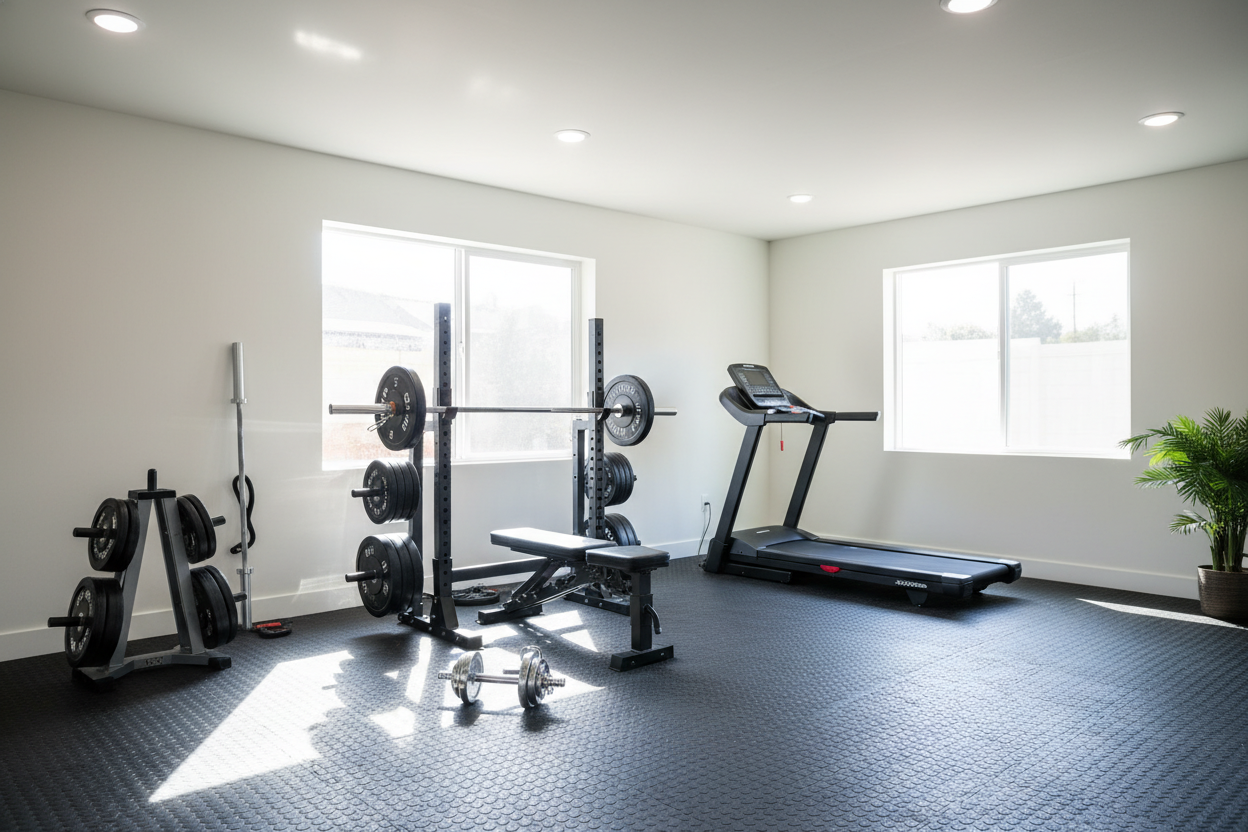
I remember scrolling through Craigslist at 11 PM, desperate to avoid another $60 monthly gym fee. I found what looked like a steal: a full weight set for bench press for under $200. It had the bar, the plates, and the bench. I felt like I'd hacked the system.
Two weeks later, the vinyl on the bench was cracking, and the bar felt like it was made of recycled soda cans. Buying pre-packaged bench sets might seem like a shortcut, but it's usually just a detour to the junkyard. You aren't buying a gym; you're buying a headache.
- Bundled bars usually have a measly 300-lb capacity (including your body weight).
- Standard 1-inch plates are a dead-end investment you can't resell easily.
- Cheap sets often use narrow uprights that force a dangerously close grip.
- A 7-foot Olympic bar is mandatory for safety and proper rack clearance.
The Illusion of the All-in-One Box
The marketing for a gym set with bench is designed to trigger your 'deal' reflex. You see a low price and a photo of a guy with 18-inch arms, and you think you're set for life. The reality is that manufacturers play a shell game with the specs. They shave off millimeters of steel thickness and use hollow uprights to hit that price point.
The biggest red flag is the barbell. In these bundles, the bar is often the first thing to fail. I've seen these bars literally bow under 185 pounds. When I tried a cheap starter weights bench and set, the narrow uprights made it impossible to find a comfortable hand position. My shoulders were screaming before I even finished the first set.
Standard vs. Olympic: The Mistake That Costs You Twice
You’ll see a starter weight bench set advertised with 100 or 160 pounds of weights. Look closer. If those plates have a 1-inch hole, they’re 'Standard' weights. These are usually plastic shells filled with concrete or sand. They’re bulky, they leak, and they won't fit any high-quality equipment you buy later.
Olympic plates have a 2-inch hole and are the industry standard. They hold their value. If you buy a set of cast iron Olympic plates today, you can sell them for 80% of what you paid five years from now. Standard weights end up in a landfill. Don't pay twice for the same gear.
Sizing Your Bar: The Rack Width Reality Check
Most beginner weight bench set packages include a 5-foot or 6-foot bar. This is a mechanical nightmare. A standard power rack or a quality weight bench with wide uprights requires a 7-foot bar to sit safely in the hooks.
If the bar is too short, your hands will be outside the rack when you're trying to re-rack a heavy set. I’ve seen people crush their pinkies because they didn't have enough 'sleeve' space. A 7-foot Olympic bar gives you the 52 inches of 'inside' space you need to breathe and lift safely.
Is That Holiday Deal Actually Worth Your Money?
Black Friday and New Year's are the peak seasons for a weight bench set on sale. You’ll see 'limited time' offers at big-box retailers. Before you hit buy, check the shipping weight. If a 'full gym' weighs less than 100 pounds, it's made of thin-walled tubing that will wobble the moment you try to incline press.
Always dig into the reviews. If you're looking at an Amazon weight bench set, ignore the 5-star ratings from people who just unboxed it. Look for the 3-star reviews from guys who have used it for six months. They’ll tell you if the bolts are stripping or if the bench feels like a seesaw under load.
How to Piece Together a Setup That Survives
Stop looking for the 'one box' solution. Instead, buy your components separately. Start with a heavy-duty adjustable weight bench. You want something with at least a 600-lb real-world capacity. This becomes the foundation of your garage gym.
Next, hunt for a used 300-lb Olympic weight set. Even if the plates are rusty, some vinegar and a wire brush will make them look new. If you absolutely must have an integrated unit, look for something like this weight set with bench and rack. It’s one of the few combos that actually uses heavy-gauge steel and offers the structural integrity needed for serious progression.
How much weight do I really need for a bench set?
Start with a 300-lb Olympic set (which includes a 45-lb bar). It sounds like a lot, but you'll hit a 135-lb bench faster than you think. Buying a smaller set means you'll be paying for shipping again in three months.
Can I use a 5-foot bar on a standard rack?
Usually, no. Most racks are 48 inches wide. A 5-foot bar only has about 38-40 inches between the sleeves. You won't be able to rack it safely. Stick to a 7-foot bar.
Why are 'Standard' weights so much cheaper?
They use cheaper materials like vinyl and sand. They also have a much lower weight capacity. They’re fine for bicep curls, but they’re dangerous for heavy benching or squatting.
Share:
The Fragile, Expensive Reality of Smart Fit Dumbbells
Why I Hate Most Modern Gym Equipment (But Kept 3 Pieces)