
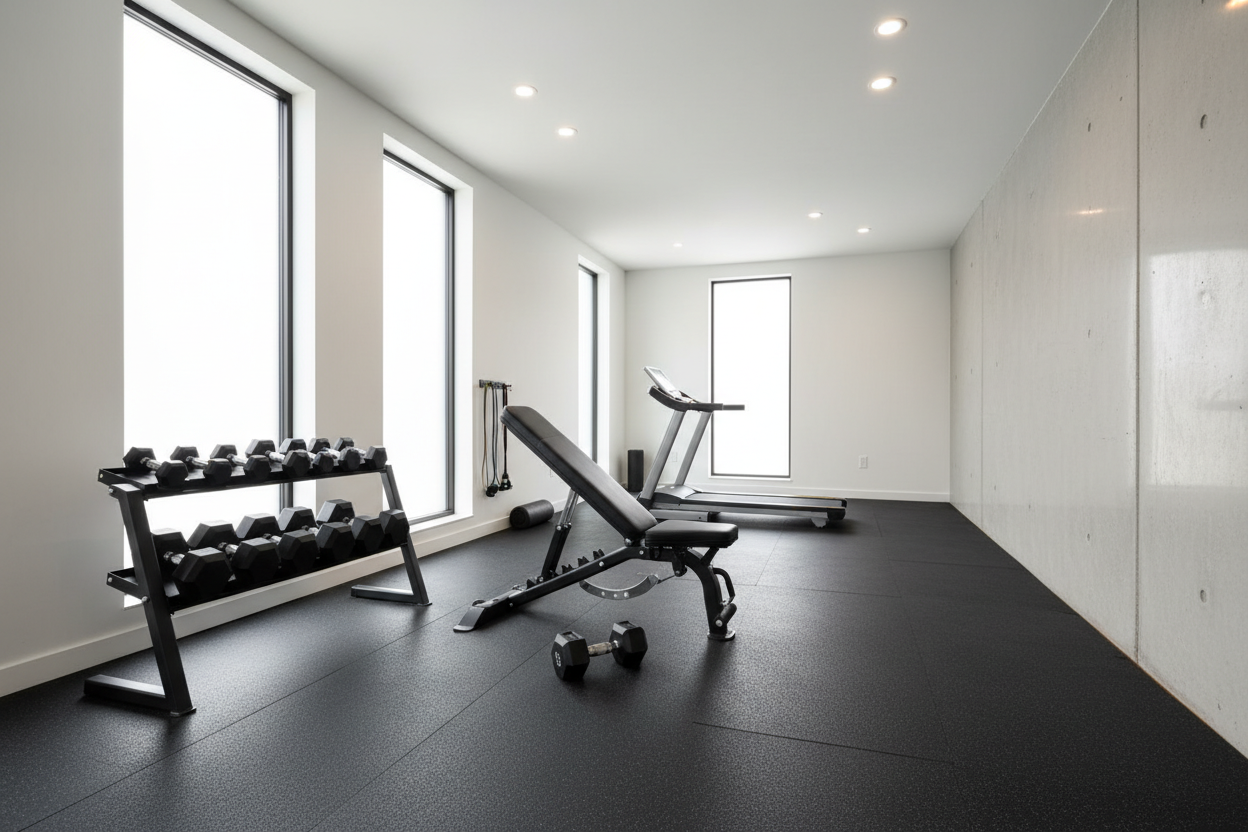
I remember the first time I tried to build a beginner home gym. I went to a big-box sporting goods store and walked out with a 'multi-purpose' bench that felt like it was made of recycled soda cans and a set of plastic-coated weights that smelled like a chemical plant. Two months later, the bench was a laundry rack and I was back at the commercial gym paying a monthly fee I couldn't afford. Don't make my mistakes.
Building a space to train at home isn't about replicating a 24-hour fitness center. It's about buying the fewest number of things that allow you to do the most amount of work. If you buy right the first time, you'll never have to buy it again. Here is how you build a foundation that actually lasts.
Quick Takeaways
- Skip the 'all-in-one' machines; they have low weight ceilings and flimsy cables.
- Focus on a steel rack, a 20kg barbell, and real rubber flooring.
- 11-gauge steel is the gold standard for safety and longevity in a rack.
- Horse stall mats or dedicated gym rubber are non-negotiable for concrete protection.
Please Stop Buying the 'All-in-One' Plastic Junk
The biggest mistake people make when setting up an at home gym for beginners is falling for the marketing of 'total body' machines. These things look great in a catalog. They promise 50 different exercises in a 4x4 footprint. The reality? They use thin cables, plastic pulleys, and 14-gauge steel that flexes under a 135-lb load. They are built for people who want the idea of working out, not people who actually want to get strong.
Progressive overload is the only way to see results. That means you need gear that can handle more weight as you get stronger. If your machine maxes out at 100 lbs of resistance, you're going to hit a wall in eight weeks. A real home gym for beginners should be able to handle 500+ lbs without a shimmy. You want a foundation that respects the physics of heavy lifting, not something that feels like a toy from a department store. Cheap machines have a 'crunchy' feel in the pulleys that ruins the mind-muscle connection. When the cable feels like it's dragging over sandpaper, you aren't focusing on your lats; you're focusing on when the wire is going to snap.
The Holy Trinity of Home Gym Starter Equipment
You only need three things to build a world-class physique in your garage: a way to hold the weight, the weight itself, and a surface that won't crack. This is the core of home gym starter equipment. When you start shopping for heavy-duty home gym essentials, ignore the shiny gadgets. Focus on the steel. A minimalist setup allows you to master the 'Big Three' lifts—squat, bench, and deadlift—which are responsible for 90% of your muscle growth anyway. Everything else is just expensive fluff.
A Rack You Won't Outgrow in Six Months
Your rack is your insurance policy. If you're training alone—which most of us do—you need a cage that catches the bar when you fail a rep. Look for a power rack with at least 2x3-inch steel tubing. Check the hole spacing; Westside spacing (1-inch gaps through the bench zone) is a lifesaver for finding the perfect height for your safety pins. I spent a lot of time testing power racks versus Smith machines and for a starter, the rack wins every time. A power rack forces you to stabilize the weight yourself, which builds the core strength that a Smith machine simply skips over.
Don't be tempted by the lightweight squat stands that aren't connected at the top. They are prone to tipping if you re-rack a heavy bar with any forward momentum. A full four-post power rack can be bolted to the floor or a platform, making it an immovable object. You want to feel confident when you step under a heavy bar, not wonder if the rack is going to walk across the garage with you.
The Floor Is More Important Than You Think
I've seen guys drop a 225-lb deadlift on those foam puzzle mats you find at hardware stores. The foam bottomed out instantly, the bar bounced weirdly, and the concrete underneath spider-webbed. Foam is for playrooms. For real lifting, you need a dense 4x8 gym mat. High-density rubber absorbs the shock and spreads the force across a wider surface area. It also keeps your rack from shifting during aggressive sets. If you can't afford a full floor of rubber, get two mats for the lifting area. It saves your foundation and keeps the noise down so your neighbors don't call the cops at 6:00 AM.
How to Program a Home Gym for Beginners
You don't need 15 machines to get big. You need four movements: Squat, Press, Pull, and Hinge. With a rack and a bar, you can do all of them. A typical Monday-Wednesday-Friday split works wonders. Day A: Back Squat (3x5), Overhead Press (3x5), and Pull-ups (3xMax). Day B: Deadlift (1x5), Bench Press (3x5), and Barbell Rows (3x8). That's the whole program. If you do those six movements and add 5 lbs to the bar every week, you'll look better in six months than the guy doing 20 different bicep curls on a cable machine.
The beauty of this setup is the lack of friction. You don't have to adjust seats, change cable attachments, or wait for someone to finish their sets. You walk into the garage, load the bar, and move. The simplicity of a barbell is its greatest strength. It teaches you how to move your body through space under load, which translates to real-world strength much better than a seated chest press ever will.
When Should You Actually Upgrade Your Setup?
Wait until you can bench your body weight and squat 1.5x your body weight before buying more toys. Consistency is the goal here, not gear collection. Once you've earned it, you can look at an all-in-one Smith machine station to add cable crossovers or lat pulldowns to your routine for that extra hypertrophy work. But for the first year? Stick to the iron. The discipline you build with a basic barbell setup is what actually keeps you training for the next decade.
Personal Experience
My first 'real' rack was a cheap squat stand from a liquidator. I thought I was being smart by saving $200. One afternoon, I missed the cup while re-racking a squat. The whole stand tipped over because it wasn't bolted down and the steel was too light. I ended up with a hole in my drywall and a very bruised ego. I replaced it with an 11-gauge power rack the next week. Buy the heavy stuff first; your safety is worth more than the savings. I've still got that same 11-gauge rack ten years later. It has outlasted three cars and two different houses.
FAQ
Do I need a 7-foot Olympic bar?
Yes. Don't buy the 1-inch 'standard' bars. They bend easily, the sleeves don't rotate well, and finding plates for them is a nightmare. Stick to the 2-inch Olympic standard from day one.
Can I build a gym in a carpeted room?
You can, but put 3/4-inch plywood under your rubber mats. Lifting on soft carpet is like trying to squat on a mattress; it's bad for your ankles and makes it impossible to stay balanced under heavy loads.
Is a bench necessary right away?
You can floor press and overhead press without one, but a solid flat bench is usually the fourth piece of gear I recommend. Just make sure it's rated for at least 600 lbs (user weight plus the bar).
Share:
What Happens When You Pull the Pin: How Gym Machines Work
How to Pick a Weight Set for Home That Won't Gather Dust