
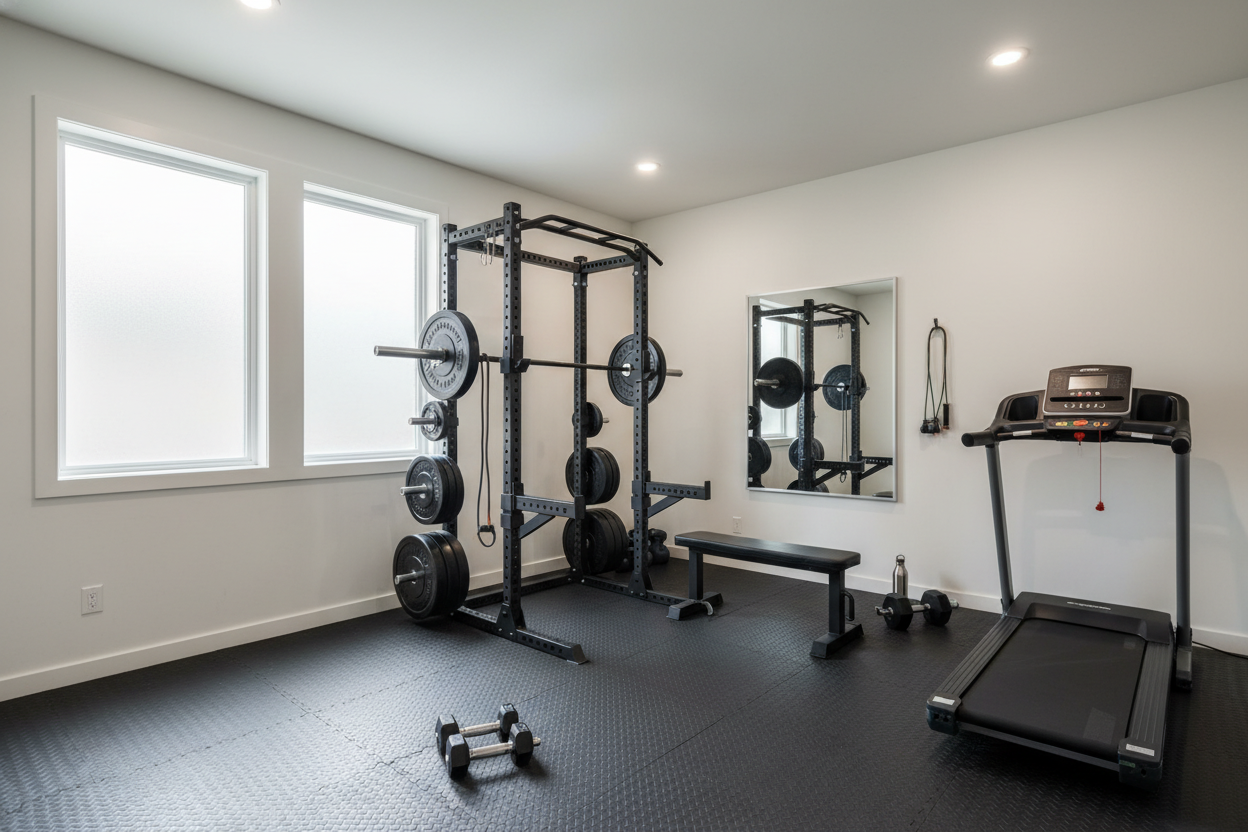
I spent three years training in a garage so tight I had to open the side door just to have room for my elbows during a bench press. I’ve scrolled through those midnight Amazon listings for a compact home gym just like you have, wondering if that $300 all-in-one machine will actually hold up or if it'll fold like a lawn chair the first time I try to row the stack.
The truth is, most gear marketed as a small home gym is absolute garbage. It’s built for people who want to look at their equipment, not people who want to move heavy weight. If you’re tired of your gym raising prices and you’re ready to reclaim your spare room or garage corner, you need a setup that prioritizes footprint without sacrificing the ability to get strong.
Quick Takeaways
- Prioritize 11-gauge steel over flashy plastic covers.
- Vertical storage is your best friend in a small space home gym.
- Folding racks are the gold standard for saving floor real estate.
- Adjustable dumbbells replace an entire wall of fixed weights.
The Brutal Truth About Space-Saving Fitness Gear
Most marketing for a home gym for small spaces is a trap. They show a smiling model using resistance bands or a wobbly pulley system that looks sleek but offers zero meaningful tension. These 'mini home gym' setups are designed to be light enough to ship cheaply, not heavy enough to build muscle. If the equipment weighs less than you do, it’s going to move when you’re mid-set.
I’ve tested those 'compact' cable machines with the 100-lb stacks. They’re fine for high-rep face pulls, but the moment you try to do a heavy lat pulldown, the whole unit tips forward. You don't need a gimmick; you need high-density iron. A real compact gym should be built around a few heavy-duty pieces that perform multiple roles.
The Core 4: Outfitting a Small Footprint Home Gym
You don't need twelve different machines to hit every muscle group. You need four foundational pieces that allow for hundreds of variations. We’re talking about a rack, a bench, a barbell, and adjustable dumbbells. This combination fits in a 6x8 foot area and allows for a professional-level workout. When you focus on a compact home weight set rather than isolated machines, you save money and space simultaneously.
A Rack That Doesn't Eat the Whole Room
If you want to squat 400 lbs, you need a rack. But a full 4-post power rack is a space killer. For a low profile home gym, look at a folding wall-mount rack or a heavy-duty half-rack. A good folding rack sticks out less than 5 inches from the wall when it’s tucked away. Make sure it uses at least 3x3 inch, 11-gauge steel uprights. Anything less will feel like a swaying skyscraper when you’re trying to re-rack a heavy set of squats.
Bench Selection (Skip the Flimsy Folders)
I’ve made the mistake of buying a 'foldable' bench that promised it could hold 500 lbs. It felt like balancing on a wet noodle. Instead of a cheap compact weight machine, invest in a high-end adjustable bench with a built-in handle and wheels. You can stand it up on its end when you aren't using it. When looking for high-quality home gym essentials, the bench is where you shouldn't skimp—if it wobbles during a dumbbell press, your brain will subconsciously cut your power output to keep you balanced.
Are All-In-One Machines Actually Worth the Money?
The 'compact all in one home gym' is a polarizing topic. Most are overpriced coat racks, but there are exceptions. If you’re a bodybuilder who needs leg volume but doesn't have room for a dedicated leg press, a combo machine is the move. For example, the compact 30 degree leg press hack squat combo is a rare beast that actually handles heavy weight while occupying about half the space of a standard commercial leg press.
The key is looking at the pivot points and the steel thickness. If a compact multi-gym uses plastic bushings instead of ball bearings, it will feel 'crunchy' within six months. If you go the all-in-one route, make sure it’s a plate-loaded system. Weight stacks are convenient, but they add massive bulk and cost to the machine's footprint.
How to Fit Real Iron in a 10x10 Space
A 10x10 room is more than enough for a best small home gym if you’re smart about the layout. The biggest mistake is putting the rack in the center of the room. Shove that thing against the wall. Use vertical plate trees to get your bumpers off the floor. I’ve seen people squeeze a real compact in-home gym into 50 square feet by using wall-mounted barbell hangers and folding benches.
Remember the 'barbell pathway.' A standard Olympic bar is 7.2 feet long. You need at least a foot of clearance on either side to load plates without hitting the drywall. If you’re truly cramped, look into a 'shorty' bar, which cuts the sleeve length down to fit into tighter corners while keeping the knurling in the right place for your grip.
The Biggest Trap When Buying Compact Equipment
The 'best small weight machine' lists online are often filled with gear that has a 250-lb total weight capacity. That includes your body weight. If you weigh 200 lbs and you're benching 100 lbs, you've already exceeded the safety rating. This is why most compact gym for home setups snap or bend under real usage.
Always check the 'gauge' of the steel. In the gym world, lower numbers are better. 11-gauge is the gold standard; 14-gauge is what you find at big-box retailers. If the manufacturer doesn't list the steel gauge or the weight capacity, assume it’s not meant for serious lifting. A most compact home gym is only a good value if it doesn't end up in a scrap heap after your first heavy leg day.
FAQ
Can I really get a full workout with a compact gym?
Absolutely. If you have a rack, a bar, and a bench, you can perform the 'Big Five' (Squat, Bench, Deadlift, Overhead Press, Row). Everything else is just extra credit. Focus on compound movements to get the most bang for your buck in a small space.
What is the best flooring for a small space?
Don't buy those soft foam puzzle mats from the toy aisle. They compress under weight and make you unstable. Get 3/4-inch thick stall mats. They are heavy as hell and smell like a tire shop for a week, but they will protect your subfloor from dropped deadlifts forever.
How much should I spend on a compact setup?
Expect to spend between $1,500 and $2,500 for a setup that will last a lifetime. You can go cheaper, but you'll likely end up replacing the bench or the bar within a year when you realize how much they flex under load.
Share:
Why the Best Low Impact Exercise Machine Isn't an Elliptical
I Regret Buying Most Gear: My Actual At Home Workout Must Haves