
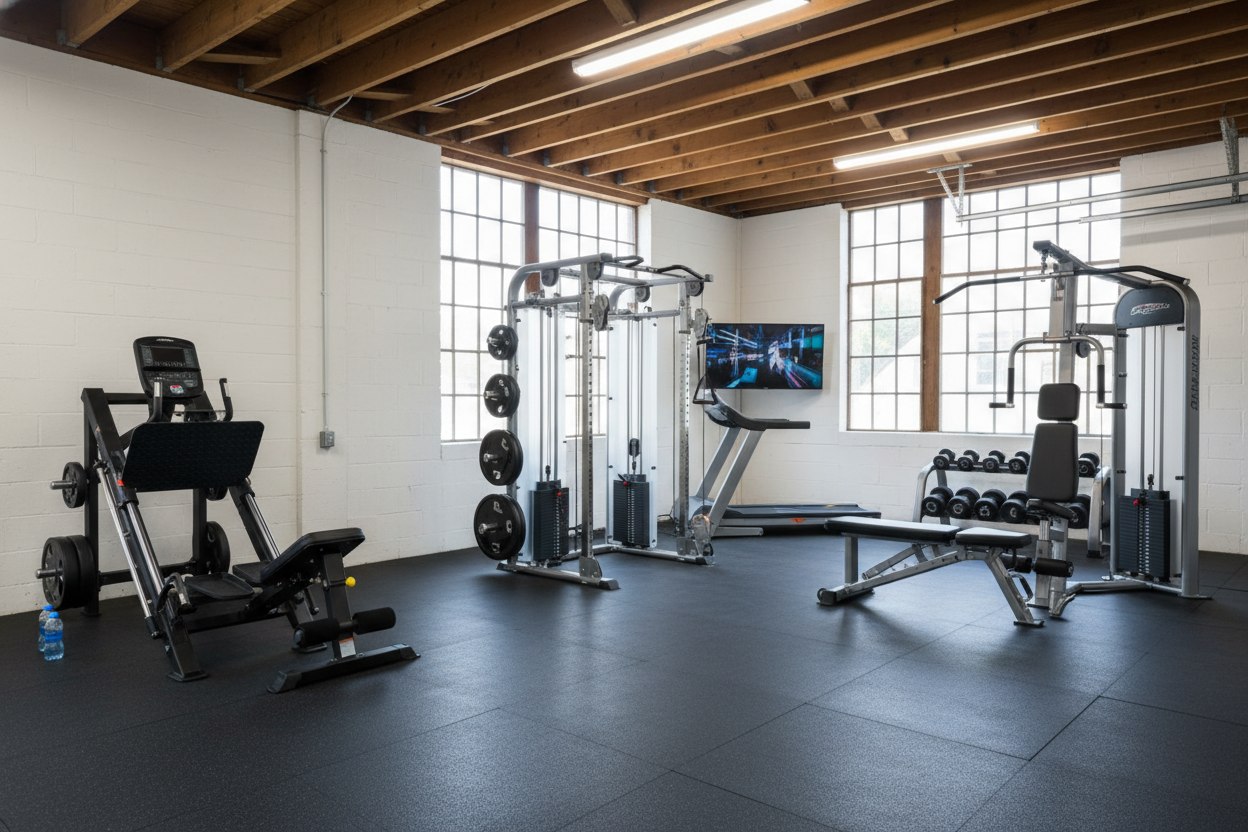
I spent a solid decade telling anyone who would listen that if they weren't back-squatting a barbell, they weren't really training. I was wrong. I’ve watched too many people walk into a gym, struggle with an empty 45-lb bar, and leave three weeks later because their lower back hurt and they felt like they didn't belong. The truth is, a beginner gym machine workout is the smartest, most efficient way to build a foundation without the ego-bruising learning curve of free weights.
Quick Takeaways
- Machines provide a fixed path of motion, reducing the risk of injury while you learn to move weight.
- Selectorized stacks make it easy to track progress—just move the pin down one plate.
- A full-body machine workout for beginners should take less than 45 minutes.
- Focus on the 'negative' (the way down) to build muscle faster.
Why I Stopped Forcing Beginners to Use Barbells
I used to be a total free-weight snob. If it wasn't a rusty barbell, I didn't want to know. But after coaching dozens of people, I realized that machine exercises for beginners are actually superior for hypertrophy and safety. When you're on a machine, you don't have to worry about balancing a heavy bar or your ankles collapsing. You can focus entirely on the muscle you're trying to hit.
I even traded free weights for a full body workout machine for a few months during a rehab phase. My strength didn't plummet; it actually went up because I could push to failure without a spotter. For a beginner machine workout, this safety net is vital. It allows your central nervous system to adapt to tension without the high-stakes coordination required by a snatch or a clean. You’re teaching your brain how to fire those motor units in a controlled, guided environment.
The guided track of a selectorized machine means you can’t 'cheat' the movement as easily. If you’re doing a beginner weight training machines routine, you’re forced into a specific biomechanical path. This builds the mind-muscle connection that beginners usually lack. Once you can actually feel your lats or your quads working, then we can talk about moving to the rack.
3 Rules You Can't Ignore When Using Weight Machines
First, adjust the seat. I see people all the time with their shoulders up in their ears because the seat is too low. The handles should align with the center of the muscle group you're working. If you're doing a chest press, the handles should be at nipple height. If the pivot point of the machine isn't aligned with your joint, you're just asking for a repetitive strain injury.
Second, own the eccentric. Don't let the weight stack slam back together. That 'clink' is the sound of you wasting half the rep. Take two seconds to lower the weight. This is where the most muscle damage (the good kind) happens. A beginner workout weight machines plan only works if you're actually controlling the weight, not letting gravity do the heavy lifting for you.
Third, track your numbers. Most machines use a simple pin system. If you did 70 lbs for 10 reps last week, you better do 75 lbs or 11 reps this week. This is called progressive overload, and it’s the only way to grow. Don't just wander around the gym doing 'three sets of whatever.' Have a plan and stick to it.
The Exact Machine Routine I Give to New Lifters
This is a beginner weight machine routine designed to hit every major muscle group in one session. You should do this three times a week with a rest day in between. It’s simple, it’s effective, and it doesn't require a PhD in kinesiology to execute. We’re going to focus on big, compound movements that give you the most bang for your buck.
Lower Body: Leg Press and Hamstring Curls
Start with the leg press. It’s the king of beginner weight training machines. Place your feet shoulder-width apart in the middle of the sled. Don't lock your knees out at the top—keep a slight bend to keep the tension on your quads. If your gym is packed and the leg press is taken, a Smith machine home gym station is a perfect alternative for guided squats. The fixed track keeps your torso upright and your spine safe.
Follow that with seated or lying hamstring curls. Most beginners are quad-dominant, meaning their front thighs are way stronger than their back. This leads to knee pain. Hamstring curls are non-negotiable for joint longevity. Keep your toes pointed up and squeeze at the bottom of the rep. This is the foundation of any solid machine weight training for beginners.
Upper Body Push: Chest Press and Guided Shoulders
Next, head to the chest press. If you have the option, use a chest press machine with independent arms. This is huge for beginners because it prevents your stronger side from doing 70% of the work. Keep your shoulder blades pinned back into the pad and push through the palms of your hands. This builds the chest and triceps without the risk of dropping a bar on your throat.
For shoulders, the overhead press machine is your best friend. Most of these have two grip options: palms facing forward or palms facing each other. If you have tight shoulders, use the palms-facing-each-other (neutral) grip. It’s much easier on the rotator cuffs. Keep your core tight so you don't arch your back like a banana when the weight gets heavy.
Upper Body Pull: Lat Pulldowns and Seated Rows
For the back, we start with lat pulldowns. The biggest mistake here is pulling the bar to your stomach. Only pull to the top of your chest. Imagine you have a string attached to your elbows and someone is pulling them down to the floor. This cue helps you engage the lats rather than just using your biceps. A full body multi training station usually has a high-quality pulley system for this.
Finish with the seated row. This builds the thickness of your back and improves your posture—essential if you spend all day hunched over a laptop. Keep your chest pressed against the pad and pull the handles toward your hips, not your ribs. This weight machine workout for beginners is about quality over quantity. If you're swinging your torso to move the weight, it's too heavy.
How to Progress When the Stacks Get Too Light
After about 12 weeks of this beginner machine workout plan, you’re going to notice something: the weights feel light. This is the 'newbie gains' phase, and it’s the best part of lifting. When you can comfortably hit the bottom of the stack for 12 reps, it's time to change your variables. You don't necessarily need to jump into a powerlifting meet, but you should increase the difficulty.
You can start by slowing down your reps—try a 4-second negative. Or, you can reduce your rest periods from 90 seconds to 45 seconds. This increases the metabolic stress on the muscle. If your goal has shifted from pure strength to leaning out, you might want to build a weight loss machine workout that incorporates shorter rest and higher volume. This keeps your heart rate up while still preserving the muscle you just built.
Eventually, you’ll want to mix in some cable work or dumbbells. Cables are the middle ground between machines and free weights—they offer a constant tension that machines provide but require a bit more stabilization. But don't rush it. There is no shame in a beginners machine workout that uses the stacks. Some of the biggest guys I know still use the chest press machine because the stretch and squeeze are just that good.
FAQ
Do machines build as much muscle as free weights?
For hypertrophy (muscle growth), yes. Your muscles don't know if you're holding a dumbbell or a machine handle; they only know tension. Machines actually make it easier to reach true failure safely, which is a key driver of growth.
How many days a week should a beginner train?
Three days is the sweet spot. It gives you 48 hours of recovery between sessions. As a beginner, you grow while you rest, not while you're in the gym. Don't overcomplicate it.
What if a machine feels uncomfortable on my joints?
Stop immediately and check your seat height. Usually, joint pain in a machine is caused by a misalignment between your joint and the machine's pivot point. If it still hurts, find a different machine that hits the same muscle. No exercise is mandatory.
Share:
Stop Blaming Your Gear: How to Actually Exercise at Home Gym Setups
Why Most Exercise Equipment in Home Spaces Becomes a Clothes Hanger