
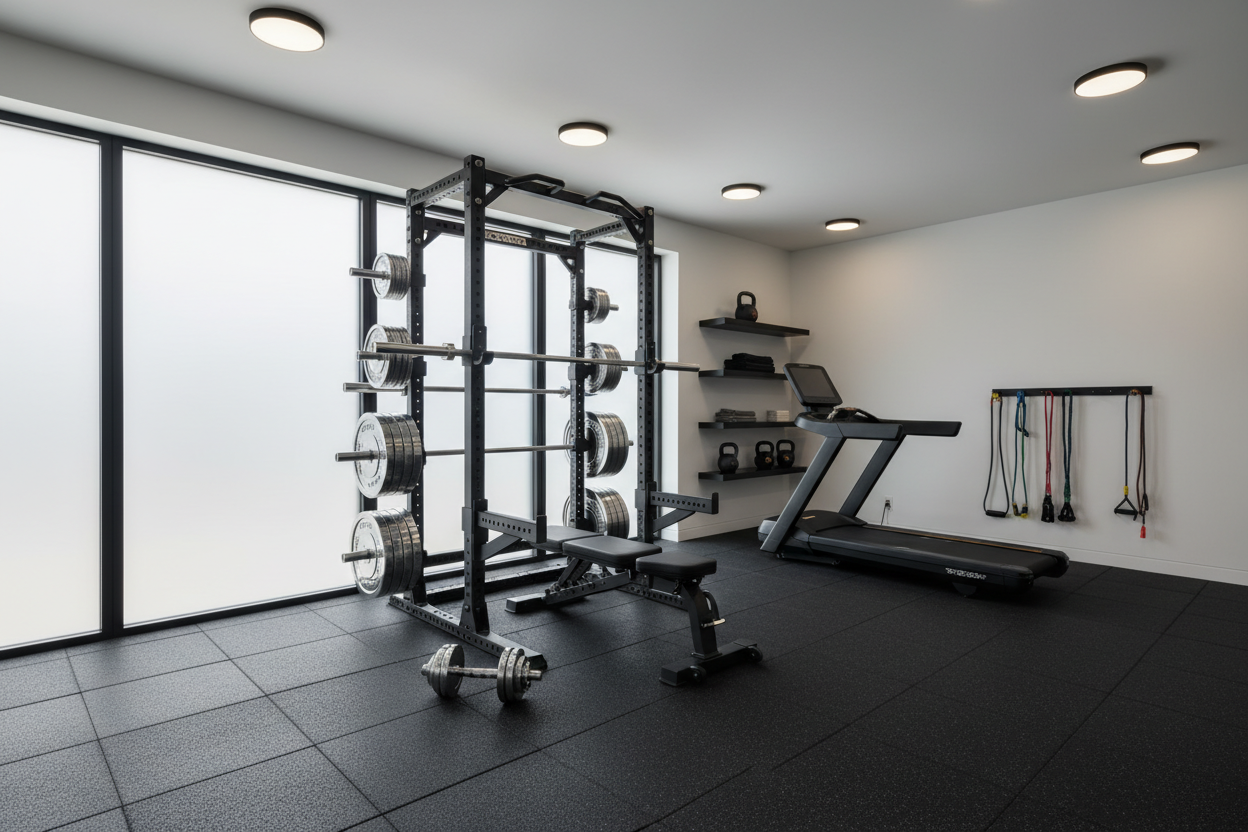
I remember staring at a glossy equipment catalog at 2:00 AM, convinced that if I just had a dedicated leg press, a standing calf raise, and a five-stack cable machine, my physique would finally match my ambitions. I spent weeks measuring my garage down to the fraction of an inch, trying to figure out how to fit the biggest home gym possible into a standard two-car space. I thought volume of equipment equaled volume of results.
I was wrong. After spending thousands on the most expensive home gyms and cramming my floor space so tight I had to shimmy sideways to reach my barbell, I realized I’d built a storage unit, not a training facility. More gear didn't make me stronger; it just made me spend more time moving benches out of the way and less time actually lifting heavy things.
Quick Takeaways
- Maximizing floor space is more important than maximizing machine count.
- High-end multi-functional pieces beat a dozen single-use machines every time.
- Decision fatigue is real; too many options lead to 'program hopping' and stalled progress.
- Maintenance time increases exponentially with the amount of cable pulleys and guide rods you own.
The Trap of the Mega-Gym Fantasy
Social media has ruined our perception of what a home setup should look like. We scroll through feeds of professional athletes with 5,000-square-foot personal warehouses and think that’s the gold standard. These are often the most expensive home gym setups on the planet, designed more for brand deals and aesthetics than for the reality of a 60-minute workout before work.
When you try to replicate a commercial gym in a residential space, you lose the one thing that makes home training great: focus. In a commercial gym, you pay for the variety because you're sharing it with 200 other people. In your garage, you are the only user. Buying three different chest press machines doesn't give you better pecs; it just gives you three things to dust and oil once a month.
Where All That Square Footage Actually Goes
The footprint of a machine is a lie. A functional trainer might say it’s 4x5 feet, but you need another three feet of clearance on every side to actually use the handles and change the weights. If you don't plan for 'human clearance,' your gym becomes a claustrophobic maze. I’ve seen guys buy the most expensive home gyms only to realize they can't even fully extend their arms for a lateral raise without hitting a weight tree.
Flooring is another victim of the 'bigger is better' mindset. People buy ten different machines and then realize they can't afford to floor the whole space properly. You’re better off with a dedicated lifting zone featuring a thick 4x8 gym mat and open air than a room packed with $5,000 machines sitting on bare concrete or cheap foam tiles that slip the moment you try to drive your heels in for a bench press.
Decision Fatigue in Your Own Garage
There is a psychological cost to owning too much gear. It’s called the paradox of choice. When I had just a rack, a bar, and some plates, I knew exactly what I had to do: squat, press, pull. When I added five different isolation machines, I started spending my rest periods wondering if I should do three sets on the cable crossover or move over to the pec deck.
This leads to 'program hopping' within a single session. You stop chasing the logbook on compound movements because you’re too distracted by the shiny new toys in the corner. Efficiency is the currency of home training. If your workout takes two hours because you're messing with pin heights and cable attachments, you're going to burn out and stop training altogether.
Versatility Beats Volume Every Time
The smartest lifters I know don't have the biggest gyms; they have the most versatile ones. Instead of buying a separate power rack, a smith machine, and a functional trainer, they look for a single anchor piece that does it all. The debate between a power rack or a smith machine used to be an 'either-or' situation that ate up massive amounts of floor space if you wanted both.
Now, you can get a comprehensive smith machine home gym station that handles your heavy barbell work, provides the safety of a smith track for hypertrophy sets, and includes a dual-pulley system for accessories. This takes up a 6x7 foot area instead of 200 square feet. You get 95% of the functionality of a commercial gym with 10% of the clutter. That extra floor space is what allows you to do burpees, jump rope, or simply breathe between sets without hitting your shins on a frame.
The Real Flex Is Efficiency, Not Clutter
At the end of the day, your gym should serve your goals, not your ego. Having the 'biggest' gym on the block is a headache of maintenance, heat management, and cramped movements. I eventually sold off half my equipment—the single-use leg extension, the bulky rowing machine, and the redundant cable towers. My workouts immediately improved because I could actually move around.
Stop trying to fill every square inch of your garage with steel. Instead, curate your home gym around the movements that actually drive your progress. Buy the best barbell you can afford, a solid rack or all-in-one station, and leave enough room to actually move. A gym that breathes is a gym you’ll actually want to use every day.
Personal Experience: The 'Leg Press' Lesson
I once bought a massive, commercial-grade leg press because I found a 'deal' on a used equipment site. It weighed 800 pounds and took up a 4x8 foot footprint. Within a month, I realized I hated loading 12 plates onto it just to get a workout in. It became a very expensive shelf for my gym bags and extra towels. I eventually sold it for half what I paid just to get my floor space back so I could do walking lunges again. Bigger isn't better; better is better.
Frequently Asked Questions
How much space do I really need for a home gym?
A standard 10x10 foot area is plenty for a world-class workout. This fits a full rack, a bench, and a stack of plates with enough room to move safely. Anything beyond that is a luxury, not a necessity.
Are all-in-one machines actually durable?
The high-end ones are. Look for 11-gauge steel and aircraft-grade cables with at least a 2,000-lb tensile strength. If the machine weighs less than 400 lbs total, it’s probably going to feel shaky when you start moving heavy weight.
Should I buy used commercial gear to save money?
Only if you have the space and the tools to fix it. Commercial gear is built for 12 hours of daily abuse, but it's often massive and hard to disassemble. For most garage lifters, modern 'prosumer' gear designed for home dimensions is a much better fit.
Share:
Are Machines Good for Building Muscle? My Surprising 6-Month Test
Is a Home Gym Under $1000 Actually Enough for Heavy Lifting?