
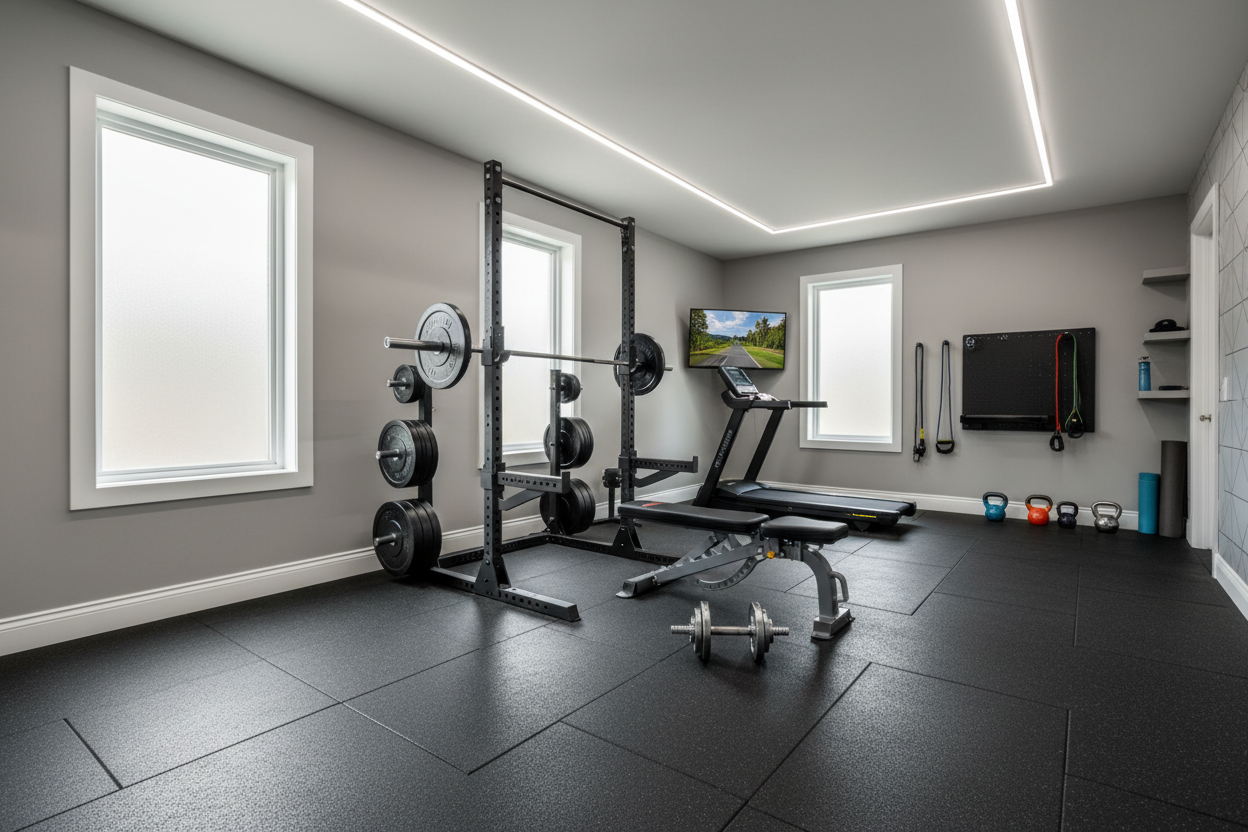
You finally decided to stop paying for a gym membership you barely use, or maybe you're just tired of waiting twenty minutes for the only power rack in the building. You want to build a home gym. Then you see the shipping quote for a 300-pound barbell set and nearly choke on your protein shake. Naturally, you pull out your phone and search for exercise equipment stores in my area, hoping to save a few hundred bucks on freight.
I have spent the last decade scouring showrooms, and I am here to tell you: that search is a minefield. Most of the results you see on Page 1 are big-box retailers that treat fitness gear like an afterthought, tucked between the patio furniture and the seasonal grill displays. If you want gear that survives a heavy squat session, you have to look deeper.
Quick Takeaways
- Big-box stores usually sell 'residential grade' gear that uses thin 14-gauge steel and plastic bushings.
- Search for 'commercial fitness supply' or 'strength and conditioning' instead of generic terms.
- Always perform a 'wobble test' on floor models before pulling out your credit card.
- Factor in the 'convenience tax'—local shops often mark up MSRP to cover their high retail rent.
The Local Retail Trap: Why Most Nearby Shops Disappoint
The harsh reality of local brick-and-mortar fitness retail is that most shops are optimized for the casual user, not the person who trains five days a week. When you look for gym stores around me, the top results are usually massive chains. They stock equipment that looks shiny in the showroom but feels like a tin can once you get it home.
These stores thrive on high markups for unbranded or house-brand gear. They know you're trying to avoid a $200 shipping fee, so they bake that 'savings' right back into a higher sticker price for a rack that barely handles a 315-pound drop. I have seen racks sold for $800 that have more side-to-side sway than a palm tree in a hurricane. If the steel isn't at least 11-gauge (roughly 3mm thick), walk away.
How to Actually Filter 'Gym Stores Around Me'
To find the good stuff, you have to change how you search. Stop using generic terms. Try searching for 'commercial gym equipment' or 'used fitness liquidators.' These are the places that supply the hardcore black-iron gyms in your city. They usually operate out of warehouses in industrial parks rather than fancy shopping malls.
Be careful with the sales reps at the big chains. Often, they are incentivized to move old inventory or high-margin items that don't actually fit your training style. I went undercover at 5 exercise equipment stores and found that most reps couldn't tell the difference between a needle bearing and a brass bushing in a barbell. If they can't talk specs, they shouldn't be selling you gear.
The 'Wobble Test' at the Nearest Exercise Equipment Store
When you finally step into the nearest exercise equipment store, don't just look at the price tag. Touch the equipment. If it's a power rack, grab the uprights and give it a literal shove. If it rattles or shifts more than a fraction of an inch, it isn't going to hold up to your PR attempts. Check the welds—they should look like a stack of dimes, not a messy splatter of gray gum.
The same applies to cardio. If you want to test a display exercise bike, don't just sit on it. Crank the resistance to the max and stand up on the pedals. Check for frame flex and listen for clicking in the magnetic resistance. A cheap bike will sound like a dying blender under heavy load, whereas a quality unit will stay whisper-quiet.
Spotting the Hidden Markups at Nearby Exercise Equipment Stores
Local shops have massive overhead. They pay for floor space, electricity, and a sales staff that stands around waiting for you to walk in. You are paying for that convenience. Before you buy, pull up a reputable online brand on your phone and compare the specs. If the local shop is charging $1.50 per pound for iron plates while the market rate is $1.10, you are paying a 'convenience tax.'
Don't be afraid to negotiate. Most local owners would rather give you 10% off than watch you walk out the door. Ask if they have 'floor models' or 'scratch and dent' units. I once saved $400 on a functional trainer just because it had a cosmetic scratch on the back of the weight stack that nobody would ever see.
When to Suck It Up and Buy Online Anyway
There is a tipping point where local selection just doesn't cut it. If you are looking for specialized equipment—like a calibrated powerlifting bar or a heavy-duty Smith machine home gym station—the local retail options are almost always inferior. These are complex, heavy pieces of engineering. A local shop might carry a flimsy version, but a dedicated manufacturer will ship you a tank.
Yes, freight shipping sucks. But paying $200 for shipping on a piece of equipment that lasts twenty years is a better investment than buying a $500 local 'deal' that breaks in twenty months. If the local shop doesn't carry brands with a proven track record in the strength community, keep your wallet in your pocket.
My Personal Lesson in Local Buying
Years ago, I bought a 'commercial' flat bench from a nearby exercise equipment store because I didn't want to wait a week for delivery. It felt solid enough in the store. Three months later, the vinyl started cracking and the frame developed a permanent 5-degree tilt to the left. I ended up giving it away on Craigslist and buying the one I should have ordered online in the first place. I wasted $150 trying to save $40. Don't be like me.
Frequently Asked Questions
Are local gym stores cheaper than online?
Rarely. Once you factor in sales tax and the higher base price, you usually break even or pay more locally. The only real saving is the 'time' of having it today versus next week.
How do I know if a local rack is high quality?
Look for 3x3 or 2x3 steel tubing with 11-gauge thickness. If the bolts look small or the frame feels light enough to pick up with one hand, it is likely a budget residential model.
Should I buy used gear from local stores?
Yes, if they are a legitimate refurbisher. Many local shops buy old gear from closing Gold's Gyms or YMCAs. This is often the best way to get professional-grade steel at a residential price.
Share:
Why I Never Walk Into a Commercial Gym Machines Store Anymore
How to Shop for Fitness Equipments for Home Without Getting Scammed