
I remember scrolling through Amazon at 1 AM, tired of my local commercial gym's monthly fee hikes and the crowd around the power rack. I just wanted a simple weights and bench sets combo to get the job done in my garage. It looks like a steal on paper—a bench, a bar, and some plates all for the price of a few months' membership. But as someone who has since bent bars and cracked frames, I'm here to tell you that most of these bundles are a trap.
Quick Takeaways
- Most entry-level bundles use 'standard' 1-inch bars that can't be upgraded with Olympic plates.
- Mid-width uprights are a safety hazard that force a dangerous grip width.
- Plastic-coated plates are filled with sand or concrete and are prone to leaking.
- A 300-lb weight capacity usually includes the user's body weight, leaving very little for actual lifting.
The Allure of the Quick-Start Home Gym
The appeal is obvious. You click one button, and a week later, a heavy box arrives at your door. You think you’ve just bypassed the complexity of researching rack gauges and tensile strengths. Beginners often flock to the Marcy weight bench and weights because it’s a household name and fits in a spare bedroom. It promises a total body workout without the footprint of a full power cage.
The problem is that these all-in-one boxes are engineered for the lowest possible price point, not for longevity. You aren't just buying a gym; you're buying a ceiling. Most of these sets are designed for someone who plans to lift the same 100 pounds for the next five years. If you actually plan on getting stronger—which is the whole point of lifting—you will outgrow the structural integrity of these units within six months. I've seen it happen dozens of times: the vinyl tears, the foam rollers compress into nothing, and the bar starts to resemble a pool noodle under a moderate load.
The 3 Fatal Flaws of Budget Bundles
When you buy a cheap weight lifting bench and weight set, you aren't just sacrificing comfort; you're often sacrificing safety. Manufacturers cut corners in three specific areas that make training miserable. First is the steel gauge. Most of these units use 14-gauge steel or thinner. While that sounds technical, it basically means the metal is thin enough to wobble when you rack the weight. A shaky bench is a mental barrier that prevents you from pushing your limits.
Second is the footprint. These sets are often made purposely narrow to save on shipping costs. This leads to a terrifying lack of stability. If you don't center the bar perfectly when racking, the whole unit can tip. Third is the 'static' vs. 'dynamic' weight rating. A bench might claim to hold 400 lbs, but that often doesn't account for the force of you dropping a heavy bar onto the J-cups. In my experience, if a budget set doesn't specify a 2x2 or 3x3 inch steel frame, it’s a hard pass.
Uprights That Crush Your Hands
The most egregious design flaw in these bundles is the 'mid-width' upright design. A standard Olympic rack is wide enough that the uprights sit outside your hand placement. Budget racks are often 24 to 30 inches wide. This puts the uprights exactly where your hands need to be for a proper bench press. You’re forced to either grip the bar too narrow, which wrecks your triceps and shoulders, or grip it too wide, where you risk crushing your fingers every time you rack the weight. It’s a design that actively discourages proper form.
Plastic-Coated Concrete Plates
Let's talk about the weight sets and bench combos that come with those 'vinyl' plates. These aren't iron. They are plastic shells filled with sand or concrete. They are massive—a 25-lb plastic plate is often thicker than a 45-lb iron plate. This means you run out of room on the bar almost immediately. Even worse, the plastic eventually cracks. Once that happens, you’ll have a trail of gray sand across your gym floor every time you move a plate. They also have a 'standard' 1-inch hole, meaning if you ever want to upgrade to a real Olympic bar, these plates become expensive paperweights.
When a Weight Training Bench Set Actually Makes Sense
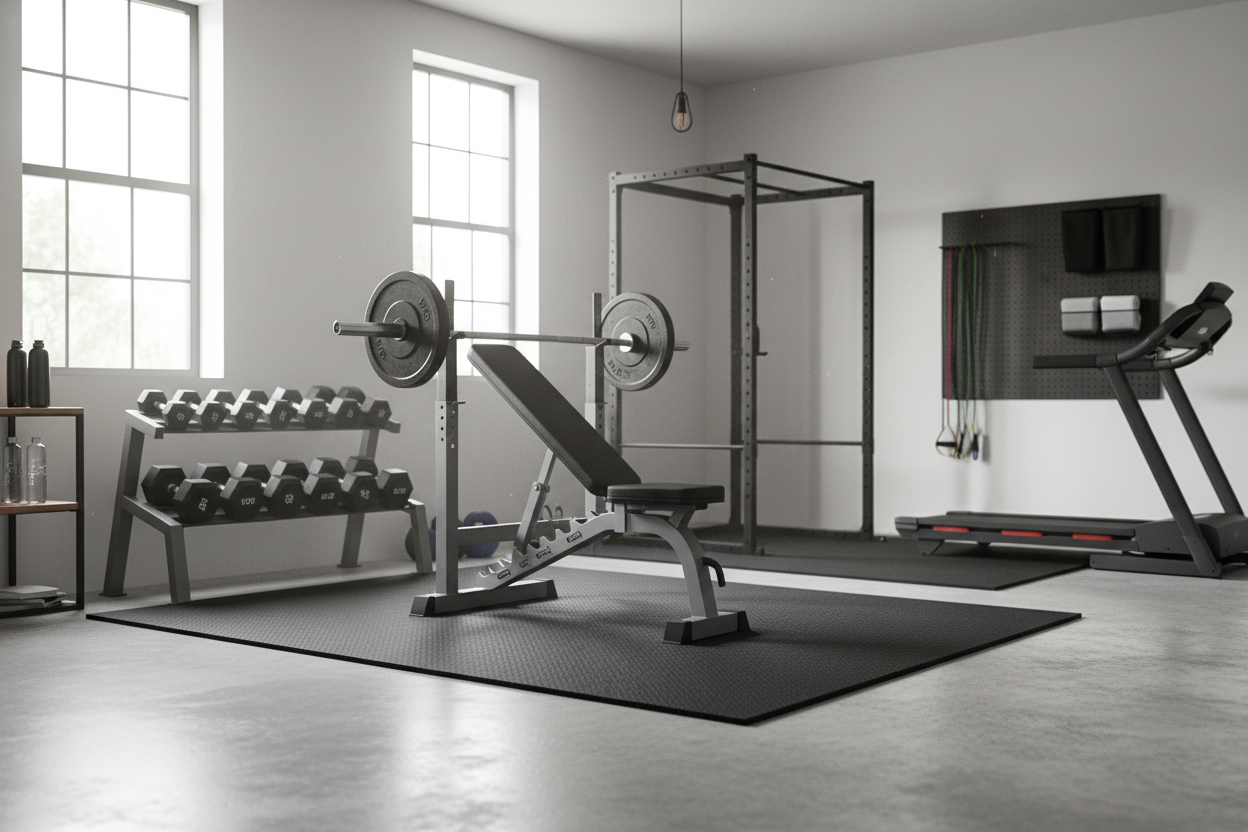
I’m not saying every integrated unit is junk. There are scenarios where an integrated bench with a barbell rack is actually a smart move for a small space. If you are looking at a unit made with 11-gauge steel and 2-inch or 3-inch tubing, you’re in a different league. These are built for people who want a dedicated bench station that won't budge. They often include extras like leg developers or preacher pads that are actually bolted on securely rather than wobbling on a single pin.
If you're browsing the web, picking an Amazon weight bench set requires a skeptical eye. Look for 'Olympic' in the description. This usually indicates a wider rack and a 2-inch sleeve diameter on the bar, which is the gold standard. A heavy-duty unit might cost more upfront, but it won't end up on the Facebook Marketplace for $20 three months later because it felt like it was going to collapse under a 135-lb squat.
How to Buy Proper Weights for Bench Set Upgrades
If you want to future-proof your gym, you need to focus on the bar and the plates first. Always opt for weights for bench set configurations that use 2-inch Olympic sleeves. This allows you to buy plates from any manufacturer—new or used—and they will always fit. Iron plates are thinner, more durable, and have a much higher resale value than plastic-filled ones. Even if you start with a modest 160-lb set, you can add 45-lb plates as you progress. With a 1-inch standard bar, you are capped by the bar's low weight capacity, which is often as low as 200 lbs.
The Final Verdict: Bundle vs. Building Your Own
Bundles are tempting because they simplify the buying process, but they usually end up costing more in the long run when you have to replace every single component. My advice? Buy a high-quality standalone weight bench and a separate squat stand or power rack. This 'modular' approach means if you want to upgrade your rack later, you don't have to throw away your bench. It gives you the freedom to move the bench out of the way for squats or overhead presses, something most all-in-one sets won't allow.
My Honest Mistake
Years ago, I bought a 'complete' set for $150. I thought I was a genius. On my first heavy day, I loaded 185 lbs on the bar. As I sat back, the bench creaked like an old floorboard. On the third rep, the adjustment pin sheared off. I ended up pinned under the bar in my basement with no one home. I learned that day that 'cheap' is very expensive when it comes to your safety. I spent the next week buying a real rack and haven't looked back.
FAQ
Are 1-inch weight sets worth it?
Generally, no. They have low weight capacities and the plates won't fit on 99% of the quality bars on the market. Spend the extra $50 for an Olympic set.
What is a good weight capacity for a bench?
Look for a minimum of 600 lbs. Remember, this includes your body weight. If you weigh 200 lbs and are benching 200 lbs, a 400-lb capacity bench is already at its limit.
Can I use a standard bar on an Olympic rack?
No. Standard bars are usually too short to reach the uprights of an Olympic-width rack, making it impossible to rack the weight safely.
Share:
Can You Actually Use a Barbell at Planet Fitness?
Skip the 5s and 10s: Why a Dumbbell Set 20 50 Is the Smart Move