
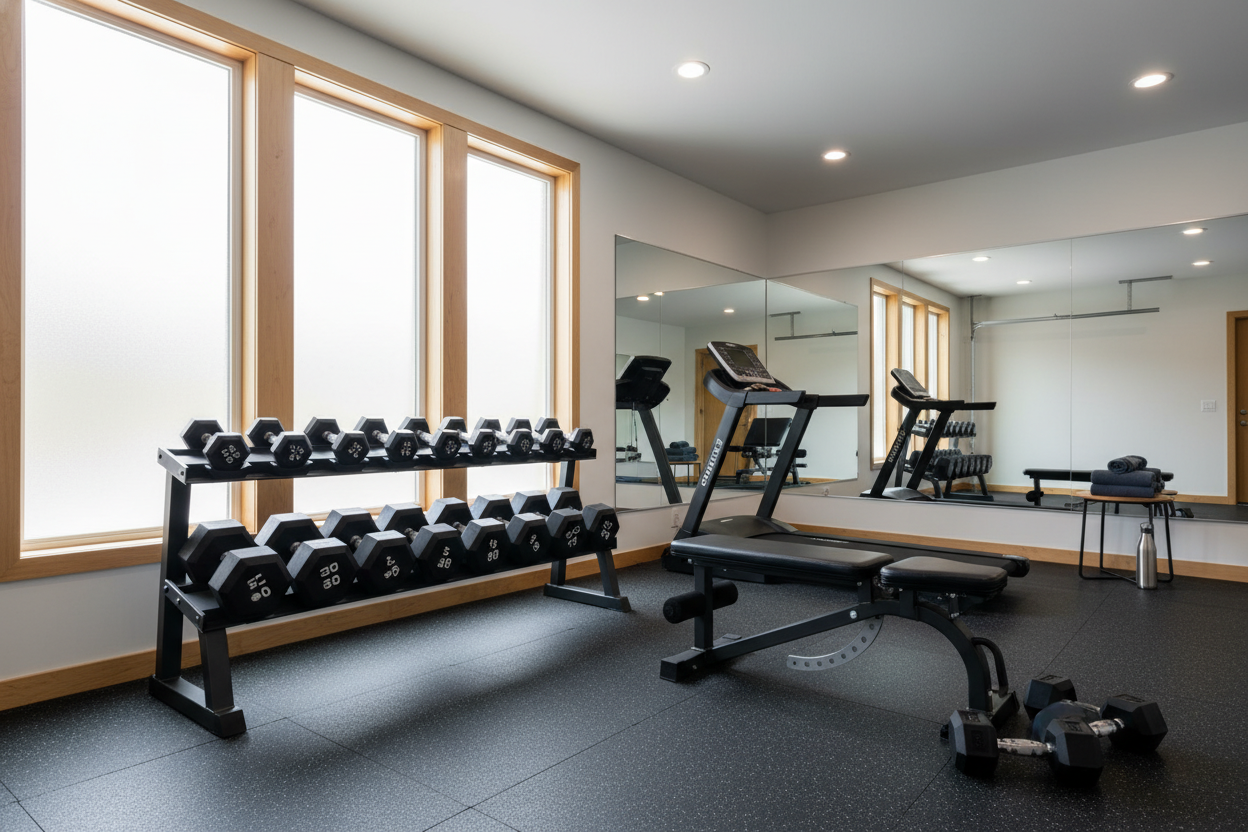
I remember the first time I walked into a big-box sports store with a pocket full of cash and a head full of ego. I walked right past the small stuff and started eyeing the 50-pounders, thinking that if I wasn't benching heavy, I wasn't really training. I was wrong, and my rotator cuffs paid the price for that arrogance about three weeks later.
Building a home gym is about utility, not showing off for the delivery driver. That is why I consistently tell people to start with a 5-35 lb dumbbell set. It is the smartest way to build a foundation without turning your garage into a graveyard of heavy, unused iron that you aren't ready to move safely yet.
Quick Takeaways
- Form First: Smaller increments prevent the 'ego-swing' that ruins joints and leads to injury.
- Accessory King: The 5-35 lb range covers nearly 90% of all isolation and hypertrophy work.
- Space Efficiency: A small 2-tier rack fits in a 3-foot footprint, making it perfect for small garages.
- Long-term Value: You will never outgrow the 15s or 25s for high-volume accessory movements.
The Ego Trap of Buying Heavy Weights Day One
We all want to feel strong. But buying a set that starts at 40 lbs and goes up to 100 lbs as your first purchase is like buying a Ferrari before you have a learner's permit. You end up 'cheating' every rep, using momentum to swing weights you can't actually control. Your lower back ends up doing the work your biceps should be doing.
I've seen it a hundred times. A guy buys heavy iron, tries to overhead press the 50s, feels a pop in his shoulder, and the weights sit there gathering dust for two years. Starting light allows your tendons and ligaments to catch up to your muscles. It builds the mind-muscle connection that actually leads to growth, rather than just moving weight from point A to point B poorly.
Why a 5-35 lb Dumbbell Set Is the Actual Sweet Spot
This range is the workhorse of any serious lifter's program. While you might eventually move to heavier weights for your primary presses, a massive chunk of a standard hypertrophy program happens between 5 and 35 pounds. Think about your accessory movements: lateral raises, front raises, tricep extensions, and rear-delt flys. Most humans have no business doing a strict lateral raise with more than 25 lbs.
By investing in this range first, you're securing the tools for the 'pretty' muscles and the 'prehab' work that keeps you in the game. When you're ready to move more weight, you can slowly expand your collection of dumbbells to include the heavy hitters, but these lighter pairs will still be used every single session for your warm-ups and finishers.
The Brutal Math of 5-Pound Jumps
In the world of heavy lifting, 5 pounds doesn't sound like much. But let's look at the percentages. If you move from a 15-lb dumbbell to a 20-lb dumbbell for a set of lateral raises, you aren't just adding 5 pounds—you are increasing the load by 33%. That is a massive jump for a small muscle group like the medial deltoid.
Having those 5-lb increments in the lower range is mandatory for steady progress. Without them, you'll hit plateaus that last months because the next weight up is simply too big of a leap. A 5-35 set gives you the granular control needed to progress every week, even if it's just by adding a few reps or moving up to a slightly heavier pair for your final set.
Adjustable Spinners vs. A Dedicated Rack
I get the appeal of adjustables. They save space. But if you're doing a drop set—where you go from 30s to 20s to 10s with no rest—fiddling with pins or dials kills the intensity. A fixed rack lets you grab and go. There is a psychological benefit to seeing the iron lined up; it looks like a gym, not a gadget. It makes you want to train.
That said, if you're training in a literal closet or a studio apartment, a fixed rack might be a luxury you can't afford. In those cases, something like the Adjustable Dumbbells Ab01 is a solid compromise. You lose the speed of the transition, but you gain back about 6 square feet of floor space. Just know that for fast-paced accessory circuits, fixed weights are still the gold standard for flow.
When Will You Actually Outgrow the 35s?
If you're a guy with decent genetics, you'll probably outgrow 35s for flat bench press and one-arm rows within six months of consistent effort. That's the reality. However, 'outgrowing' them for one lift doesn't mean they become obsolete. I still use my 15s for face pulls and my 25s for incline curls every week, and I've been lifting for over a decade.
You can check out my breakdown on Exactly How Long a 300 lb Dumbbell Set Will Last a Beginner to get a better idea of the long-term timeline. The point is, the 5-35 range is the foundation. You build the house on top of it later with 50s and 70s, but the foundation never goes away. You'll use these weights forever.
My Personal Experience
When I started my first garage gym, I bought a pair of 50-lb hex dumbbells and a cheap barbell. I thought I was set. I spent three months struggling to do anything but rows and floor presses. I couldn't do a single decent rep of an overhead press or a fly without my form breaking down and my ego taking a hit. I eventually swallowed my pride and bought a set of 10s and 20s. My shoulders stopped clicking, and my arms actually started growing because I was finally hitting the target muscles instead of just manhandling the weight with momentum.
FAQ
Do I need a rack for a 5-35 lb set?
Technically, no, but your floor will hate you. A basic A-frame or 2-tier rack keeps them organized and prevents you from tripping over a 15-lb weight in the middle of the night. It's worth the small investment to keep your space clean.
Rubber hex or cast iron?
Go rubber hex. They don't roll away when you put them down between sets, and they're much quieter if you're training in a garage or spare room. Cast iron looks cool and 'old school,' but the clanging gets old fast when you have family or neighbors nearby.
Can I build muscle with just 35 lbs?
Absolutely. You just have to manipulate other variables. Slow down your tempo (3 seconds down, 1 second up), increase your reps, or shorten your rest periods. A 35-lb dumbbell feels like 50 lbs if you're doing 15 reps with a very slow eccentric phase.
Share:
Why I Stopped Recommending the All-In One Weight Bench
I Broke My Adjustables. Now I Only Buy Complete Dumbbell Sets