
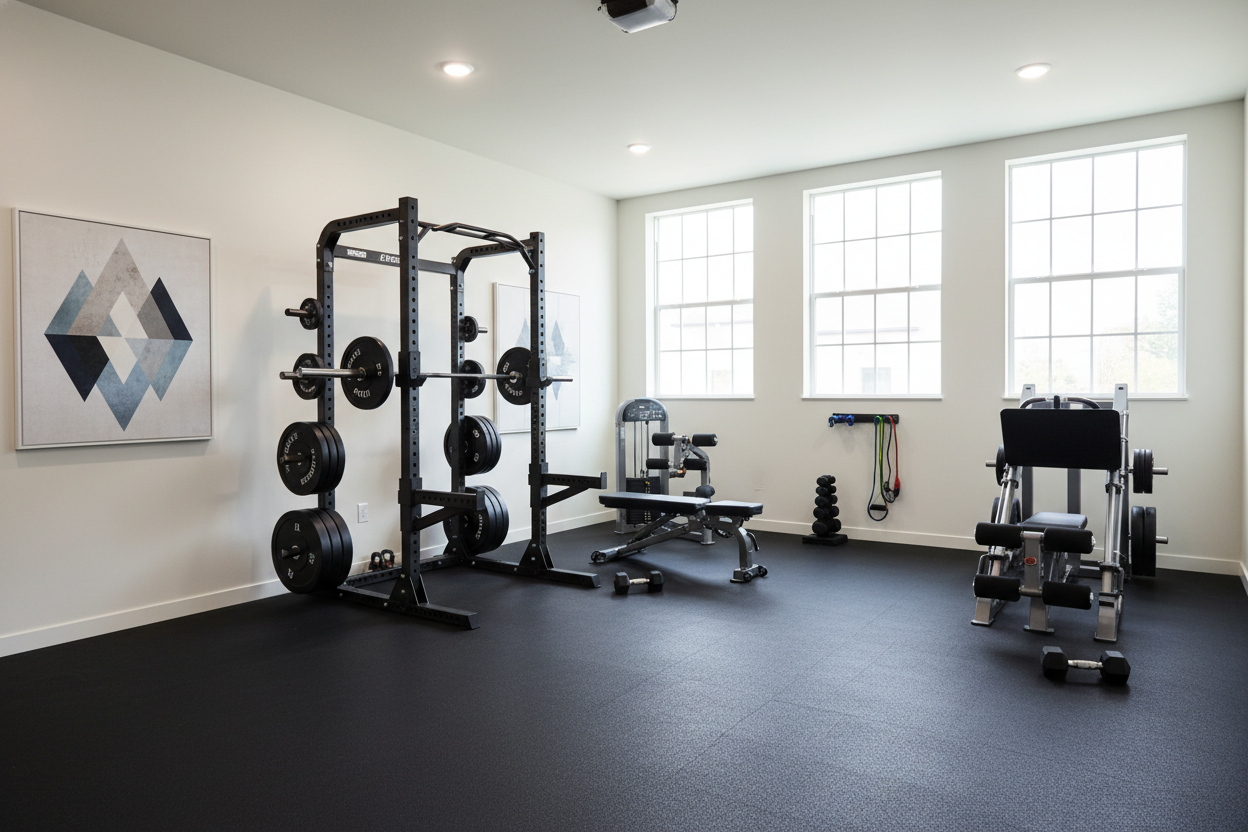
I remember the day I canceled my commercial gym membership. I thought I'd save a fortune, but I spent the first three months trying to grow my quads with $20 resistance bands and a prayer. It didn't work. Finding the right exercise equipment for legs at home is a minefield of plastic junk and 'as seen on TV' gadgets that eventually just become expensive laundry racks. If you want real wheels, you need real steel.
- Heavy iron is king; you cannot cheat physics when it comes to hypertrophy.
- Adjustable dumbbells provide the best ROI for small garage footprints.
- Avoid 'booty bands' if your goal is actual muscle mass.
- Pre-workout warm-ups on a bike prevent 'old man knees' syndrome.
The Brutal Reality of Training Legs Outside a Commercial Gym
Legs are the biggest, strongest muscles in your body. They require massive loads to grow. In a commercial gym, you have access to a 500-lb leg press that takes up 30 square feet. In your garage or spare bedroom, you're fighting for every inch of floor space. This is the central conflict of at home leg workout equipment: how do you move heavy weight without turning your house into a warehouse?
Most people fail because they underestimate the load required. If you're doing 50 reps of a bodyweight movement, you're doing cardio. To build mass, you need mechanical tension. That means you need gear that can handle 200, 300, or 400 lbs without wobbling or snapping. If the equipment feels light when it arrives in the box, it’s probably not going to build your quads.
Why Most 'Space-Saving' Leg Gadgets Are Complete Junk
I've tested those 'all-in-one' resistance rigs that claim to replace a squat rack. They usually feel like pulling on a giant rubber band—because that's exactly what they are. The resistance curve is all wrong; it's easy at the bottom and impossible at the top. This is why Why the Best At Home Exercise Equipment for Women Isn't Pink—serious training requires equipment built for durability, not marketing aesthetics.
Any generic foot exercise machine for home or lightweight Amazon 'thigh toner' is going to bottom out the moment you get even moderately strong. I’ve snapped 'heavy duty' bands mid-set, and let me tell you, getting slapped in the calf by a high-tension latex strip is a great way to ruin a Tuesday. If it’s made of thin plastic, leave it on the shelf.
The Core Free-Weight Gear You Actually Need
You need a solid foundation for your Home Gym. For legs, that means a barbell and plates. Everything else is secondary. While machines are great for isolation, the highest ROI for your floor space will always be free weights. They allow for squats, lunges, and deadlifts—the 'Big Three' for a reason.
Power Racks vs. Squat Stands: Making the Call
A full power rack is the gold standard. If you've ever failed a 315-lb squat solo, you know the terror of not having spotter arms. A rack with a 3x3 inch steel frame and 11-gauge steel is a tank. If you're tight on space, a squat stand with a 4x4 foot footprint can work, but you lose the 'box of safety.' I personally went with a rack because I like knowing I won't be pinned to the floor if my quads give out on the last rep.
The Underrated Power of Heavy Adjustable Dumbbells
I used to think dumbbells were just for curls. Then I tried doing Bulgarian split squats with a pair of 80-lb adjustables. My quads were on fire for three days. These are the ultimate leg exercise home equipment because they force you into unilateral work. This fixes the imbalances you didn't even know you had. Plus, they tuck away into a corner when you're done.
Do Dedicated Leg Machines Ever Make Sense in a Garage?
Plate-loaded leg extension and curl combos are fantastic if you have the $600 and the 15 square feet to spare. They allow you to hit the quads and hamstrings without the systemic fatigue of a heavy squat. However, for most home lifters, these are luxuries. I only added one to my setup after I had my rack, bench, and 500 lbs of plates sorted out.
The Smith Machine Loophole for Leg Day
If you want the guided feel of a leg press without the massive footprint, a Smith Machine Home Gym Station is a clever workaround. You can lean your feet forward for 'faux' hack squats that absolutely torch the quads. It's safer for solo lifters than a free-weight bar when you're pushing to absolute failure, and it takes up way less space than a dedicated leg press machine.
Don't Neglect the Warm-Up (Your Knees Will Thank You)
I used to jump straight under the bar. Now that I'm in my 30s, my knees sound like a bowl of Rice Krispies if I don't prep them. Spending five minutes on a Foldable Upright Exercise Bike to get the blood flowing is mandatory. It flushes the joints with synovial fluid and gets your core temperature up. A foldable bike is great because it doesn't stay in the way during your actual lifting sets.
How to Build Your Lower Body Setup Without Going Broke
Prioritize your purchases. Start with a quality barbell and about 160 lbs of plates. That will cover your squats and deadlifts for the first six months. Next, get a rack. Only after you have the basics should you look at leg exercise machines for home. My biggest mistake was buying a cheap leg press first—it was wobbly, the bearings were loud, and I eventually sold it for half what I paid just to get my floor space back.
FAQ
Is a leg press necessary for home gyms?
No. You can replicate almost every benefit of a leg press with squats, lunges, and Smith machine variations. Only buy one if you have a massive garage and a surplus of cash.
Can I build legs with just resistance bands?
To a point, yes. But you will eventually hit a plateau where the bands don't provide enough tension. For long-term growth, you need some form of heavy external load like plates or dumbbells.
What is the best leg exercise for small spaces?
The Bulgarian Split Squat. You only need a bench (or a chair) and a pair of dumbbells. It is arguably the most effective—and most hated—leg movement in existence.
Share:
Exercise at Home or Gym: Which Setup Actually Gets Used?
Will a Heavy Weight Leg Press Machine Crack Your Garage?