
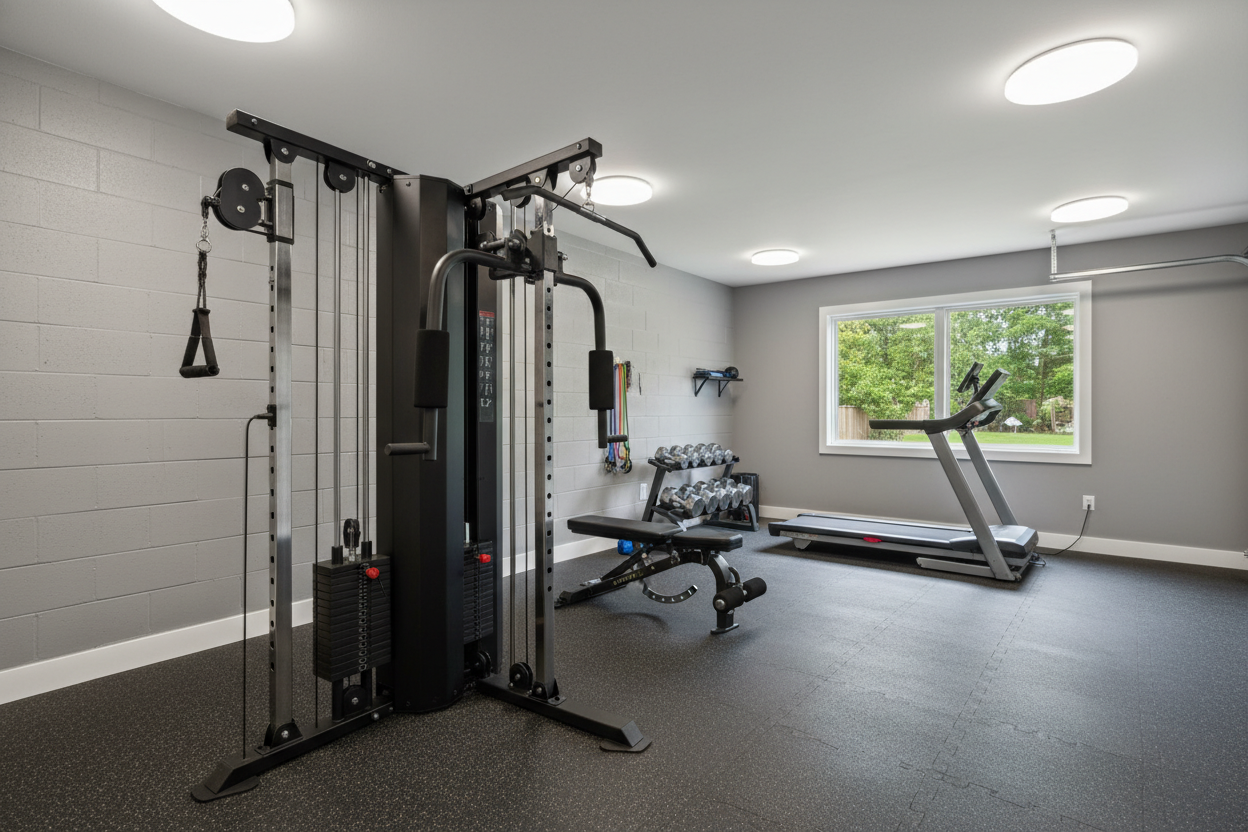
I remember the first time I bought a budget multi-gym from a big-box store. I spent six hours bolting it together, only to realize that the moment I tried to home exercise weight machines with more than 100 pounds, the entire frame started swaying like a palm tree in a hurricane. It was a terrifying reminder that 'convenient' usually means 'compromised' when it comes to home gear.
Most people buy these rigs because they want the commercial gym experience in a 4x4 footprint. But unless you know what to look for in the steel gauge and pulley quality, you’re just buying an expensive clothes hanger. If you want to actually lift machine weight without the frame groaning under the pressure, you have to look past the shiny stickers.
Quick Takeaways
- Avoid 14-gauge steel; it’s too thin for serious loading.
- Leverage systems (plate-loaded) are almost always more stable than cheap cable stacks.
- Independent arms prevent your dominant side from doing all the work.
- A rock-solid bench is a better first investment than a mediocre multi-station.
The 'Do-It-All' Illusion That Ruins Your Workout
The biggest lie in the industry is the machine that promises 50 different exercises in a tiny corner of your garage. Physics doesn't work that way. To make a machine do everything, manufacturers use thin 2-inch by 2-inch steel tubing and dozens of plastic pulleys. Every time you add a pulley to the line, you add friction and another point of failure.
When you try to lift machine weight on these rigs, the resistance feels 'crunchy' rather than smooth. That’s because the cables are stretching and the plastic pulleys are rubbing against the frame. If you’re serious about a machine for lifting weight, you need a frame made of at least 11-gauge or 12-gauge steel. If you can move the machine by pushing it with one hand, it isn't heavy enough to support your heaviest sets.
Cables vs. Leverage: What Actually Belongs in a Garage Gym?
If you have the choice between a cheap cable machine and a plate-loaded leverage system, take the leverage system every single time. Leverage machines use physical pivot points and bushings rather than cables and pulleys. This means there is almost zero maintenance and the 'feel' is much closer to a commercial gym piece.
I’m a huge fan of a chest press machine with independent arms for this exact reason. When the arms move separately, you can't cheat by letting your strong side take over. Plus, without cables to snap or fray, these machines can take a beating for a decade without needing a single replacement part. You get a consistent strength curve that doesn't get jerky halfway through the rep.
Are Multi-Station Systems Ever Worth the Money?
There is a place for combined units, but you have to be willing to pay for the engineering. A high-end functional trainer with dual 200-pound stacks is a beast, but it’s going to cost you three times what a budget multi-gym costs. You have to ask yourself if all-in-one home weight lifting machines actually fit your training style or if you're just trying to save space.
In my experience, most people are better off with two high-quality specialized machines than one 'jack of all trades' that does nothing well. If the leg extension on your multi-gym feels like it's going to snap your shins because the pivot point is off, you’ll never use it. Buy for quality, not for the number of attachments listed on the box.
Stop Buying Machines Before You Have a Real Base
Before you even look at a complex machine for lifting weight, look at your floor. Do you have a barbell? Do you have plates? Most importantly, do you have a heavy-duty adjustable weight bench? You can do 60% of your total volume with just a bench and some dumbbells.
I’ve seen guys spend $2,000 on a fancy selectorized machine while they’re still using a wobbly $50 bench they bought off Craigslist. That’s backwards. A solid weight bench is the literal foundation of your strength. Once you have a bench that doesn't creak when you sit on it with 225 pounds, then you can start thinking about adding specialized machines to fill in the gaps of your accessory work.
My Top Picks After Breaking a Dozen Rigs
I’ve personally snapped cables on three different 'budget' machines and bent the frame on another. It’s not fun, and it’s definitely not safe. If you want gear that survives a real workout, you have to prioritize heavy-duty bushings and thick steel uprights. I’ve tested 7 weight lifting machines for home and only one actually stayed in my personal gym.
Look for machines that use 1-inch thick chrome guide rods and linear bearings if you're going the cable route. If you're going the leverage route, look for greaseable pillow block bearings. These are the small details that separate a 'toy' from a piece of training equipment that your kids will eventually inherit.
Personal Experience: The 2 AM Snap
I once had a cable snap mid-rep on a cheap lat pulldown at 2 AM. The bar hit me in the head, and the weight stack crashed so hard it cracked the concrete in my garage. I realized then that I’d rather have one $800 machine that works perfectly than a $1,000 'whole gym' that might kill me. I sold the remains for scrap and started buying 11-gauge steel gear only. It’s more expensive, but the peace of mind is worth every cent.
FAQ
Do I need to bolt my weight machine to the floor?
If the machine is top-heavy or has a small footprint, yes. Most high-quality functional trainers have bolt-down tabs for a reason. If you're doing explosive movements, bolting it down prevents the frame from 'walking' across your gym floor.
How often should I lubricate the cables?
I hit my guide rods with a silicone-based spray every three months. Never use WD-40; it attracts dust and will eventually gum up the bearings. Keep the rods clean and the movement will stay smooth.
Is 14-gauge steel really that bad?
For a power rack, it's okay for beginners. For a machine with moving parts, it's terrible. The thin walls allow the frame to flex, which puts the pulleys out of alignment and causes the cables to fray prematurely.
Share:
Dedicated Gear vs. A Combo Exercise Machine: The Garage Gym Showdown
Why a BodyPump Barbell Is the Worst First Home Gym Purchase