
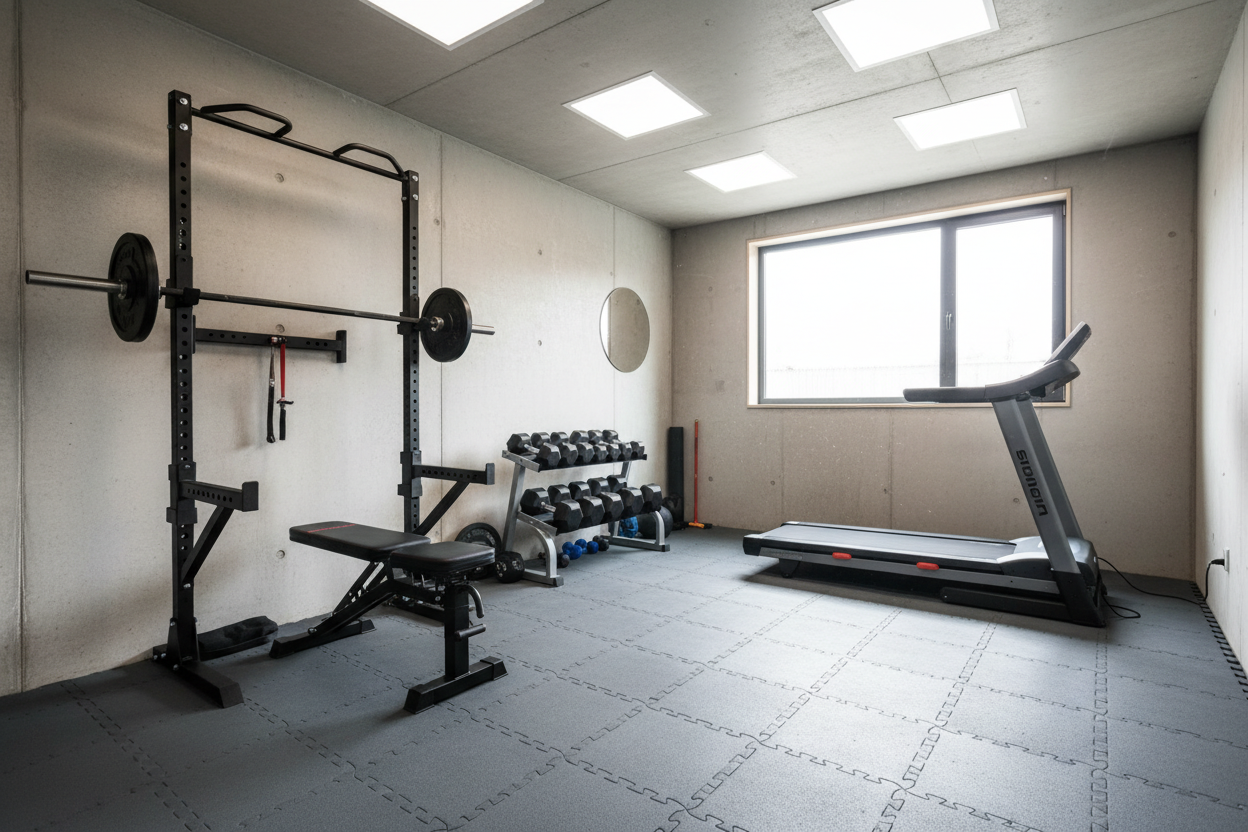
I have spent the last decade trying to cram 1,000 pounds of iron into spaces meant for a twin bed. I have tripped over kettlebells in the dark, scratched baseboards with barbell sleeves, and learned the hard way that most small home gyms ideas you find online are written by people who have never actually performed a heavy set of squats in a closet. Real training requires clearance, stability, and gear that does not fall apart the moment you add a second plate.
The biggest mistake people make is trying to replicate a commercial gym layout in a 10x10 spare room. You do not need a dedicated leg extension machine, a standing calf raise, and a five-pair dumbbell rack. You need a strategy that prioritizes the 'footprint-to-utility' ratio. If a piece of gear only does one thing and takes up four square feet, it is dead weight in a compact setup.
Quick Takeaways
- Vertical storage is non-negotiable; if it is on the floor, it is in your way.
- Folding racks are the gold standard for multi-purpose rooms.
- Adjustable dumbbells save more space than any other single investment.
- Floor protection (3/4-inch rubber) is mandatory to prevent structural damage in small rooms.
The 'Shrinking Room' Illusion (And Why You're Buying the Wrong Gear)
When people start looking for home gyms small spaces, they usually make the mistake of buying 'mini' versions of bad equipment. They buy a flimsy, 1-inch-diameter weight bench or a cable machine that uses plastic pulleys because it looks small in the photo. Two weeks later, they realize the bench wobbles under 135 pounds and the cable travel is too short for a full range of motion. You have not saved space; you have just bought a high-quality coat rack.
Smart apartment gym design is about maintaining the 'empty center.' You need a clear 6x6 foot area to actually move. Instead of cluttering the middle of the room with a stationary bike or a cheap universal gym, you should push everything to the perimeter. I have seen guys turn a tiny gym space into a cluttered obstacle course where they can barely do a burpee without hitting a rack. That is a failure of layout, not square footage. You want gear that lives against the wall until the moment you need to sweat.
Stop Looking at the Floor: Why Vertical Space is Your Best Friend
Your floor is the most valuable real estate you own. Stop wasting it on plate trees and horizontal dumbbell racks. To create a home gym in a small space that actually works, you have to look at your walls. Wall-mounted folding racks have completely changed the game for the small room gym setup. When you are done lifting, the rack folds flat against the wall, protruding less than 5 inches. This turns a dedicated lifting area back into a functional room in about thirty seconds.
I personally squeezed a real compact in home gym into a tiny corner by using wall-mounted weight pegs and a vertical bar holder. By getting the plates off the floor, I reclaimed nearly nine square feet of floor space. That is enough room for a bench or a plyo box. If you are dealing with a tiny gym ideas board, start by measuring your wall height. High-mounted shelves for foam rollers, bands, and chalk will keep your floor clear for the actual work.
The Multi-Tool Approach to Picking a Compact Gym
In a limited space, every piece of gear must earn its keep. This is where the compact multi gym or a high-end functional trainer becomes a better investment than a pile of individual machines. You want versatile home gym equipment that allows you to hit chest, back, and shoulders from a single station. Look for units that use a 2:1 pulley ratio; they offer smoother travel and take up significantly less depth than a traditional plate-loaded lat pulldown.
The best small home gym setup usually revolves around a power rack with integrated cable attachments. I prefer this over a 'universal gym' because you still get the benefit of using a real barbell for compound lifts. A compact universal gym might look sleek, but if the weight stack maxes out at 150 pounds, you are going to outgrow it in six months. Stick to gear that uses standard Olympic plates so your investment scales as you get stronger.
Yes, You Can Still Hit Heavy Leg Days in a Spare Room
Leg day is usually the first casualty of a small fitness studio design. People assume they are stuck with air squats or lunges because they cannot fit a massive 8-foot-long leg press. That is a myth. You can absolutely do weight training compact home gym style without sacrificing intensity. The key is finding machines designed with a vertical or angled footprint. A compact 30 degree leg press hack squat combo is a prime example of how to get commercial-grade lower body volume into a spare room gym ideas layout.
These combo machines typically take up about half the space of a traditional leg press. By using an angled sled, they provide the same quad-crushing resistance without requiring a ten-foot runway. When you are planning your small home gym room ideas, remember that you need 'working clearance'—the space for your body to move around the machine. A compact leg press allows you to tuck the unit into a corner while still leaving room to load plates on the sides.
Real-World Floor Plans for Awkward Layouts
Not every room is a perfect square. If you are dealing with a narrow home gym—like a converted hallway or a long, skinny sunroom—you have to think linearly. Line your equipment up along one wall and keep the opposite wall completely clear. For a small office workout room, consider a 'hidden' gym. I have seen setups where a wall-mounted rack is hidden behind a curtain or a decorative screen. It keeps the professional vibe for Zoom calls but is ready for a PR attempt at 5:01 PM.
I once helped a buddy with a home gym small enough for a bedroom that utilized a half-rack and a stowable bench. We put the bench under the bed when it was not in use. It sounds tedious, but it is the difference between having a gym and having a bedroom that feels like a warehouse. For a diy small home gym, focus on 'modular' pieces. Buy things that can be moved easily, like a bench with high-quality wheels and a handle. If you cannot move your gear with one hand, it is too bulky for a small space.
Personal Experience: The Bench Mistake
I once bought a cheap 'space-saving' folding bench from a big-box store. It looked great on the box—folded down to the size of a suitcase. The first time I tried to do heavy incline presses, the locking pin sheared. I ended up on the floor with 80-pound dumbbells in my lap. The lesson? Never sacrifice structural integrity for a few inches of saved space. In a small home gym, you are often training alone in a tight spot. You need to trust your gear 100%. Now, I only use a heavy-duty bolt-together bench. It takes up a little more room, but I am not worried about a trip to the ER every time I go for a heavy triple.
Small Home Gym FAQ
Can I deadlift in an upstairs apartment?
Technically yes, but you need to manage the vibration. Use 3/4-inch stall mats and consider 'crash pads' to soak up the impact. Never drop a deadlift in an apartment unless you want a visit from the landlord.
Is a folding rack as strong as a standard rack?
If it is made from 11-gauge steel and bolted into at least four wall studs using a proper stringer, it is incredibly strong. Most are rated for 800+ pounds, which is more than enough for 99% of lifters.
How much space do I actually need for a barbell?
A standard Olympic bar is 7.2 feet long. You need at least 9 feet of width to comfortably load plates without hitting the walls. If you have less than that, look into a 'shorty' bar, which reduces the sleeve length but keeps the grip area standard.
Share:
Your Gear Snapped. Did You Actually Pick the Best Fitness Shop?
I'm Tired of Wobbly Rigs: Finding the Best Home Multi Gym UK