
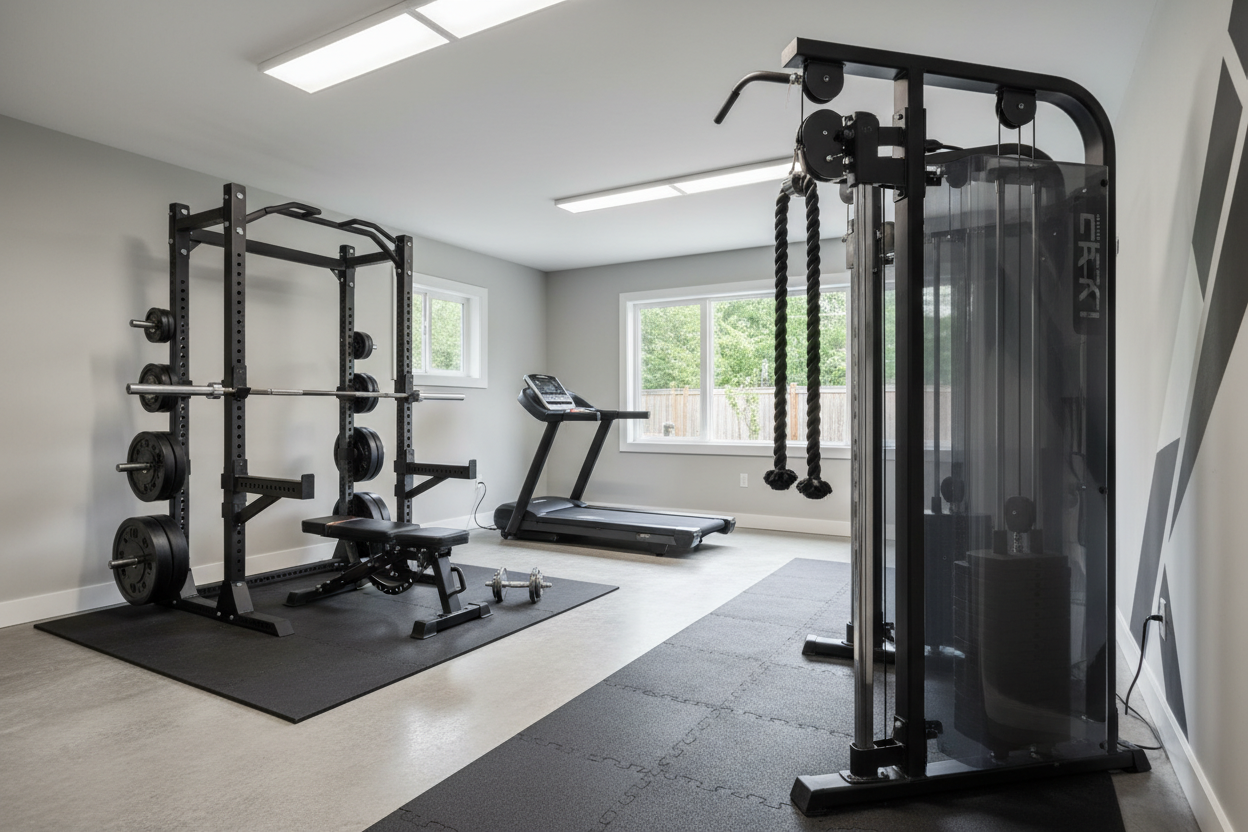
I remember the day my $200 'all-in-one' tower gave up. I was mid-pullup when the thin-walled steel buckled, sending me and the whole rig toward the concrete floor. That was the last time I trusted a machine I could lift with one hand. If you can move your gym equipment with a single arm, it is probably not going to survive a real leg day.
Finding the best at home exercise machine isn't about looking for the most features on a glossy flyer. It's about looking for mass. If the machine doesn't weigh more than you do, it has no business being in your garage. You want structural integrity, not a glorified clothes rack.
- Look for 11-gauge or 12-gauge steel; anything higher is basically a soda can.
- Heavier machines offer stability that light, bolt-together rigs can't match.
- Understand your pulley ratios (2:1 vs 1:1) before you commit to a cable system.
- Linear bearings are the gold standard for smooth, repeatable movement.
Why Your Infomercial Buy Will Snap in Six Months
We've all seen the late-night ads featuring a machine that folds under a bed and promises a total body transformation. Here is the reality: those machines are built with 14-gauge steel and plastic pulleys that create more friction than resistance. When you are building a permanent home gym, you are looking for equipment that survives a decade of abuse, not something that ends up in a landfill by Christmas.
Lightweight gear is a massive red flag. If a machine weighs 150 pounds but claims a 600-pound capacity, the math doesn't check out. You'll feel the frame sway during a simple chest press. That wobble isn't just annoying; it's a sign of impending structural failure. I've seen proprietary resistance bands snap and plastic handles shatter under loads that a real gym wouldn't even consider 'heavy.' Cheap gear uses thin cables that fray within months, turning your workout into a safety hazard.
The Anatomy of the Best At Home Exercise Machine
If you want a rig that feels like the commercial equipment at a powerhouse gym, you need to look at the specs. The gold standard is 11-gauge steel, usually in a 3x3 or 2x3 post configuration. This provides the heft needed to keep the machine anchored during explosive movements. The best home exercise machine should also feature high-quality linear bearings on any sliding parts. Lower-end models use plastic bushings that stick and stutter, ruining your mind-muscle connection.
Don't overlook the footprint either. A machine that is too compact often forces you into awkward ranges of motion. You need enough width for a proper lat pulldown and enough depth to perform a full-stride cable lung without hitting the frame. Look for a machine that uses aircraft-grade cables—usually rated for 2,000 lbs—and aluminum pulleys. Aluminum doesn't degrade like plastic and provides a significantly smoother pull.
Stop Ignoring the Pulley Ratios
Before you buy any cable-based system, check the ratio. A 2:1 ratio means that 100 pounds on the stack feels like 50 pounds of actual resistance. This is great for functional movements and isolation work because it gives you more cable travel. However, if you are a heavy hitter looking for brutal lat pulldowns or low rows, a 1:1 ratio—where 100 pounds feels like 100 pounds—is often preferred. Many modern machines offer a hybrid feel, but knowing what you're pulling is vital for tracking progress.
Fixed Tracks or Free Moving Cables?
The biggest debate in home gym design is deciding between cables and a Smith setup. A cable-based functional trainer offers endless versatility. You can hit every angle, mimic real-world movements, and keep constant tension on the muscle. It’s the ultimate tool for hypertrophy and accessory work.
On the other hand, a heavy duty Smith machine home gym station provides a level of safety that cables can't match. If you train alone and want to push your squats or bench press to absolute failure, the fixed track and safety catches are literal lifesavers. The best setups now combine both—a Smith bar for the heavy compounds and a dual-pulley system for the detail work. This hybrid approach is why the weight of these machines often creeps toward 800 or 1,000 pounds once you add the weight stacks.
When a 'Do-It-All' Machine Still Needs Help
Even the most expensive all-in-one stations have limitations. While they can handle 90% of your training, they often struggle with specific, high-leverage movements. For example, while you can technically do a glute bridge on a Smith machine, it’s often clunky and hard to set up. Serious lifters might eventually look at adding a dedicated hip thrust machine to their space to ensure they are hitting those glutes with the right biomechanics.
Similarly, while most machines have a 'leg developer' attachment, they rarely match the feel of a standalone leg extension or curl machine. Use your primary machine for the heavy lifting, but don't be afraid to branch out into specialty pieces as your strength outgrows the 'all-in-one' capabilities.
The Verdict: Buy Once, Cry Once
Saving $500 today on a flimsy, lightweight machine feels good until the first time the frame creaks during a heavy set. Investing in a heavy-duty, 11-gauge steel rig is about more than just aesthetics; it's about safety and the quality of your training. If you buy a professional-grade machine now, you'll never have to buy one again. Buy once, cry once, and then get to work.
Personal Experience: My $600 Mistake
I once bought a functional trainer from a big-box retailer because it was on sale. Within three weeks, the 'chrome' plating on the guide rods started flaking off, creating a grinding sensation every time I did a cable fly. I spent more time lubricating the rods than I did actually lifting. I eventually sold it for a third of what I paid and bought a real commercial-grade unit. The difference in my workout consistency was night and day.
FAQ
Is 11-gauge steel really necessary?
If you're lifting heavy or weigh over 200 lbs, yes. It prevents the frame from twisting and ensures the safety catches won't fail under load.
What is the ideal footprint for a home machine?
Most high-quality all-in-one units require about a 5x7 foot area. Don't forget to account for 'working space' around the machine so you aren't hitting your walls.
Are aluminum pulleys worth the extra cost?
Absolutely. Plastic pulleys wear down and create friction, making the weight feel 'jerky.' Aluminum stays smooth for years and handles high heat from fast repetitions much better.
Share:
Is There a True 'Best Exercise Equipment for Whole Body' Setup?
Your Shoulders Are Lying to You: Is Smith Machine Bench Harder?