
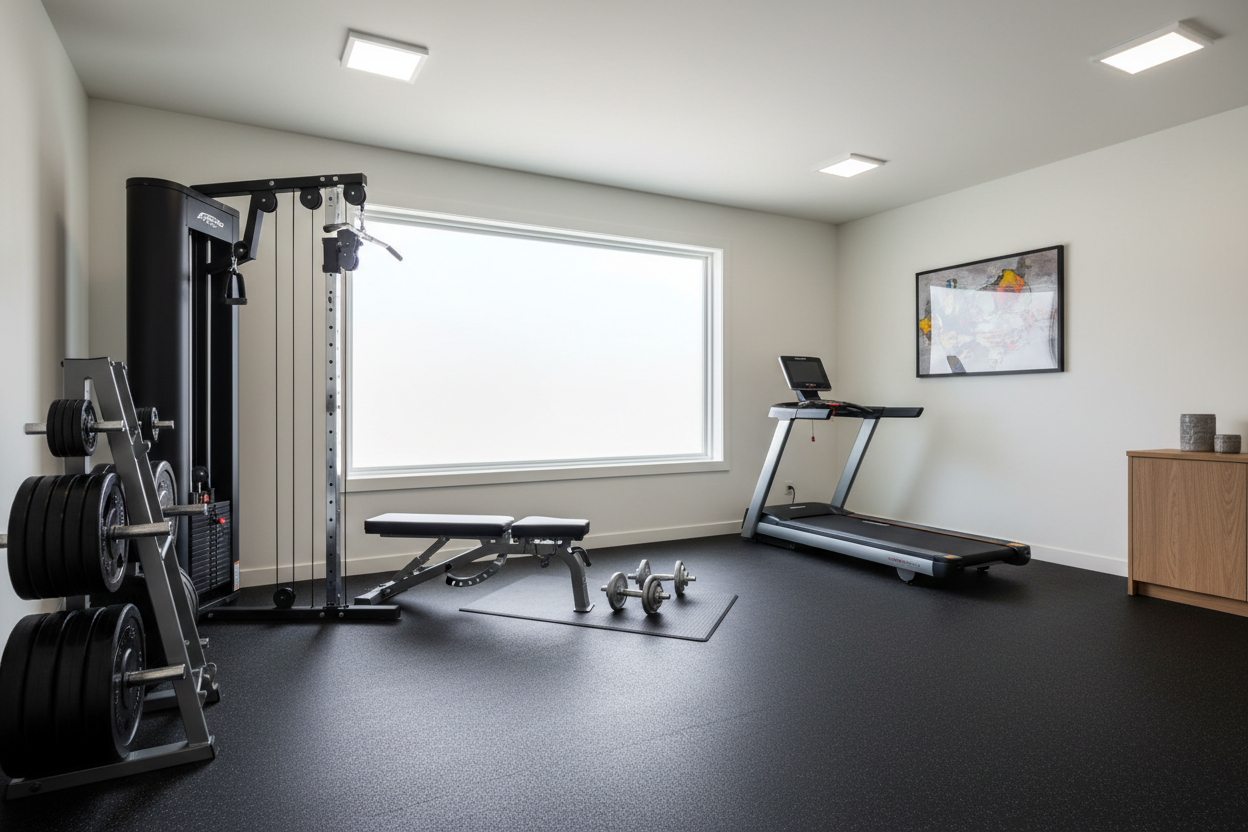
I remember the day I realized my garage wasn't a gym; it was an obstacle course. I’d bought a massive best in home weight machine that looked great in the catalog, but left me doing walking lunges in the driveway because there was literally no floor space left. If you are tired of tripping over workout weight machines for home that are more 'clutter' than 'gym,' you are not alone.
Quick Takeaways
- Corner units save approximately 30-40% more floor space than center-room stations.
- Selectorized weight stacks (pin-loaded) are superior for fast-paced training like drop sets.
- A 2:1 pulley ratio is the sweet spot for smooth, long-travel cable exercises.
- Independent arms are a non-negotiable feature to prevent your dominant side from doing all the work.
The Sprawling Big Workout Machine Trap
We’ve all seen that universal multi station weight machine at the local big-box store. It looks impressive with its four different seats and enough steel to build a bridge. But here is the reality: those things are space killers. A big workout machine often requires a 10x10 foot footprint just to operate, and that doesn't include the 'buffer zone' you need to actually move around it.
I have seen dozens of people search for a universal gym machine for sale, only to realize their spare bedroom or garage can't breathe once it's installed. You end up with an overpriced coat rack. Often, people think they need a massive smith machine home gym station to get a 'real' workout, but if you have to shimmy sideways just to reach the pull-up bar, you’re going to hate training in that room.
Why Your Room Needs a Corner Home Gym Machine
Geometry is your best friend when building a strength home gym. Most residential rooms have 'dead zones' in the corners. By choosing a corner home gym machine, you anchor the heavy steel against the walls, opening up the center of the room for dumbbells, jump ropes, or just breathing room. It turns a cramped exercise machine home gym into a functional training center.
A well-designed corner unit still functions as a full gym workout machine. You aren't sacrificing movements; you’re just being smarter about the layout. I’ve found that a 90-degree V-shape design allows for chest presses, lat pulldowns, and low rows all within a 4x4 foot corner footprint. That is the difference between a gym that feels like a dungeon and one where you actually want to spend an hour every morning.
Stacks vs. Leverage: Picking Your Resistance
When looking at home gym machine with weights, you have two main choices: selectorized stacks or plate-loaded leverage arms. Selectorized stacks use a pin to choose your weight instantly. Leverage machines require you to manually slide Olympic plates onto pegs. If you already have a rack and a pile of iron, you can stop overpaying for iron by choosing a plate-loaded unit that utilizes the gear you already own.
When to Rely on a Traditional Weight Lift Machine
If you train solo and love high-intensity techniques, a weight lift machine at home with a selectorized stack is the winner. There is nothing like finishing a heavy set of chest presses and immediately pulling the pin to drop 30 pounds for a burnout set. You can't do that effectively with plates without killing your momentum. I personally prefer a 200-lb stack for most home setups; it’s enough for 95% of lifters and keeps the unit's height manageable.
The Body Weight Machine for Home Illusion
Don't get distracted by the home gym that uses your body weight as the primary resistance. While those sliding-bench units are great for mobility and light toning, they often lack the top-end resistance needed for genuine hypertrophy. A body weight machine for home eventually hits a ceiling. If you want to get actually strong, you need the consistent, measurable tension that only home gym units with physical weight stacks can provide.
Non-Negotiable Features for Your Setup
I’ve tested enough strength machines for home to know that the 'feel' of the movement matters more than the color of the paint. Look for a 2:1 pulley ratio. This means 100 lbs on the stack feels like 50 lbs of resistance, but it gives you double the cable travel. This is vital for functional movements or anything where you need to move far from the machine. If the cable is too short, you’ll be constantly 'topping out' the stack.
Next, look at the arms. I always recommend a chest press machine with independent arms. Most cheap machines use a single fixed bar. If your right shoulder is stronger than your left, the right side will take over, and you’ll develop a visible imbalance over time. Independent movement forces each side to pull its own weight. Also, check for sealed ball bearings—if the pulley wheels are plastic-on-plastic, the machine will feel 'crunchy' within six months.
Finishing Your Strength Space Without the Clutter
Once you’ve anchored your corner unit, you’ve basically finished building a complete home gym. The corner machine handles your heavy compounds and cable isolation, leaving you space for an adjustable bench and maybe a set of adjustable dumbbells. This 'hub and spoke' model of gym design is how you get a commercial-grade workout in a residential-sized room.
My biggest mistake was thinking more gear meant more gains. It doesn't. Better gear used more often is the secret. Buy the best corner unit you can afford, keep the floor clear, and stop treating your gym like a storage unit. Your PRs will thank you.
FAQ
Do corner machines require more maintenance?
Not necessarily. Just keep the guide rods lubricated with a dry silicone spray. Because they sit in a corner, they actually tend to collect less dust on the moving parts than machines sitting in the middle of a high-traffic garage.
Can I do leg day on a compact machine?
Yes, most high-quality corner units include a leg extension/curl attachment and a low pulley for cable kickbacks or goblet squats. It's not a leg press, but for 90% of people, it's more than enough to build serious wheels.
Is 150 lbs enough weight for a home stack?
For isolation moves like flies or pushdowns, yes. For compound moves like lat pulldowns or presses, you might outgrow 150 lbs quickly. I always suggest looking for units that offer a 200-lb or 250-lb stack upgrade.
Share:
Why Your Smith Machine Front Squat Form Feels So Awkward
The Beginner Home Gym Equipment You Should Actually Ignore