
I remember the night I finally snapped. My local commercial gym jacked up their rates for the third time in two years, and the squat rack was occupied by a guy doing bicep curls—again. I went home and started scrolling through Amazon, ready to buy the first shiny 'total body system' I saw. That is the moment most people mess up their beginner home gym equipment purchases. You are vulnerable, you are motivated, and the marketing departments know it.
Building a home gym for beginners does not require a five-figure investment or a room full of cable towers. I have spent a decade testing gear that promised the world and delivered nothing but rust and regret. If you want to actually get strong without turning your garage into a graveyard for plastic pulleys, you need to ignore the hype.
Quick Takeaways
- Prioritize a 3x3 or 2x3 steel power rack over any 'all-in-one' machine.
- Buy an Olympic barbell with decent knurling; it is your primary connection to the weight.
- Avoid 'cheap' adjustable benches that wobble under a 200-lb load.
- Measure your ceiling height and barbell clearance (at least 7 feet wide) before buying anything.
Why Most First-Time Gym Builders Get Fleeced
The fitness industry loves a 'miracle' machine. They show you a guy with 4% body fat using a $400 multi-station rig that looks like it belongs in a late-night infomercial. In reality, those machines use thin-gauge steel and nylon bushings that feel like sandpaper after three workouts. I fell for this early on, buying a flimsy station that shook every time I tried to do a pull-up. It was one of the many expensive mistakes I made early on.
Treating your at home gym for beginners like a mini-Planet Fitness is a trap. Commercial gyms buy machines because they are easy for unguided members to use without getting hurt. In your house, space is at a premium. A machine that only does one thing is a waste of square footage. You need tools that are versatile, durable, and hold their resale value.
The Unsexy Iron That Actually Builds Strength
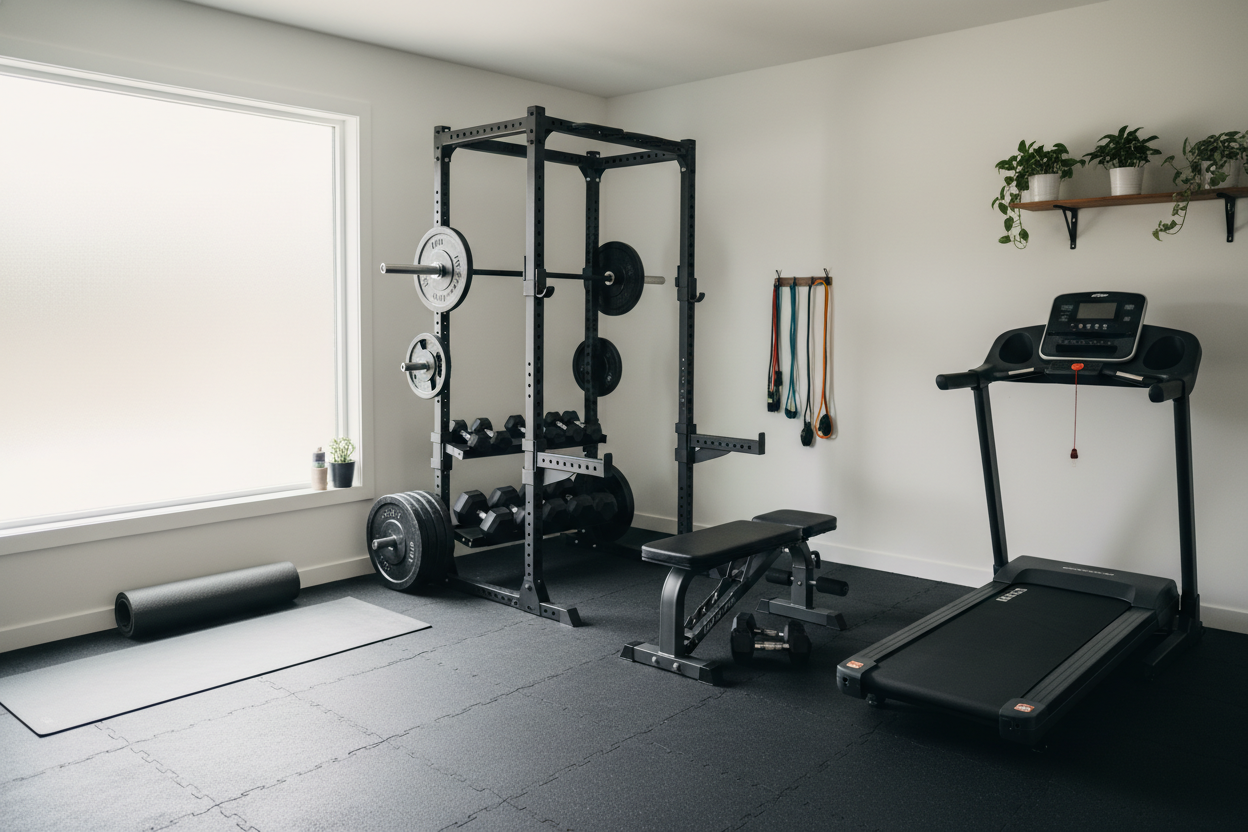
If you want to get strong, you need a power rack, a barbell, and iron plates. That is it. A solid rack made from 11-gauge steel is the anchor of any serious setup. It provides safety with spotter arms so you can bench and squat alone without dying. Look for a rack with a 1,000-lb capacity—not because you are lifting that much yet, but because it ensures the frame won't sway when you re-rack 225 lbs.
Your barbell is where you should spend the most money. Don't buy a $50 'standard' bar from a sporting goods store. You want a 20kg Olympic bar with a 28mm to 28.5mm diameter and a tensile strength of at least 190,000 PSI. This is the core beginner home gym gear that will last your entire life. Iron plates are just heavy circles; buy them used on Marketplace if you can find them for under a dollar a pound.
Stop Buying Flimsy Weight Benches
A bad bench is a safety hazard. I have seen 'budget' adjustable benches that use thin plywood and cheap staples for the upholstery. If you weigh 200 lbs and you are pressing 100 lbs, that bench needs to handle 300 lbs plus the force of you moving. A wobbly bench kills your stability and your confidence. If you are on a budget, buy a high-quality flat bench. A $150 flat bench from a reputable brand will always be better than a $150 adjustable bench that feels like a lawn chair.
Machines You Can Skip (For Now)
You do not need a treadmill. You do not need a leg press. And you definitely do not need a dedicated bicep curl station. These are home gym essentials for beginners that aren't actually essentials. A pair of running shoes and the sidewalk are free. A heavy set of squats builds more leg drive than a cheap, friction-heavy leg press ever will. These machines take up massive amounts of floor space and offer very little return on investment for a novice.
I often see people asking about a Smith machine home gym station. While a Smith machine has its place for high-level hypertrophy work or rehab, it should not be your first purchase. It locks you into a fixed bar path, which prevents you from developing the stabilizer muscles you get from free weights. Build your foundation with a barbell first. If you have the space and cash later, then look at specialized machines.
Mapping Out Your Floor Plan Before You Swipe Your Card
Before you buy that rack, get a roll of blue painter's tape. Mark the footprint on your floor. Remember that a standard Olympic bar is 7.2 feet long. You need at least a foot of clearance on either side to actually load the plates. I have seen guys buy beautiful racks only to realize they can't fit a 45-lb plate on the bar because it hits the wall.
When building a home gym, vertical space matters too. If you plan on doing overhead presses or pull-ups, measure your ceiling. A standard 90-inch rack won't fit in a basement with 7-foot ceilings. If space is tight, look for 'shorty' racks or wall-mounted folding racks that can be tucked away when you are done. Your gym needs to fit your life, not make your garage unusable for anything else.
The Final Verdict on Starting Your Iron Journey
The best beginner home gym is the one you actually use. Don't try to buy a complete commercial setup in one go. Start with the rack, the bar, and the plates. Add a bench. Then, as you train, you will realize what you are actually missing. Maybe it's a kettlebell for conditioning or a set of bands for accessory work. Buy quality once, and you will never have to buy it again.
Personal Experience: The Bench That Almost Killed Me
Early in my training, I bought a 'gold' branded adjustable bench from a big-box store. It was $80 and looked fine. Three months in, I was doing a set of incline presses. The adjustment pin—which turned out to be cheap pot metal—snapped. The backrest collapsed instantly while I had 60-lb dumbbells over my chest. I escaped with a strained neck, but it could have been much worse. I learned that day: if a piece of gear is responsible for holding your body weight and iron, never go for the cheapest option.
FAQ
How much space do I really need?
Ideally, an 8x8 foot area is the minimum for a rack and barbell setup. This gives you room to move around the bar and perform most lifts without hitting the walls.
Should I buy bumper plates or iron plates?
If you plan on doing Olympic lifts or deadlifting and you are worried about your floor, get bumpers. If you just want to squat and bench, iron is cheaper and takes up less room on the bar.
Do I need flooring?
Yes. Do not drop weights on bare concrete; you will crack the slab. Get 3/4-inch horse stall mats from a farm supply store. They are indestructible and much cheaper than 'fitness' flooring.
Share:
Why the Best In Home Weight Machine Hides in the Corner
Stop Trying to Cram Commercial Gyms Equipment Into a Spare Room