
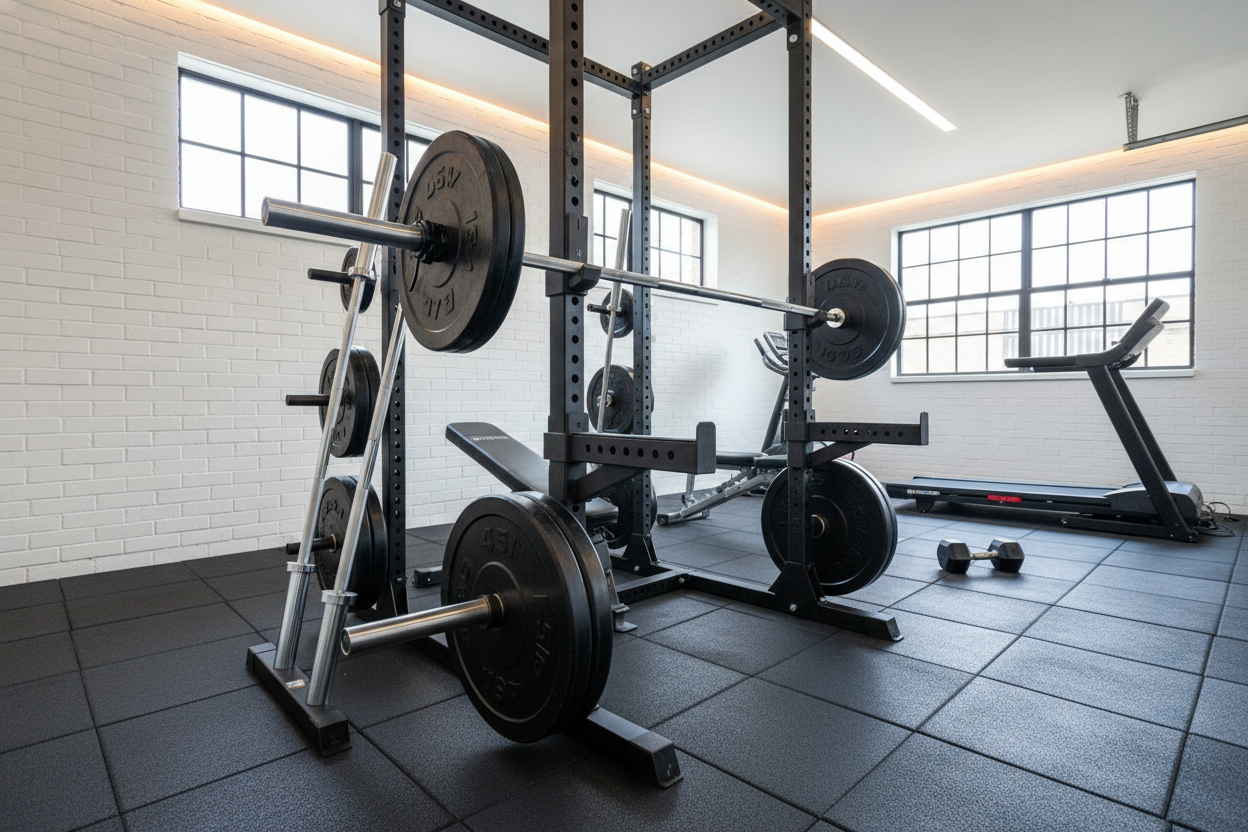
That Hex Bar Doesn't Weigh 45 Pounds
I remember the first time I loaded up a trap bar for a heavy set of five in my garage. I did the math I always do: two 45-pound plates on each side, plus forty-five for the bar. I felt like a absolute beast until I actually checked the manufacturer's spec sheet. That specific bar was a cheap, hollow-sleeve version that weighed exactly 30 pounds. My 'new PR' was actually a 15-pound deficit. It felt light because it was light. Understanding the different weights of barbells isn't just for gear nerds; it's for anyone who actually wants to get stronger without lying to themselves.
Most lifters treat 'the bar' as a constant, like gravity or the smell of old sweat in a basement gym. But blindly assuming every piece of steel in your rack weighs the same is a recipe for stalled progress. If you're meticulous about your macros and your sleep, but you're guessing at the starting weight of your primary movers, you're leaving gains on the table. Just like upgrading to a solid weight bench, learning your equipment's true specs is a rite of passage for anyone moving from 'casual trainee' to 'serious lifter.'
I’ve seen guys fail reps because they swapped a 15kg training bar for a 20kg power bar and didn't account for the 11-pound jump. In a sport where we fight for 2.5-pound jumps using fractional plates, ignoring a 10-to-20-pound variance in the bar itself is pure insanity. Let’s get the math right so you can actually track your progressive overload with some dignity.
A Breakdown of Types of Barbells and Their Weight
When you walk into a well-equipped facility, you're looking at a sea of silver and black steel. To the uninitiated, it all looks the same. To me, it's a collection of very specific tools with very specific masses. The types of barbells and their weight vary based on their purpose, the diameter of the shaft, and the material of the sleeves. If it’s a specialty bar, all bets are off.
- Standard Power Bar: Usually 45 lbs (20.4 kg) or exactly 20 kg (44.1 lbs).
- Deadlift Bar: Almost always 20 kg (44.1 lbs), but longer and thinner for more whip.
- Safety Squat Bar (SSB): These are the heavy hitters, often weighing between 60 lbs and 70 lbs depending on the brand (Rogue’s is 70 lbs).
- Swiss/Multi-Grip Bar: Usually around 35 lbs to 45 lbs, but some heavy-duty versions hit 55 lbs.
- Technique Bars: These are often aluminum and weigh a measly 15 lbs to 25 lbs.
The weight of different barbells isn't just a number; it changes the mechanics of the lift. A 70-pound Safety Squat Bar puts the center of mass in a completely different spot than a standard bar. If you log that as a '45-pound bar' in your app, your next session with a straight bar is going to feel surprisingly heavy (or light), and you won't know why. I once tested a cheap hex bar from a big-box sporting goods store that weighed 38 pounds. Thirty-eight. Try doing the math for a 405-pound pull with a 38-pound base. It’s a headache you don't need.
The Standard Olympic Bar (45 lbs / 20 kg)
This is the gold standard. In most North American gyms, the 'standard' bar is 45 pounds. However, if you're in a CrossFit box or a weightlifting club, you’re likely using a 20 kg bar. While 45 lbs and 20 kg (44.1 lbs) are close, they aren't the same. If you're a high-level lifter, that nearly one-pound difference matters. These bars have a 28mm to 29mm shaft diameter and are designed to handle 1,000+ lbs. This is the number everyone has memorized, but it’s often the only one they know.
Women's Olympic Bars (35 lbs / 15 kg)
Don't let the name fool you; these are precision instruments. A women's Olympic bar weighs 15 kg (roughly 35 lbs). The shaft is thinner—usually 25mm—to allow for a better grip during the snatch and clean and jerk. If you grab one of these for a set of overhead presses and wonder why you suddenly feel like Superman, check the sleeve. If it’s shorter than usual and the bar feels skinny in your hands, you’re likely lifting 10 pounds less than you think. That 10-pound gap is huge when you're working near your 1RM.
EZ Curl and Tricep Bars (The Wildcards)
These are the wild west of gym equipment. I have owned EZ curl bars that weighed 15 pounds and heavy-duty, rackable curl bars that weighed a full 35 pounds. Most 'standard' chrome curl bars you find in commercial gyms hover around 18 to 22 pounds. Because there is no 'International Curl Federation' (thank God), manufacturers do whatever they want. If you're obsessive about your bicep growth, you need to know how much do different gym bars weigh in the specialty category, or your tracking will be total fiction.
Wait, How Much Do Different Gym Bars Weigh at Commercial Gyms?
Commercial gyms are notorious for using 'budget' bars that don't adhere to Olympic specs. You might find a 'beater bar' that weighs 42 pounds because the steel is lower quality and the sleeves are thinner. But the real confusion starts with the fixed-weight barbells—those pre-loaded bars on the rack. Usually, the weight stamped on the end is accurate, but the bar itself is much shorter and thinner than a standard barbell.
Then there's the Smith machine. This is where PRs go to die (or get fake-inflated). A Smith machine bar is attached to a rail system, and most modern machines use a counterweight system to make the bar feel lighter. The 'starting weight' is often printed on a sticker on the frame. It might be 15 lbs, 20 lbs, or 25 lbs. I’ve seen lifters claim a 315-pound bench on a Smith machine, not realizing the machine was doing 20 pounds of the work for them before they even started. If you can't find the sticker, don't assume it's 45.
Why the Weight of Different Barbells Actually Matters
Progressive overload is the only way to get anywhere in this game. If you're adding 5 pounds a week to your squat, but you're switching between a 44-lb 20kg bar and a 45-lb power bar without realizing it, you're effectively stalling or over-reaching every other week. It’s the same logic as being careful with your types of weight plates. If you mix iron plates with thick bumper plates on the same sleeve, the center of mass shifts and the bar behaves differently. Ignoring the bar weight is just as sloppy.
I once spent three months wondering why my floor press was plateauing. It turned out I was using a multi-grip bar that was 5 pounds heavier than the one I started the program with. I was actually getting stronger, but the math told me I was stuck. That kind of mental fatigue can kill a training cycle. Accuracy isn't about being pedantic; it's about having reliable data so you can make informed decisions about your training intensity.
Dialing In Your Lifting Math at Home
If you’re building a home gym, do yourself a favor: weigh your bars. Buy a cheap digital luggage scale, loop it around the center of the bar, and lift. I did this with every specialty bar I own. My safety squat bar? 61.2 lbs. My hex bar? 52 lbs. I took a silver Sharpie and wrote the exact weight on the end cap of every single one. No more guessing, no more mid-set math, and no more 'fake' PRs.
If you're investing in a versatile bench with a barbell rack, you're likely training alone. Knowing exactly what you're unracking is a safety issue as much as a tracking one. When you're pushing your limits on a solo session, that 5-pound difference between a standard bar and a heavy-duty power bar is the difference between a clean rep and a pinned chest. Do the math once, mark the bars, and then get back to the actual work of moving the weight.
FAQ
Do all Olympic bars weigh 45 pounds?
No. While most 'standard' bars are 45 lbs, many high-end bars are 20 kg (44.1 lbs). It sounds like a small difference, but it matters for record-keeping and high-percentage lifts.
How much does a Smith machine bar weigh?
It varies wildly. Most are counterbalanced to weigh between 15 and 25 pounds. Check for a sticker on the machine's frame for the 'effective starting weight.'
Are EZ curl bars always 25 pounds?
Hardly. They range from 15 pounds for cheap, thin versions to 35 pounds for rackable, high-quality versions. Always weigh yours if you're serious about tracking arm day progress.
Why is a women's bar lighter?
It's designed for Olympic weightlifting. The 15kg weight and 25mm diameter allow for better grip and faster turnover during explosive movements like the snatch.
Share:
I Matched Every Gym Machine With Name (So You Can Stop Guessing)
Why I Finally Caved and Bought Multi Function Home Gym Equipment